Teen found face down in river was raped, killed in 1996, MT cops say. Suspect now ID’d
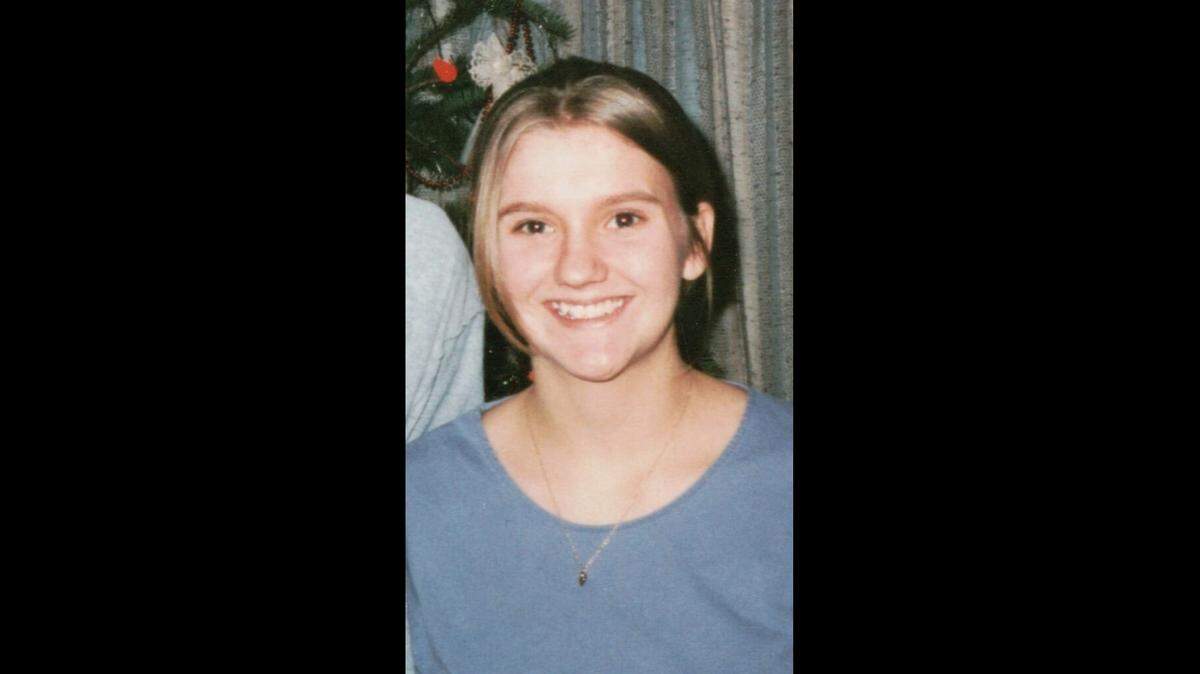
Danielle “Danni” Houchins left her Montana home at about 11 a.m. on Sept. 21, 1996.
It was the last time the 15-year-old was seen alive, the Gallatin County Sheriff’s Office said in an Aug. 8 news release.
Worried, her family reported her missing after she didn’t come home that day, deputies said.
That evening, Danielle’s mother found her truck at the Cameron Bridge Fishing Access on the Gallatin River, deputies said.
Her “body was found face down in shallow water,” according to deputies.
Despite pleas from her family, Danielle’s case would go unsolved for decades.
But now, thanks to the passage of time that allowed for the development of new DNA technologies, Danielle’s case has been closed, deputies said.
By testing the DNA of evidence left at the scene, Paul Hutchinson, 55, of Dillon, was identified as a suspect in the teenager’s rape and killing, deputies said.
“I looked into the eyes of the family. I listened to their words,” Sheriff Dan Springer said at a news conference posted on Facebook. “I saw the pain and anger in their voice surrounding the inability to get answers for Danni’s death … and their pain touched my soul.”
Even after finally getting closure in Danielle’s case, though, her younger sister yearns for more.
“I was a child in 1996,” Stephanie Mollet said at the news conference. “It shouldn’t have taken my diligence and resolve to solve this case, to even investigate it. We are not doing enough to protect women in this state from violent sexual crimes.”
Decades without answers
Mollet said that after Danielle’s body was found in 1996, her “manner of death was ruled as undetermined,” despite evidence collected at the scene.
“Danni’s body had been dragged over 20 feet by her left arm, and her watch was pulled over her hand,” Mollet said. “Her face was scratched and bruised.”
Hairs were also found on Danielle’s body, according to Mollet.
“And yet, and yet, even though the detective team put all of this evidence in front of their leadership, the sheriff, coroner and medical examiner did not rule Danielle’s death as a homicide,” Mollet said.
For decades, Danielle’s case remained stagnant.
“This case has haunted her family, me, the sheriff’s office and this community for all those years,” Springer said.
Despite attempts to identify a suspect over the years, the trail stayed cold, Springer said.
Case reopened
In 2019, the sheriff’s office reopened the case, Springer said.
“I can’t imagine the feeling this family has endured over the past 28 years, and that day, I promised them that I would find a resolution,” Springer said of reopening the case in 2019.
Seeking a new pair of eyes on the case, Springer said he hired Tom Elfmont, a retired Los Angeles Police Department officer.
“This became a full-time job for Tom as he delved in with both feet,” Springer said.
Elfmont said at the news conference that he called in the help of Sergeant Court Depweg with the Newport Beach Police Department, who has previously solved cold cases using DNA technology.
“I called him on the phone,” Elfmont said. “I said, ‘Hey, Court, will you help me? My knowledge about DNA is very limited.’”
Depweg soon became Elfmont’s confidant, walking him through the process of DNA testing.
Elfmont said the sheriff’s office sent the four hairs found on Danielle’s body to Astria Forensics for testing, where they obtained a partial DNA profile from one of them.
This profile was run through the FBI’s Combined DNA Index System, however, no matches were found, Elfmont said.
Detectives then sent the profile to Parabon NanoLabs in hopes of identifying a suspect using forensic genetic genealogy.
Genetic genealogy uses DNA testing coupled with “traditional genealogical methods” to create “family history profiles,” according to the Library of Congress. With genealogical DNA testing, researchers can determine if and how people are biologically related.
After getting search warrants, Elfmont said genealogists searched the DNA profile against two genetic genealogy databases.
This led investigators to a potential suspect: Hutchinson, deputies said.
‘Slumped in his chair’
Elfmont and Depweg interviewed Hutchinson the evening of July 23, deputies said.
“During the nearly two-hour interview, Hutchinson, who had lived in Bozeman at the time of Houchins’ death, displayed extreme nervousness,” deputies said, adding that he also “sweated profusely, scratched his face, and chewed on his hand.”
When Hutchinson was shown Danielle’s photo, he became uncomfortable as he “slumped in his chair,” deputies said.
In the early morning hours the next day, Hutchinson called 911, saying he needed help, deputies said.
Deputies said they found him dead “on the side of the road.”
He died by suicide just hours after the interview, deputies said.
Prior to her death, Danielle and Hutchinson had no interactions, deputies said.
“Describing it as a crime of opportunity, (investigators) believe Hutchinson and Houchins randomly encountered each other at the river, where Hutchinson raped then suffocated her in shallow water,” deputies said.
Hutchinson, who had no known criminal history, was married and had two adult children, according to deputies. He was an about 27-year-old Montana State University student in 1996 when Danielle was killed, according to the sheriff’s office.
Springer said the investigation into Hutchinson and his whereabouts around the time of the killing are still being investigated.
Bittersweet closure
Mollet said that while she celebrates the solving of her sister’s case, “the celebration for me is short-lived.”
“It’s quickly replaced with a tangled mess of frustration, disbelief and anger. The institutions that are designed to protect the rights of victims, to ensure that vicious killers are incarcerated, to deliver justice in Montana, those institutions failed my sister,” Mollet said.
When asked about Mollet’s accusations of failings on the part of the sheriff’s office, Springer said “it hurts me.”
“I’ve been the sheriff now for three years, and I think my employees understand what my expectations are of them, and that is definitely not my expectation of this office,” Springer said.
Mollet implored others to fight for change in the state of Montana.
“Danielle’s story should anger you, should make you think about your mothers, your sisters, your wives and your daughters,” Mollet said. “Should make you think about everything you would do to protect and honor the women you love.”
This story was originally published August 9, 2024 at 3:28 PM with the headline "Teen found face down in river was raped, killed in 1996, MT cops say. Suspect now ID’d."