
Clouds that rain rocks, vicious 2,000 mph winds detected on distant world, NASA says
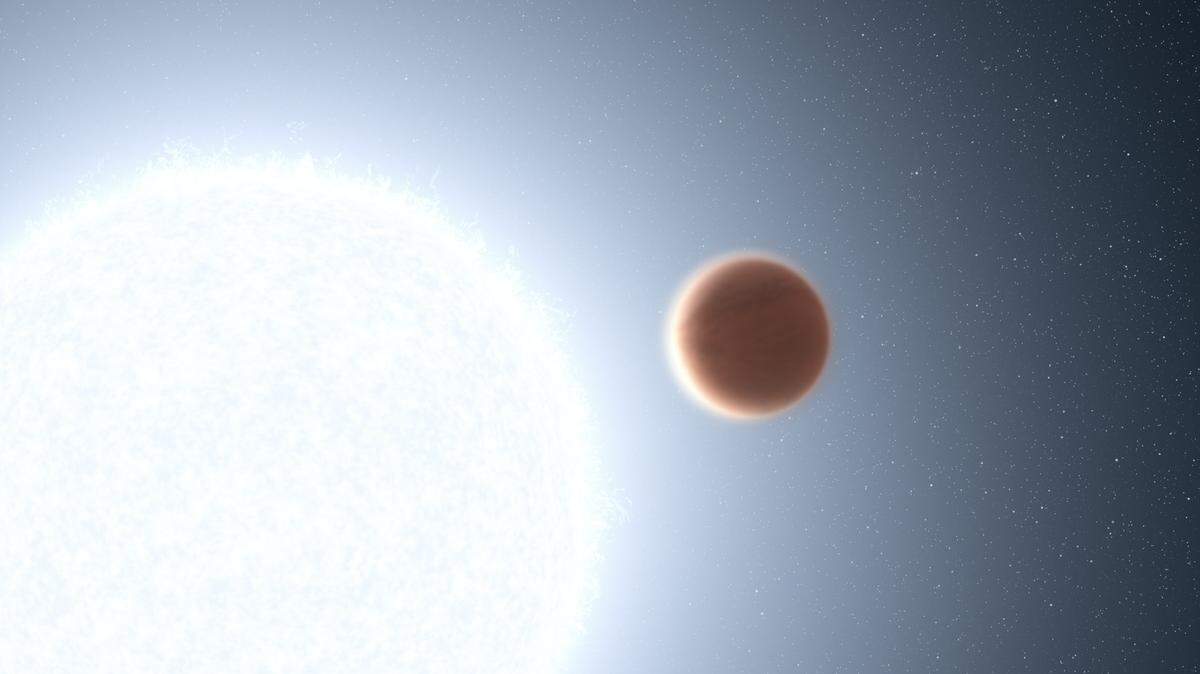
Astronomers spying on planets far outside our solar system are finding nightmarish weather conditions, including clouds that rain rocks at night and hurricanes whipping the surface with 2,000 mph winds.
Such are the extremes on “a unique class of ultra-hot exoplanets” as seen by NASA Hubble Space Telescope astronomers, NASA reported in an April 6 news release.
“These bloated Jupiter-sized worlds are so precariously close to their parent star they are being roasted at seething temperatures above 3,000 degrees Fahrenheit,” NASA says.
“That’s hot enough to vaporize most metals, including titanium. They have the hottest planetary atmospheres ever seen.”
Glimpses of conditions on these uninhabitable worlds — at least for life as we know it — have been detailed in two recently published scientific papers, including a report on planet WASP-178b in the April 7 edition of Nature.
WASP-178b is 1,300 light-years from Earth and does not rotate like our home planet, instead leaving one side always facing its star.
As a result, the daytime side is a cloudless atmosphere of silicon monoxide gas, while “the torrid atmosphere whips around to the nighttime side at super-hurricane speeds exceeding 2,000 miles per hour,” astronomers learned.
“On the dark side, the silicon monoxide may cool enough to condense into rock that rains out of clouds, but even at dawn and dusk, the planet is hot enough to vaporize rock,” NASA says.
Such extremes give scientists hints of the “exotic chemistry taking place in far-flung worlds.” That, in turn, can help predict weather in places that might actually host life, according to Josh Lothringer of the Utah Valley University.
“If we can’t figure out what’s happening on super-hot Jupiters where we have reliable solid observational data, we’re not going to have a chance to figure out what’s happening in weaker spectra from observing terrestrial exoplanets,” he said in the release.
“This is a test of our techniques that allows us to build a general understanding of physical properties such as cloud formation and atmospheric structure.”
This story was originally published April 7, 2022 at 1:35 PM with the headline "Clouds that rain rocks, vicious 2,000 mph winds detected on distant world, NASA says."