Plastic bag fees and bans have major unintended consequences, new study shows
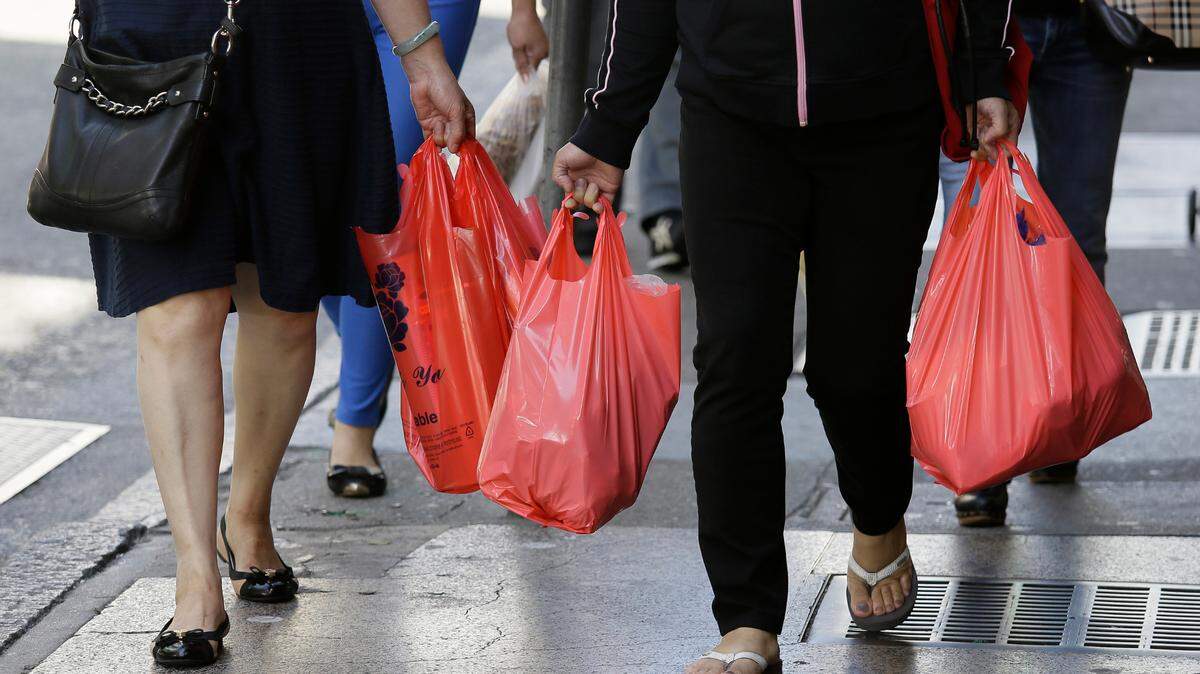
Plastic bag fees and bans intended to reduce plastic waste may have some unintended consequences, including spiking sales of trash bags, a new study shows.
The peer-reviewed study out of the University of Georgia, “Spillover Effects of Grocery Bag Legislation: Evidence of Bag Bans and Bag Fees,” was published in January and highlights the way consumers often use carryout grocery bags (CBGs) for other uses and the “unintended spillover effects” of initiatives to lower plastic bag use.
Researchers gathered data from counties that have enacted bans or fees in their stores — Washington D.C, Montgomery County in Maryland, and San Luis Obispo County and Santa Clara County in California. These data sets were compared to similar counties without such bag restrictions.
Data shows that shoppers often used those CBGs as liners for small trash cans, or for other similar uses around the household.
These needs did not just disappear with the addition of bag fees and bans, which were meant to help the environment and reduce plastic use, the study shows.
When those carryout bags were taken away from consumers, shoppers turned to buying smaller trash bags, leading to an average increase in purchased plastics of 127 pounds per store each month, researchers found by utilizing retail data from 2006 to 2014.
Sales for smaller bags — 4 and 8 gallons — increased exponentially, with 120% and 64% increase respectively. However, larger bags essentially stayed the same, proving that smaller bags were used by consumers in a myriad of ways.
“Carryout grocery bags were substituted for similar sizes of trash bags before implementing the regulations,” researcher Yu‑Kai Huang wrote. “After the regulations came into effect, consumers’ plastic bag demand switched from regulated plastic bags to unregulated bags.”
While the study shows that there are unintended consequences of attempting to reduce the distribution of CBGs, whether more plastic is being used because of the consequences is uncertain.
“It is possible that a bag ban could even lead to an increase in total plastic waste, and this is without taking into account any plastic content in purchased CGBs that consumers buy, and eventually discard, as a result of the ban,” the study said.
However, if a particular store has a high-volume of customers daily, bag fees or bans would likely be beneficial in cutting down plastic bag use, researchers said. According to the study, a store would need to generate at least 326 CBGs a day to send less plastic to landfills with a ban, considering the increase in plastic bag sales.
Additionally, if CBGs are used by consumers for other purposes, such initiatives may not be in the best interest of policymakers.
“There’s no clear answer for this,” Huang said. “Whether the provided free carryout grocery bags are reused is a key to determining the overall effectiveness of the related grocery bag policies.”
This story was originally published March 29, 2022 at 2:27 PM with the headline "Plastic bag fees and bans have major unintended consequences, new study shows."