
19th century stove is mysteriously sitting in Gulf of Mexico. NOAA has an explanation
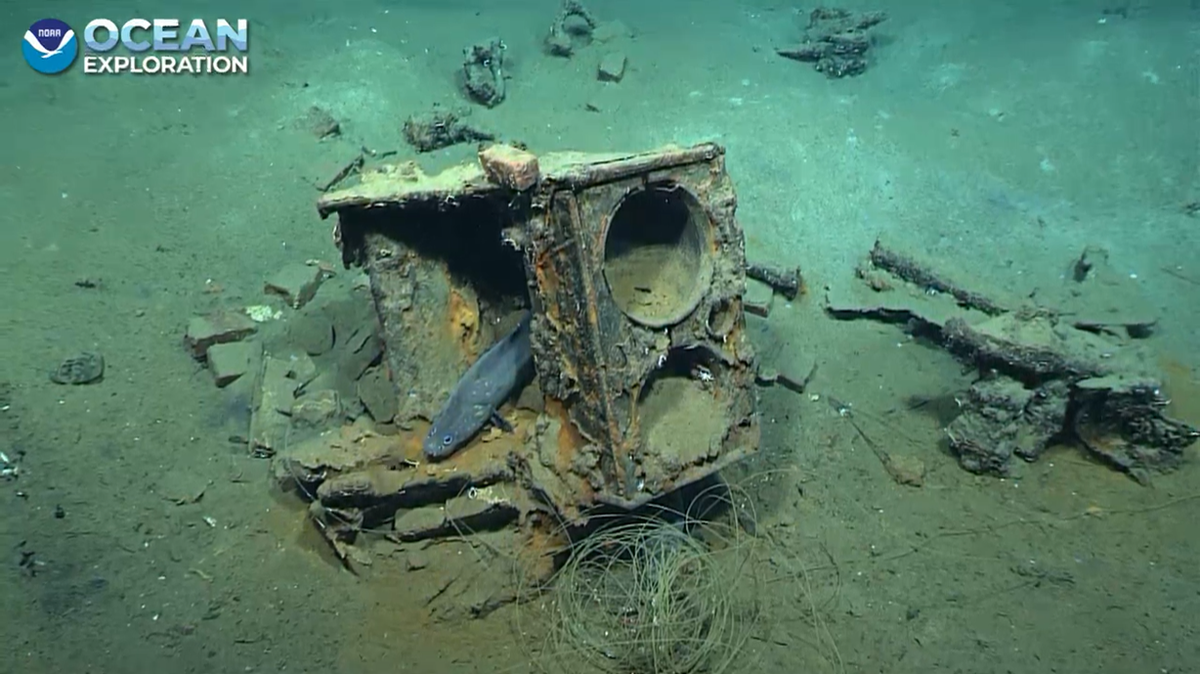
Marine researchers exploring the ocean off West Florida found a largely intact 19th century stove in the middle of nowhere — surrounded by bricks.
It sat in complete darkness, just over 3,000 feet down, along a steep dropoff known as the West Florida Escarpment.
Multiple unbroken wine (or liquor) bottles were also found, as well as multiple anchors, one of which was broken in half.
Their conclusion? The rusty stove indicated they had found the wreck of an historic 19th century whaling ship, much of which was gone or buried.
The stove appeared to be a trywork, a type of cast iron furnace used in rendering whale blubber to oil, the researchers said. Words were etched into it, but the scientists have yet to decipher what is spelled out due to encrusting.
NOAA Ocean Exploration made the discovery Feb. 25, using a remotely operated vehicle (ROV) that circled the wreck site for about two hours, recording video and taking photos for study. Their research will include comparing the artifacts to things found near other known whaling ships of the era, and searching log books for details of any whaling ships lost in the area in the 1800s.
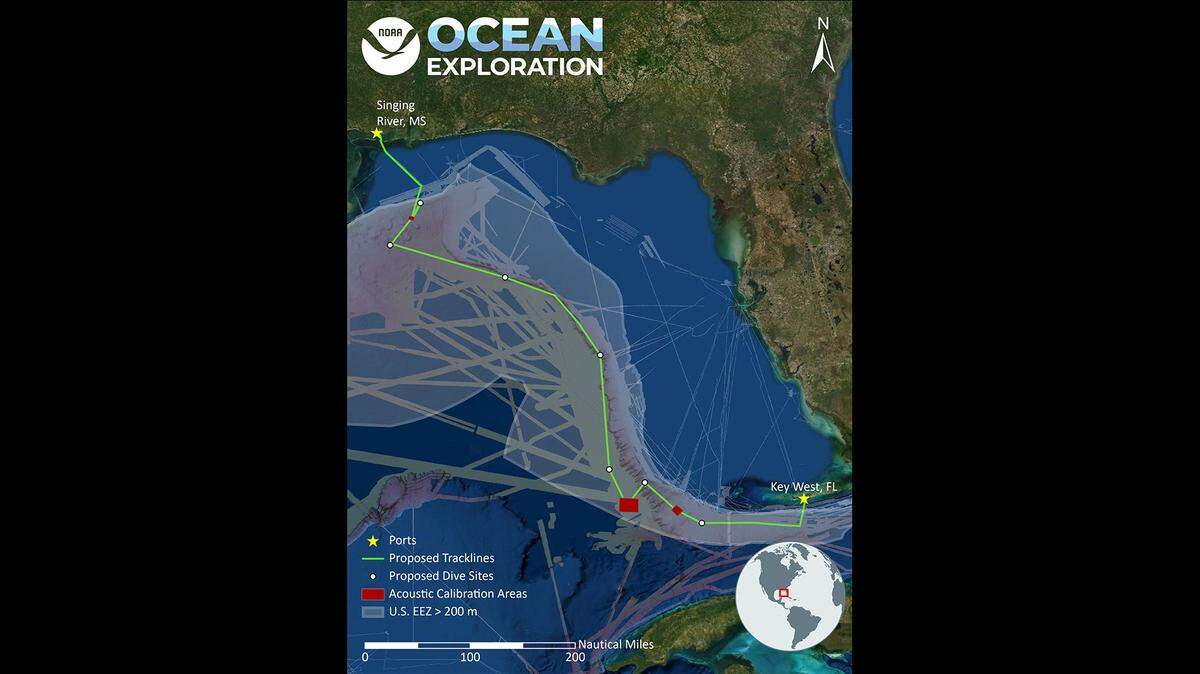
The NOAA team is in the region for a week-long equipment “shakedown” on the NOAA ship Okeanos Explorer. The mission began Feb. 23 and goals include mapping the seafloor in the northern Gulf of Mexico and western Straits of Florida. The team will also investigate any sonar anomalies found in the region, which is how they found the whaler wreck.
The site coordinates were provided by Bureau of Ocean Energy Management and SEARCH Inc, using data from previous surveys, and “researched cultural context.” (A BOEM archaeologist led a key aspect of the dive to create a “photomosaic” of the shipwreck.)
A live feed of the wreck discovery was broadcast Feb. 25 and included experts offering real-time interpretations of objects seen in the sand, which was largely devoid of sea life. (A few fish were seen using the stove as a hiding place.)
Among the other items seen at the site was a glass globe, possibly part of a minute glass timepiece, and fragments of wood believed to be from a cask. Ballast stones were piled around the anchors. As for the pile of bricks, they once encased the trywork stove as a safety measure to trap the intense heat, the team said.
It’s believed the ship was small, about 60 feet long, with a 20-foot width and 8-foot depth in its hold, the researchers said.
Records indicate a whaling ship of that size was abandoned during a squall near the mouth of the Mississippi River in 1835, the scientists said. It was built around 1820.
The team stopped short of revealing the name of that ship, until the site data can be examined more closely.
This story was originally published February 28, 2022 at 6:17 AM with the headline "19th century stove is mysteriously sitting in Gulf of Mexico. NOAA has an explanation."