
‘Lucky to be here.’ Woman says she nearly lost leg after spin class in Massachusetts
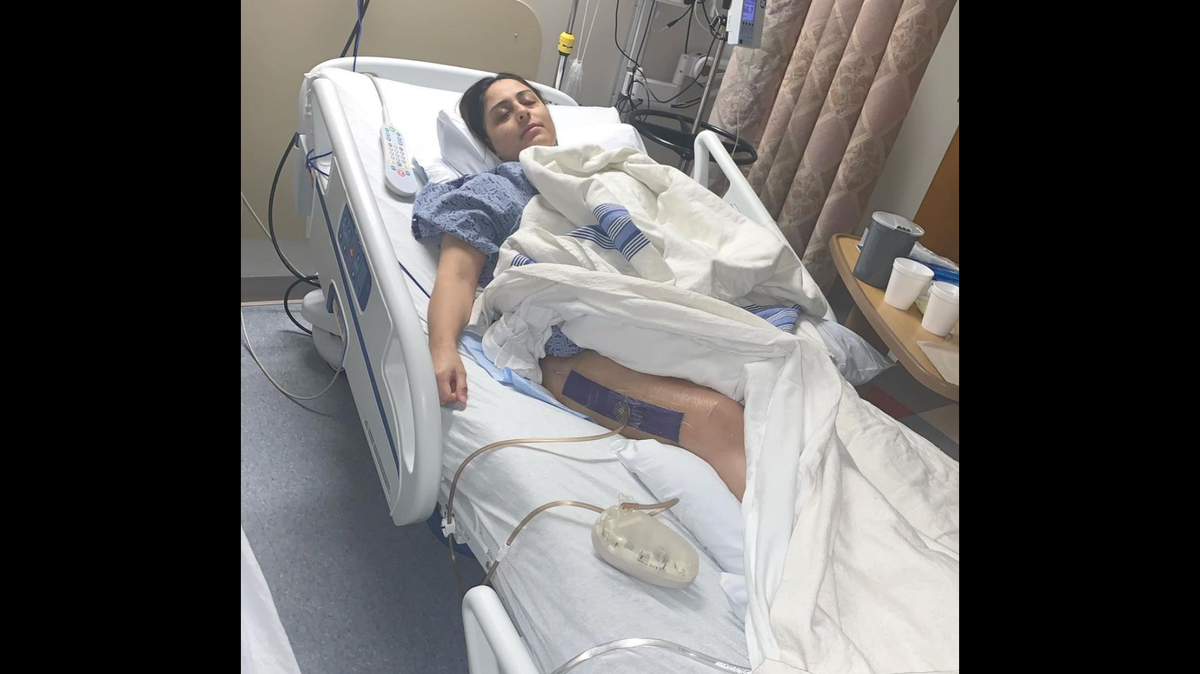
A 23-year-old woman said she is “lucky to be here” after nearly losing her leg following a spin class in Massachusetts.
Kaelyn Franco had always been active growing up, involving herself in soccer and softball during high school and later joining soccer clubs in college, according to a GoFundMe page set up for her.
The recent college graduate took a recommended spin class on Sept. 15 and that’s where she felt a weakness in her legs. She would soon discover she’d developed a life-threatening condition.
“I found it very strange that my legs immediately buckled when I got off the bike,” Franco wrote in an Instagram post.
McClatchy News has reached out to Franco for comment.
“I felt like I couldn’t move. My cousins were laughing at me but I knew something was wrong.”
At the time she thought her muscles were just sore from the ride, but the next day, she was “crying in pain” and was hospitalized at Newton-Wellesley Hospital, roughly 12 miles outside of Boston, for what she called a “horrifying illness” known as rhabdomyolysis.
The potentially fatal, rare condition, also referred to as “rhabdo,” happens “when damaged muscle tissue releases its proteins and electrolytes into the blood,” according to the CDC.
As a result, this “can damage the heart and kidneys and cause permanent disability or even death.”
At the hospital, Franco said she couldn’t walk or move and had to use a catheter.
Doctors found her levels of an enzyme called creatine kinase (CK) were at 259,000 when the normal level is around 33-211 units per liter, she said.
CK is found in body tissues such as the heart and brain but when there is muscle damage, it begins to be released in the blood, according to testing.com.
“Doctors said they hadn’t seen such levels before,” she wrote on Instagram.
“I was getting nervous seeing my loved ones so worried,” she added.
The rhabdomyolysis rapidly escalated and “became life-threatening when she developed acute compartment syndrome in her right leg,” according to the GoFundMe page.
Franco was rushed into an emergency surgery that saved her leg.
Surgeons went in to remove the muscle that was breaking down in her bloodstream, she detailed in her social media post.
“Seeing my loved ones cry when my surgeon said that this surgery had just saved my life was something I’ll never forget,” she wrote.
“Although my leg will never be the same and I’ll have lifelong complications from this, I am lucky and I am so grateful,” Franco added. “I am alive and my leg was saved.”
As she is in recovery, she is unable to walk or drive.
She has to use crutches and relies on a wheelchair when going out, according to her GoFundMe page.
Franco is sharing her story on social media and plans to document more of her experience with rhabdomyolysis in the hopes of helping others, she said.
“I am ready and hopeful for the day I can move again,” she wrote on Instagram.
Rhabdomyolysis symptoms and prevention
The risk for the condition cannot be “completely” eliminated, according to the CDC, but there are ways to lower the risks.
Activities involving overexerting oneself and heat exposure could heighten the risk for rhabdomyolysis, so the CDC advises becoming accustomed to your “physical activity level and the heat.”
Also, it is good to stay hydrated, to avoid caffeinated beverages and low-sugar foods as well as avoiding alcohol when exerting oneself in the heat.
Some signs of rhabdomyolysis include “muscle cramps, aches, or pains that are more severe than expected,” the CDC explains online, while noting it is possible to show no symptoms.
Additionally, dark colored urine is another warning sign of the condition alongside weakness and fatigue. If you notice these symptoms of the condition after strenuous activity, seek medical care.
This story was originally published November 12, 2021 at 3:54 PM with the headline "‘Lucky to be here.’ Woman says she nearly lost leg after spin class in Massachusetts."
.jpg)