You may have to tiptoe over COVID hospital waste at the beach soon, study hints
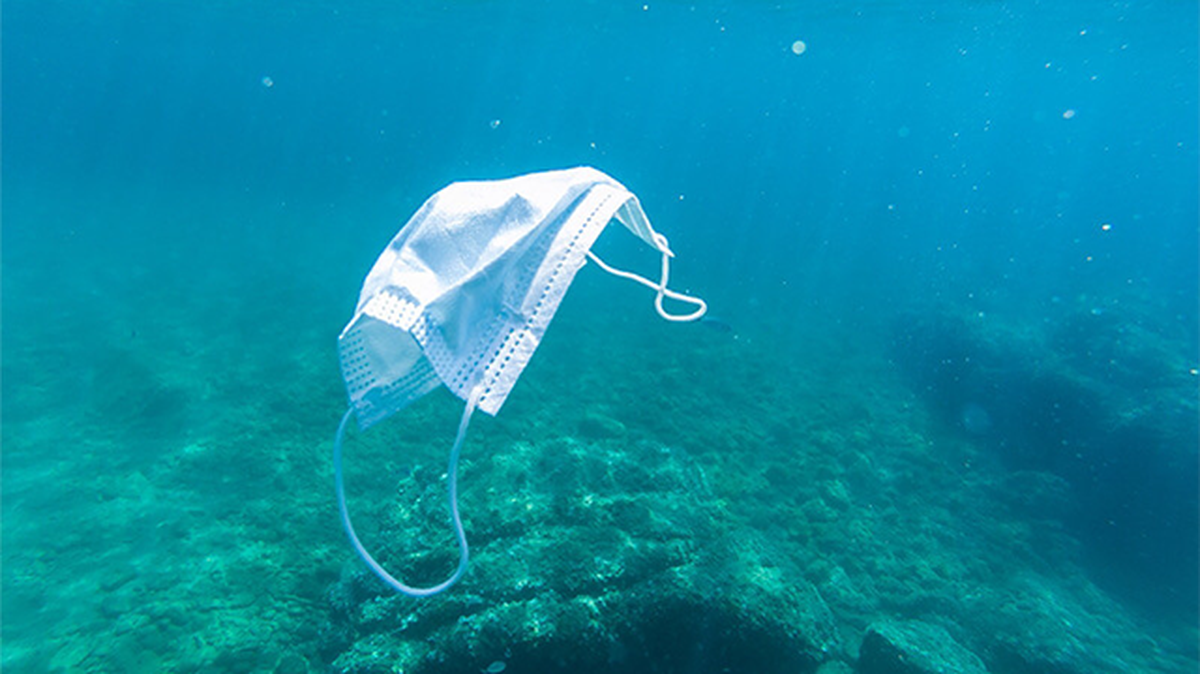
Forget the hungry seagulls; plastic waste from the COVID-19 pandemic, including masks, gloves and face shields, may ruin your future beach days instead.
New research estimates the pandemic has generated more than 8 million tons of plastic pollution globally, with more than 25,000 of those tons already dumped in oceans via rivers worldwide.
The majority of the junk is coming directly from hospitals, researchers from the University of California, San Diego’s Scripps Institution of Oceanography and Nanjing University in China said.
Fortunately for marine life, but less so for us, a significant chunk of the ocean plastic debris is expected to land on beaches, meaning it’s likely we could be tip-toeing over used masks and gloves next summer.
By year’s end, the total amount of global pandemic-generated plastic waste is estimated to reach 11 million tons, with 34,000 tons ending up in the ocean. And by the same time, the mass fraction of plastics washing in seawater, the seafloor and beach is expected to reach 13%, 16% and 71%, respectively, according to the study published Nov. 8 in the journal PNAS.
A smaller portion of plastic trash is expected to float into open water and wash up in the Arctic Ocean, informally known as the “dead-end” for pollution thanks to circulation patterns. Researchers say the potential impacts of the new trash add ”another layer of concern” given the harsh Arctic environment is already vulnerable to climate change.
To the researchers’ surprise, only about 8% of the total pandemic plastic waste produced so far has come from individual people. Meanwhile, only 0.3% has come from packaging from COVID-19 test kits.
The team collected COVID-19 data from the start of the pandemic in 2020 to August 2021 and used it to create a model that simulates how oceans move and how plastic behaves in the sea. Researchers say the model’s design was based on Newton’s laws of motion and the law of conservation of mass.
“Indeed, the COVID-related plastic is only a portion of a bigger problem we face in the 21st century: plastic waste,” study corresponding author Yanxu Zhang, a professor at the school of atmospheric sciences at Nanjing University, said in a news release. “To solve it requires a lot of technical renovation, transition of economy, and change of lifestyle.”
The pandemic has amounted to an unprecedented demand for single-use plastics, which treatment systems around the globe are failing to keep up with, particularly in developing countries, the team said.
About 72% of global plastic waste from the COVID-19 pandemic is from Asia, with the Shatt al-Arab, Indus and Yangtze rivers contributing most to the plastic discharge.
European rivers account for 11% of the plastic waste dumpage, while other continents only had minor contributions, according to the study.
However, pandemic plastic waste generation does not coincide with the distribution of COVID-19 cases, the researchers found. Most plastic pollution is produced in Asia (46%), Europe (24%) then North and South America (22%). Yet, the most confirmed COVID-19 cases have come from the Americas (48%), then Asia (31%) followed by Europe (17%).
Plastic is durable and cheap, so it’s a perfect material for many of the disposable medical tools, equipment and packaging used during the pandemic. But the convenience comes at cost.
Not all personal protective equipment such as masks and gloves are recyclable, and their presence in oceans increases the likelihood marine life becomes tangled or trapped in the waste. Animals can also die by eating plastic, researchers say. The debris could also encourage the introduction of invasive species in certain regions and the distribution of contaminants, such as the coronavirus itself.
A recent report estimated that 1.5 million face masks entered the oceans in 2020 alone — a feat made easy by the relaxation of single-use plastic legislation across the globe.
This story was originally published November 10, 2021 at 4:51 PM with the headline "You may have to tiptoe over COVID hospital waste at the beach soon, study hints."