
Funny Outer Banks ritual sees wild horses plucking fruit from trees with their teeth
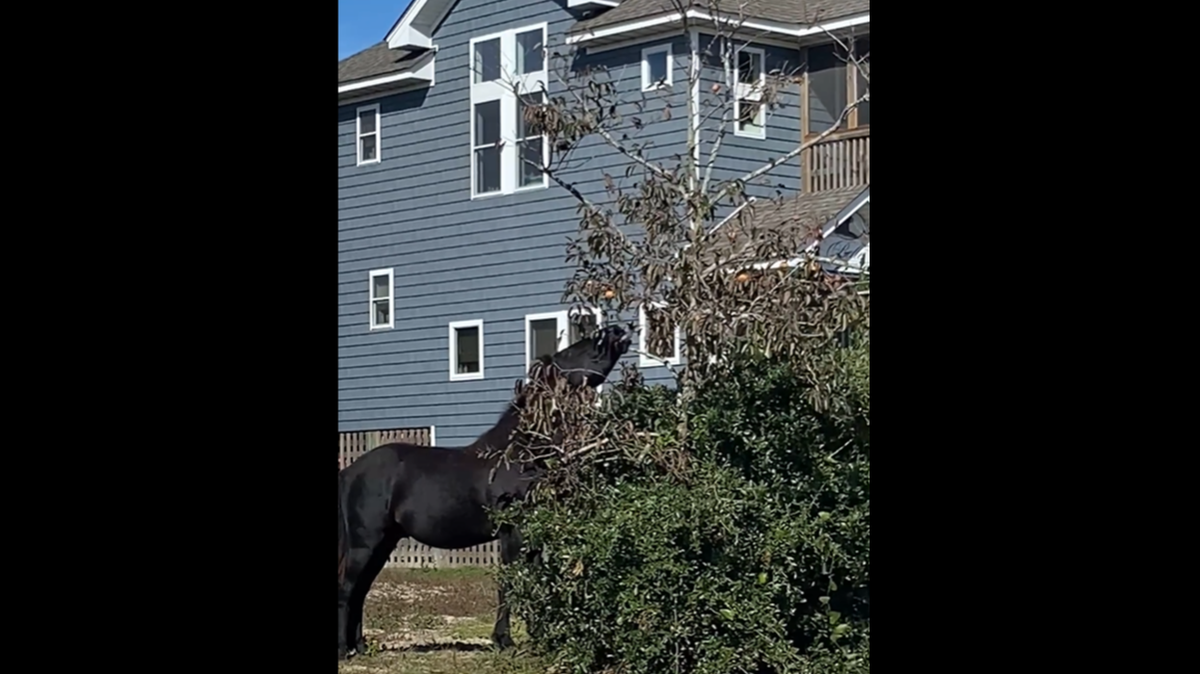
The wild horses roaming North Carolina’s Outer Banks are peculiar in countless ways, and one of the funniest reasons is their enthusiasm for persimmons.
Each year around this time, the typically stoic mustangs turn almost childlike with their affinity for the sweet fruit.
Video shared by the Corolla Wild Horse Fund shows the horses will follow the scent to wherever it leads — no matter how awkward the location — and stand there endlessly plucking at the limbs with their teeth.
This is their version of Halloween and candy is literally falling from trees.
“The American persimmon, or diospyros virginal, is a fruit-bearing tree native to our area and ... is a favorite seasonal food for the horses,” the fund wrote. “The wild horses can be seen pulling the fruit directly off the tree ... and they will also forage for it once it falls to the ground on its own.”
Ripe persimmons are orange in color, “sticky sweet,” and appear in clumps on limbs, according to the Carolinanature.com.
Love of persimmons is one of many ways the horses have adapted after being stranded 400 years ago on the barrier islands. Historians believed they were abandoned by Spanish explorers starting in the 1500s.
Traditional horse foods — hay, apples, corn, carrots — are uncommon on the Outer Banks. So the horses turned to a very specialized diet of “sea oats, coastal grasses, acorns, persimmons, and other area vegetation,” according to Outerbanks.com.
As for locating fresh water, the horses have a knack for finding their way to “large puddles,” marshes and canals, mostly on the west side of the islands, the Corolla Wild Horse Fund says.
”Horses drink between 5-10 gallons of water a day, and while they can survive without eating for 20-25 days, they cannot go without water for more than 3-6 days. After two days without water they’ll start to display signs of extreme distress, like colic,” the fund reports.
This story was originally published October 18, 2021 at 7:23 AM with the headline "Funny Outer Banks ritual sees wild horses plucking fruit from trees with their teeth."