
Swarm of 140 earthquakes has geologists closely eyeing volcano in Hawaii national park
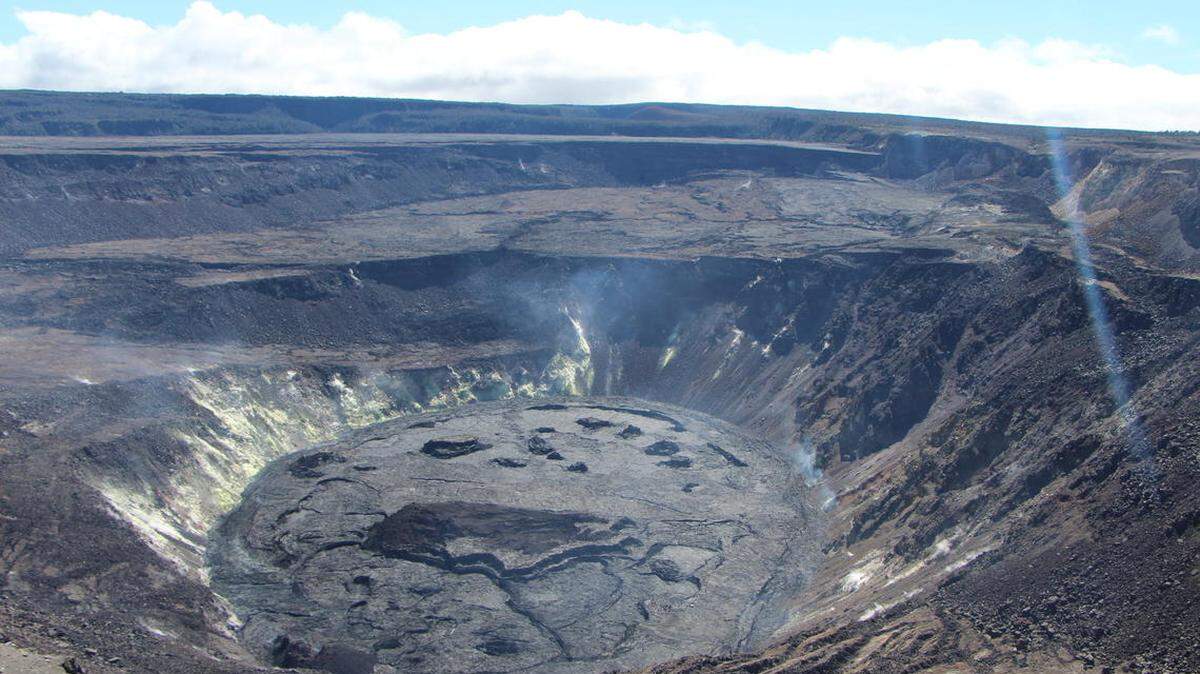
A swarm of more than 140 earthquakes shook the ground beneath a Hawaii national park.
Now geologists are keeping a close eye on a nearby volcano.
U.S. Geological Survey geologists changed the alert level for the Kīlauea volcano from an ”advisory” to a ”watch” Tuesday. That means the volcano is showing “heightened or escalating unrest,” and there’s potential for an eruption.
But it’s not currently erupting, geologists said.
The orange watch alert level is the second-highest level, with the highest being a red warning, which means an eruption is underway or imminent.
Geologists made the decision to change the Kīlauea volcano’s alert status after the swarm of earthquakes shook the region near Hawaii Volcanoes National Park.
“A swarm of earthquakes beneath the south part of Kīlauea caldera, within Hawaiʻi Volcanoes National Park, began on the evening of August 23, 2021,” USGS said. “The swarm continues into the early morning hours of August 24 with a particularly strong sequence of earthquakes.”
More than 140 earthquakes struck the area, and geologists were detecting at least 10 earthquakes an hour, according to USGS. The largest was a 3.3-magnitude earthquake, but the majority were small.
The swarm changed the ground deformation near Kilauea’s summit, geologists said. That could indicate there’s shallow movement of lava under the volcano.
Kīlauea is the youngest volcano on the Island of Hawaii, according to USGS.
“Topographically Kīlauea appears as only a bulge on the southeastern flank of Mauna Loa, and so for many years Kīlauea was thought to be a mere satellite of its giant neighbor, not a separate volcano,” USGS said. “However, research over the past few decades shows clearly that Kīlauea has its own magma-plumbing system.”
The volcano has erupted 34 times since 1952, according to USGS. From 1983 to 2018, the activity “nearly continuous.”
This story was originally published August 25, 2021 at 9:56 AM with the headline "Swarm of 140 earthquakes has geologists closely eyeing volcano in Hawaii national park."