
How do shiny rocks get shiny? The answer is disgusting when it comes to dinosaurs
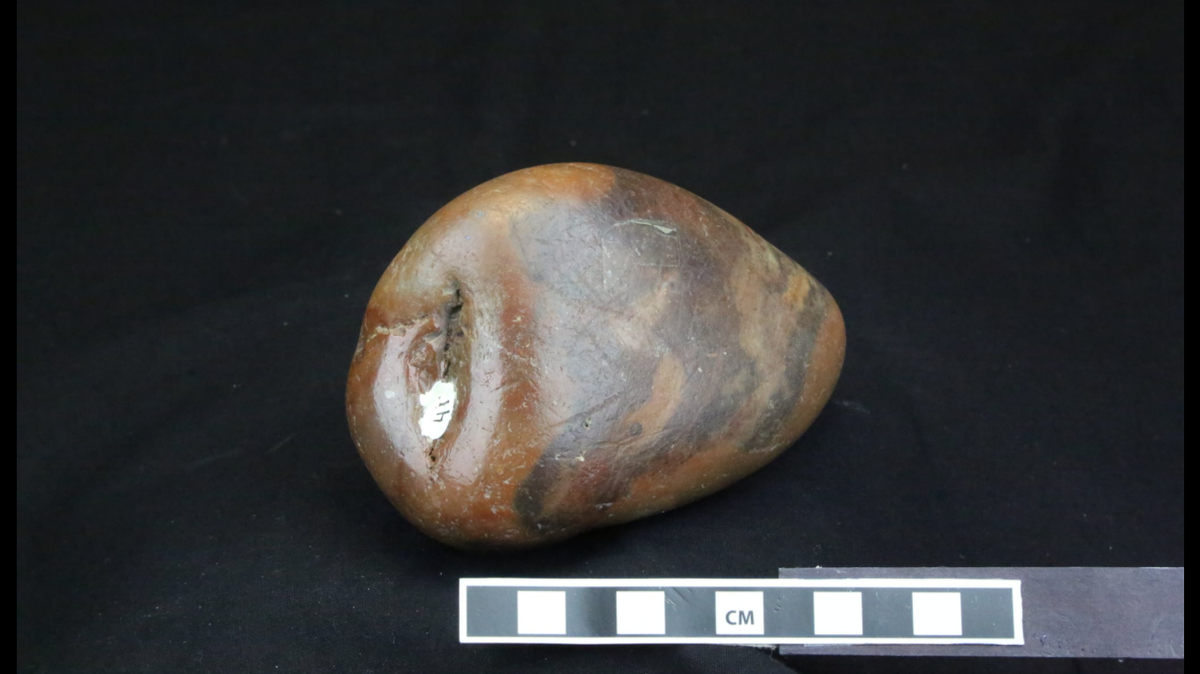
You might want to wash your hands the next time you check out an unusually shiny rock.
Turns out fossilized poop — called coprolites — isn’t the only disgusting thing dinosaurs left behind for modern man to find lying around.
There are also gastroliths, an odd bit of the fossil record that is well disguised by natural beauty.
“Often, we are shown pictures of shiny rocks and asked if they are gastroliths. But what is a gastrolith?” Dinosaur National Monument in Utah posted on Facebook.
“These are stomach stones or gizzard stones found in the digestive tract of animals that do not chew their food, like birds,” the park wrote. “Some dinosaurs, like the long-necked sauropods, have been found with these gastroliths in their fossilized remains.”
Park officials brought up the subject to help outdoorsy types figure out the difference between round rocks that are shiny — and shiny round rocks that are gastroliths.
“Are all, or even most, shiny stones found in sediments from the Mesozoic Era gastroliths? The short answer is no,” the park wrote.
“Some of these rocks may have been transported in streams for many years, giving them their shiny, tumbled appearance, and entombing them in units with fossils of dinosaurs. ... A good rule of thumb to follow is, unless it is found within a dinosaur’s remains, or within a real coprolite (fossil poop!), it is likely not a gastrolith. When in doubt, follow your gut.”
Experts at the University of California’s Museum of Paleontology note gastroliths are typically rounded, smooth and polished.
“Smoothness is a result of the chafing between various gizzard stones,” the museum reports.
Dinosaur National Monument — a fossil-rich 210,000-acre park in northwest Utah — preserves both prehistoric fossils and 10,000 years of indigenous history, including petroglyphs and pictographs, according to the National Park Foundation.
Fossil specimens found in the park date back 149 million years, the foundation says, and include “the remains of numerous species of dinosaurs.”
This story was originally published April 1, 2021 at 9:52 AM with the headline "How do shiny rocks get shiny? The answer is disgusting when it comes to dinosaurs."