Most California drivers inhale carcinogens — and the danger is from inside, study says
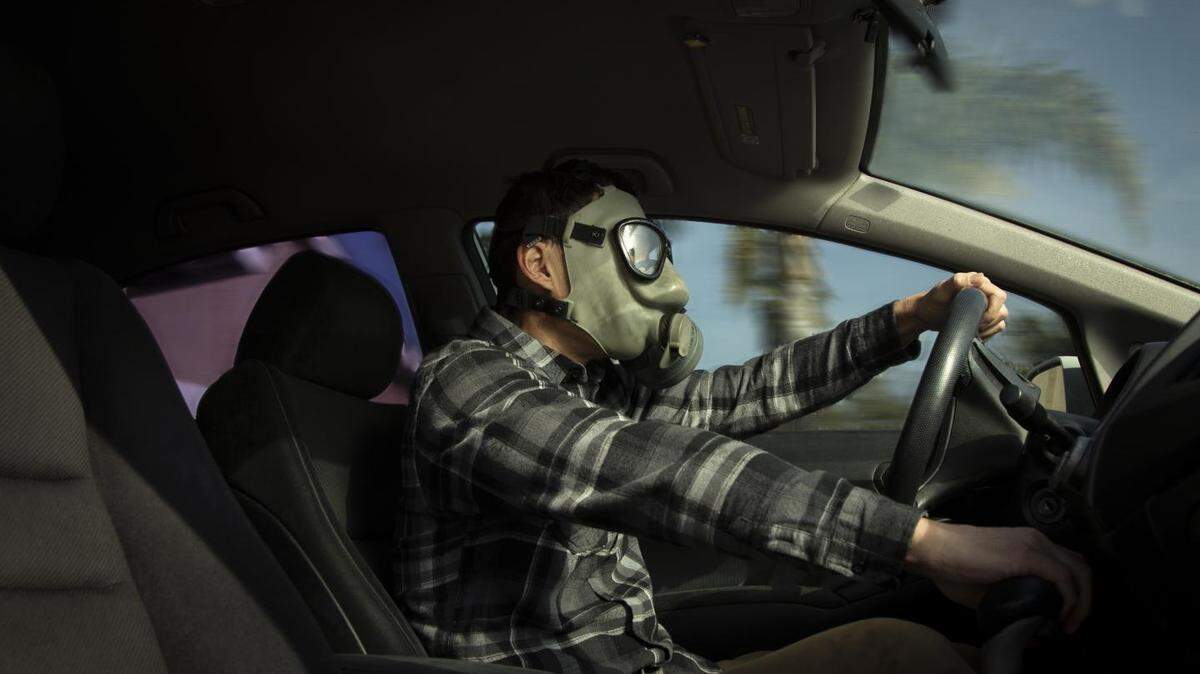
The majority of Californians who regularly travel by car, sometimes for hours a day, are inhaling dangerous levels of carcinogens floating inside their vehicles, according to a new study from the University of California, Riverside.
The researchers found that up to 90% of people who have an average 30-minute commute and live in Los Angeles, San Diego, Orange, Santa Clara and Alameda counties have at least a 10% chance of breathing in benzene and formaldehyde — two dangerous substances embedded in vehicle carpets, paints and fuels — at levels that increase risks of cancer and birth defects.
And while many public spaces have carcinogen exposure thresholds, private areas such as personal cars and home living rooms are “less studied and less regulated,” a university news release said.
“This suggests that exposure to benzene and formaldehyde through interior car air is a pertinent issue, especially in California where a large percentage of the population is commuting by personal vehicles,” the researchers said in the study published Jan. 29 in the journal Environment International.
“As benzene and formaldehyde are on the Prop 65 list due to cancer and reproductive/developmental toxicity concerns, there is a need for more information on the potential association between commute time within vehicles and exposure to both of these chemicals,” they added.
‘Chemicals are very volatile’
The team compiled nearly 30 studies that analyzed air and dust samples from car interiors and calculated how much benzene, formaldehyde, DBP, DEHP and TDCIPP — carcinogens that have all been detected inside vehicles — drivers inhale during commutes of at least 20 minutes per day.
Only benzene and formaldehyde were found in the air of car interiors, while the other three carcinogens were primarily lodged in car dust, likely because of their chemical makeup that favors their absorption into dust particles, furnishing materials and plastics, the researchers said.
“These chemicals are very volatile, moving easily from plastics and textiles to the air that you breathe,” study co-author David Volz, a professor of environmental toxicology at UC Riverside, said in the news release.
Considering all California commuters, 78% of them have a 10% chance of breathing in benzene at levels that increase their risks of developing cancer, while 63% of them have the same probability of inhaling formaldehyde at similarly dangerous levels, the study found.
“Of course, there is a range of exposure that depends on how long you’re in the car, and how much of the compounds your car is emitting,” study lead author Aalekhya Reddam, a graduate student in the UC Riverside Volz laboratory, said in the release.
Commuting times are increasing
But as many Californians know, commute times in the state are rising.
Data from 2019 revealed that workers statewide were averaging about a 30-minute trip each way, the Sacramento Bee reported. Census Bureau data from 2017 showed that more than 1.5 million Californians travel for more than two hours a day, with 3% of the state’s population commuting for more than three hours a day, according to the study.
Past research has also found similar levels of carcinogen exposure from within car interiors. Taxi drivers have found “significant associations” between their job and different forms of cancer such as in the lungs, bladder, esophageal, stomach and rectum.
The researchers said interior temperature, ventilation rate, humidity levels, vehicle age and car upholstery material can influence the concentrations of carcinogens inside vehicles. For example, older cars with more mileage, increased ventilation rates, larger cabins and fabric seats favor less “off-gassing” of these harmful substances.
This story was originally published February 16, 2021 at 1:03 PM with the headline "Most California drivers inhale carcinogens — and the danger is from inside, study says."