Toxin found in crabs ups risk of fatal heart disease in hungry sea otters, study finds
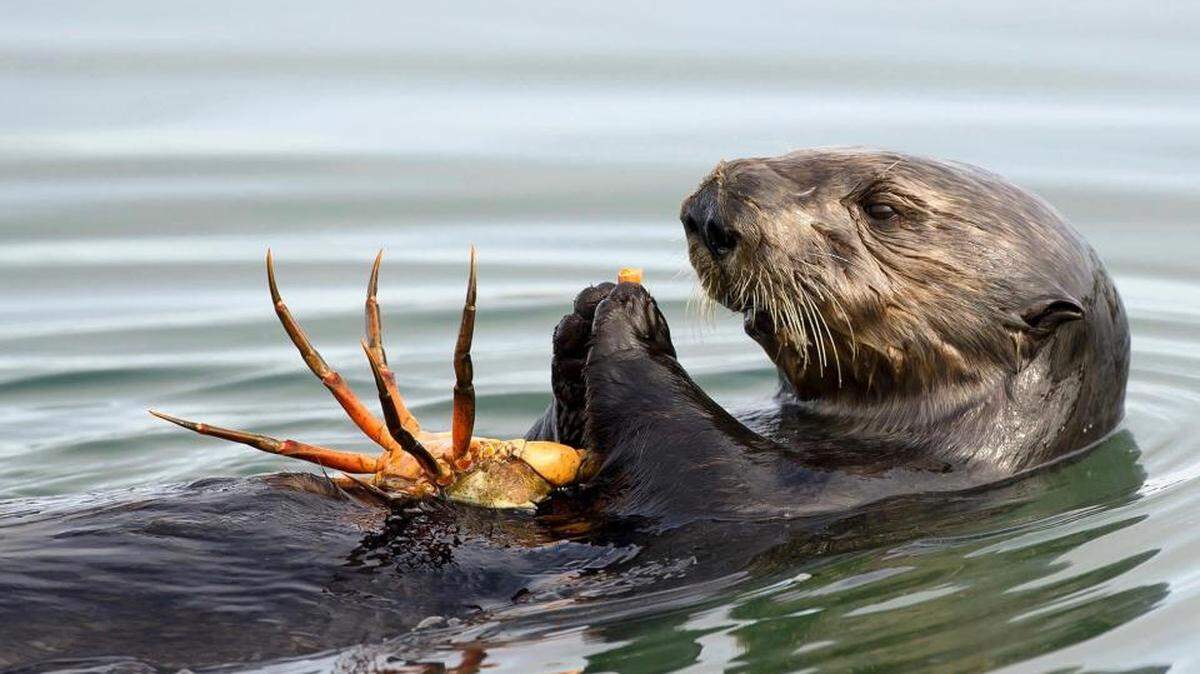
When otters aren’t cuddling with siblings or tangling themselves in kelp to avoid floating out to sea, they are hard at work feasting on meaty crabs and slimy clams — some of their favorite snacks.
These fresh meals, however, are often saturated with domoic acid, a neurotoxin tied to the fatal heart disease cardiomyopathy, which happens to be one of southern sea otters’ biggest killers, and the same toxin that causes amnesic shellfish poisoning in people.
This toxin comes from harmful algal blooms that can occur when waters are unusually warm, among other conditions. Experts predict gradual temperature warming due to global greenhouse gas emissions will make these events more common — increasing domoic acid exposure to vulnerable marine animals.
Yet, much remains unknown about the timeline of heart disease development in sea otters, the full effect of environmental domoic acid exposure on their health and the impact that individual behaviors have on their chances of getting sick.
Now, new research led by the University of California, Davis fills in some of the gaps.
It’s the first study to analyze long-term environmental exposure to domoic acid in sea otters over the course of 16 years, according to the researchers who published their study January in the journal Harmful Algae.
“Improving our understanding of the effects of domoic acid on the health and population recovery of southern sea otters is extremely important” study co-author Melissa Miller, a veterinarian and pathologist with the California Department of Fish and Wildlife, said in a news release. “Given their unique biology and specialized diet, sea otters are extremely vulnerable to toxic algal blooms, which are likely to worsen with climate change. So the results of this work have far-reaching implications.”
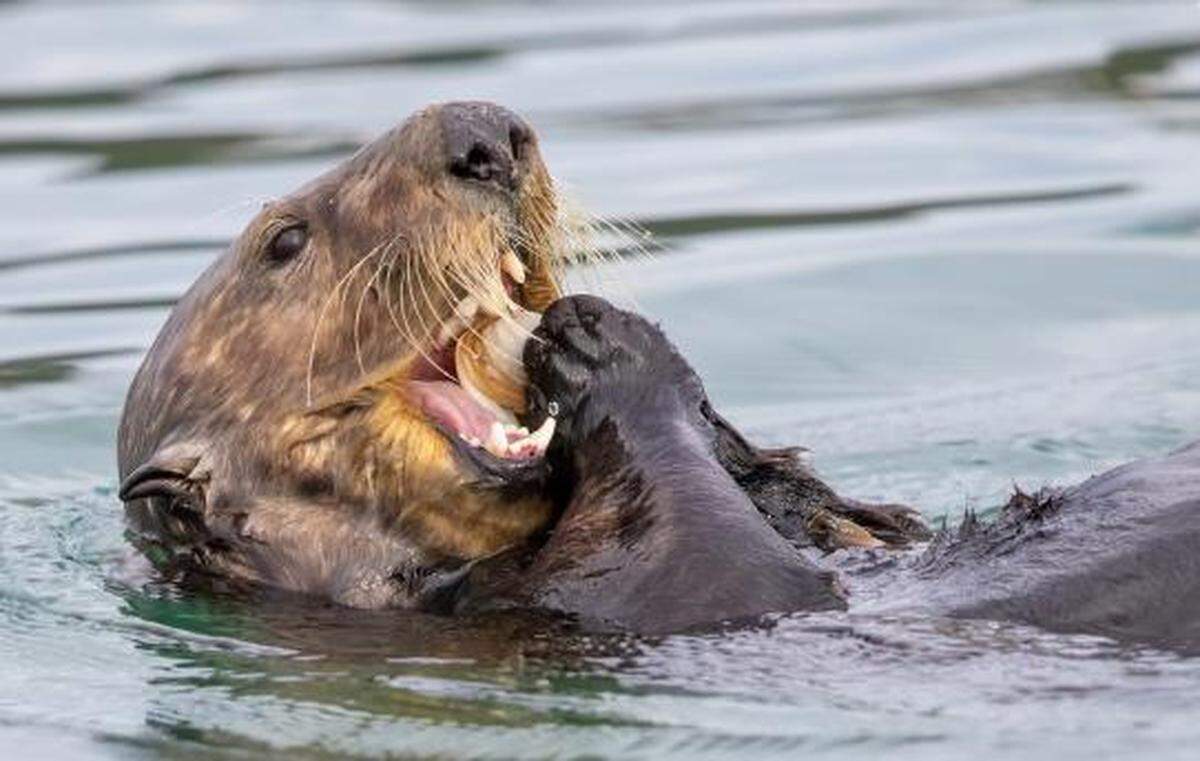
Between 2001 and 2017, the team tagged and studied wild southern sea otters — a federally-listed threatened species — living around Monterey Bay down to the Santa Barbara Channel off California’s coast. Researchers observed them four to seven times per week.
Eventually, they performed autopsies on 48 otters that had died. Of those animals, 34 died of heart disease while the remaining 14 died from other causes, the study said.
Using observational data, historic datasets on algal blooms and domoic acid levels — as well as computer models — the researchers discovered sea otters had a 1.7 times higher risk of dying from heart disease if they were exposed to high levels of the toxin within the last year compared to mammals with low exposure.
That risk jumped to 2.5 times for those that ate heavy amounts of crab, the team found, and up to 8.5 times for older otters.
“Infection with Toxoplasma gondii, a parasite associated with wild and feral cat feces on land that makes its way to the ocean, also increased the risk of fatal heart disease 2.4-fold,” the release said.
Most surprisingly, young sea otters about 4 years old were found to face a “substantially increased” hazard (2.3 times greater risk) of dying from heart disease when exposed to high domoic acid levels than similarly aged otters with lower toxin exposure.
It’s a risk that also exists, but is not as stark, in older otters.
“That’s worrisome for the long-term population recovery of southern sea otters,” study lead author Megan Moriarty, a wildlife veterinarian who conducted the research for her Ph.D. in epidemiology at UC Davis, said in the release. “This study emphasizes that domoic acid is a threat that isn’t going away. It’s a food web toxin and is pretty pervasive.”
The threat appears to be long lasting because ocean temperatures are on the rise — meaning algal blooms are, too, the study said. Global ocean temperatures in 2020 were the third highest on record, and all five of the oceans’ warmest years on record occurred in the last five years.
President Joe Biden has promised to take executive actions against climate change and signed an executive order on his first day in office to have the U.S. rejoin the Paris climate agreement — a legally binding international treaty on climate change — after former President Donald Trump withdrew the nation from the agreement.
“Its goal is to limit global warming to well below 2, preferably to 1.5 degrees Celsius, compared to pre-industrial levels,” according to the United Nations. More than 90% of excess heat in Earth’s system is absorbed by the ocean.
This story was originally published January 27, 2021 at 9:12 AM with the headline "Toxin found in crabs ups risk of fatal heart disease in hungry sea otters, study finds."