Do Trump’s social media bans violate the First Amendment? What legal experts say
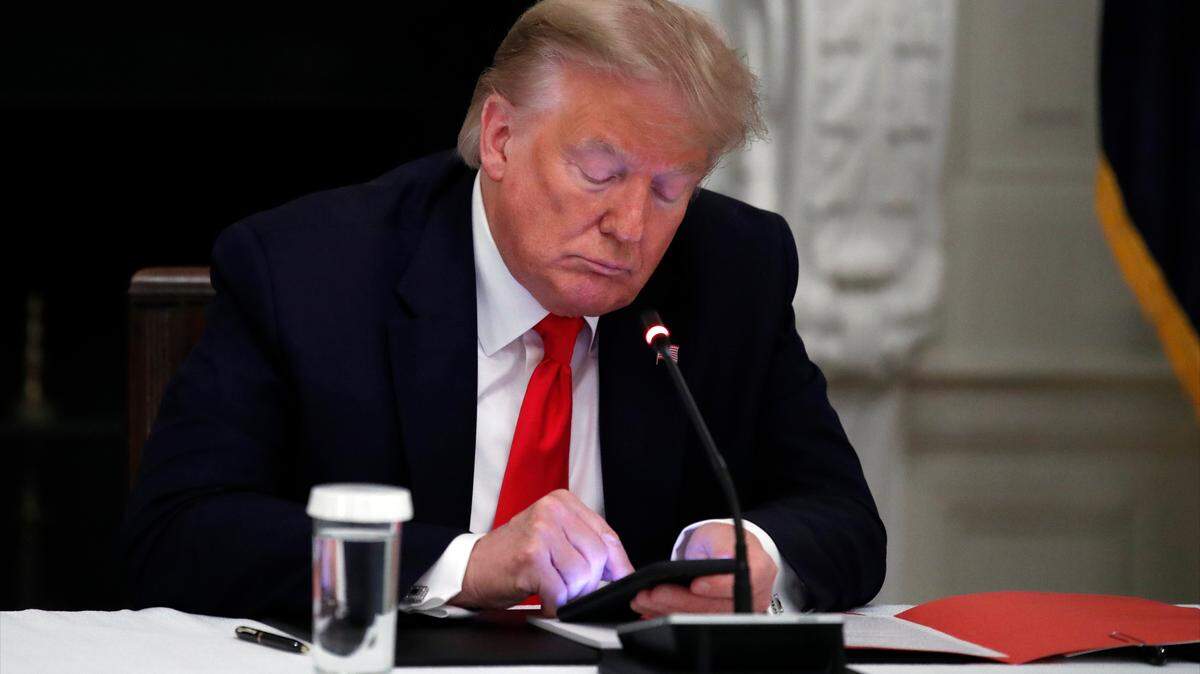
President Donald Trump was banned from Twitter and Facebook last week, raising questions about free speech.
Legal experts have told news outlets the social media companies didn’t violate the president’s Constitutional rights when they suspended his accounts in the wake of a violent siege at the U.S. Capitol.
Free speech is addressed in the First Amendment, which says: “Congress shall make no law respecting an establishment of religion, or prohibiting the free exercise thereof; or abridging the freedom of speech, or of the press; or the right of the people peaceably to assemble, and to petition the Government for a redress of grievances.”
What can social media companies do?
While the First Amendment prevents the government from violating free speech, Twitter and other social media outlets are private companies.
“The First Amendment is a constraint on the power of government,” Daphne Keller, a legal expert and leader of a platform regulation program at the Cyber Policy Center at Stanford University in California, told Business Insider. “It doesn’t apply to Twitter.”
In Virginia, an expert in constitutional law echoed those thoughts.
“In joining or using the platform, you agree to certain conditions,” said John Aughenbaugh of Virginia Commonwealth University, according to WWBT. “And if you don’t, the platform can ban you.”
One First Amendment expert says the situation isn’t so straightforward due to a past standard from the U.S. Supreme Court, The Philadelphia Inquirer reported. When compared to other rights in the Constitution, the Court has been more “fluid” about what “state action” means in free speech cases, according to Laura Little, a professor at Temple University.
“Is Twitter violating the First Amendment? Technically, Twitter is not a state actor. Arguably, no,” Little said, according to the newspaper. “But, because that requirement of the state actor has been more fluid in this context, it’s not so clear.”
What led to the bans?
In their decisions to block Trump, social media outlets Twitter, Facebook and Instagram referred to rules against inciting violence. YouTube took down Trump’s post-riot video to supporters, and Snapchat issued an indefinite ban, McClatchy News reported.
Trump until recently refused to accept defeat in the 2020 election. Twitter had flagged his false posts about widespread voting fraud.
On Wednesday, Trump was speaking to a group of supporters in Washington, D.C., when he urged them to walk toward the U.S. Capitol. Inside, Congress was meeting to certify Electoral College votes for President-elect Joe Biden.
Members of Congress were rushed to safety as a mob stormed the Capitol building, leaving behind damage. At least five deaths were tied to the chaotic day.
This story was originally published January 11, 2021 at 9:15 AM with the headline "Do Trump’s social media bans violate the First Amendment? What legal experts say."