
Search for rare creature has experts lying nose-down in Utah’s icy creeks, photos show
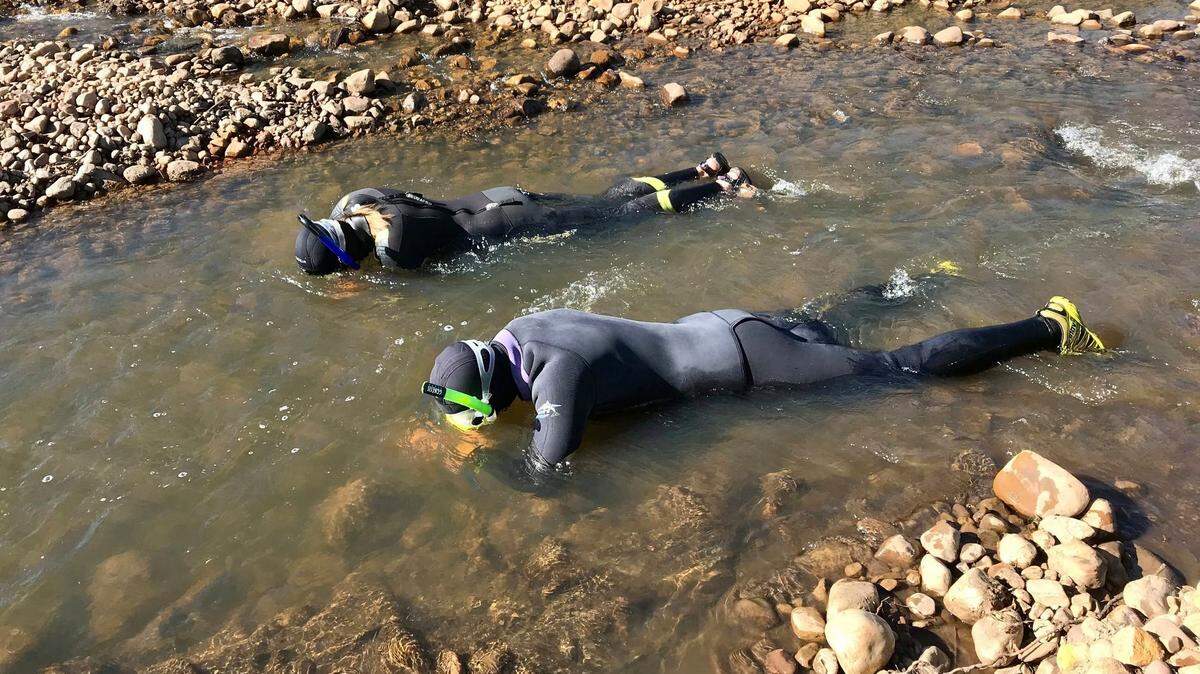
The search for a mysterious creature once considered extinct in Utah is putting state wildlife experts in an awkward position.
Photos shared by the Utah Division of Wildlife Resources show the only way to find the elusive western pearlshell is to lie nose down in a few inches of water.
The pearlshell is a freshwater mussel that can live a century without ever being noticed, experts say.
“Finding Western pearlshells isn’t easy. They look just like the rocks they hide among,” the wildlife division wrote in a Dec. 8 Facebook post. “Donning wet suits and snorkeling gear — and belly crawling through ice cold water — is the best way to find them!”
The photos have inspired jokes on social media, with some asking why anyone would go through that much trouble to find a mussel. Others have pointed out the exercise resembles snorkeling for people who can’t swim.
“How do I get this job?” one person asked.
Western pearlshells live 70 years on average but can reach 100, according to the U.S. Fish and Wildlife Service. They grow to about 5 inches in length and, yes, they do look exactly like rocks.
The species was believed extinct in Utah as recently as 2010, the state says.
“DWR biologists thought differently, though, and started surveying streams in the state. Last summer, they surveyed 17 different 100-meter stretches in northern Utah. A total of 487 live pearlshells were found,” according to the Facebook post.
Western pearlshells are on the Utah Sensitive Species list but are not considered a federally endangered species.
“Once a species has been federally listed, all kinds of land use and other types of restrictions follow,” the division says. “We’re working hard to make sure that doesn’t happen.”
Western pearlshells are considered an asset to creeks and streams because they filter the water, experts say.
This story was originally published December 10, 2020 at 2:24 PM with the headline "Search for rare creature has experts lying nose-down in Utah’s icy creeks, photos show."