
Hungry predators leave Alaska river littered with carnage in record salmon season
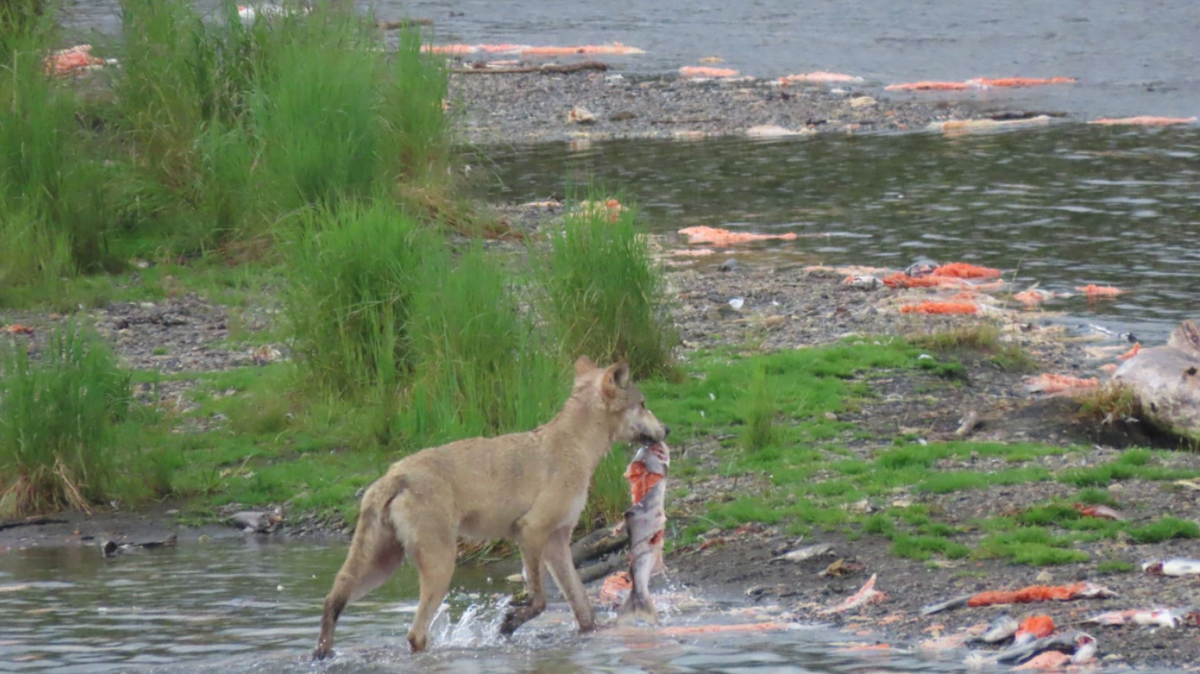
The idea of 800,000 salmon crammed into 1.5 miles of Alaska river sounds like an angler’s dream, but a photo shared by the National Park Service shows something akin to a nightmare.
Finicky wolves and bears are eating only the tastiest parts of the abundant fish, leaving the Brooks River in Katmai National Park & Preserve awash with clumps of pink meat.
The photo, posted on Facebook, shows what appears to be a young wolf dragging a large salmon to shore, while ignoring the plentiful piles of raw meat floating in every direction. Salmon meat has even been found dangling from trees, due to birds of prey joining in on the fish frenzy, the park said.
“The carcasses along the river bank show the high fat content parts — skin, brain and eggs in particular — were devoured, while a lot of the meat we would traditionally eat ourselves are left behind,” Katmai National Park officials wrote on Facebook.
“Bears and other animals being that picky happens when there is food aplenty for them,” officials said.
Finding shredded salmon on river banks is an annual affair in Alaska. But this has been “a record breaking” year for salmon in Katmai, the National Park Service says. Experts haven’t offered an explanation for the fishy phenomenon, but a video shared on Facebook shows the salmon popping out of the water as chubby bears wait to eat them.
Some species of salmon in the park grow up to 2.5 feet in length and can weigh up to 15 pounds, according to NOAA Fisheries. Still, bears patrolling the Brooks River have been known to eat hundreds of the fish a day, the NPS says. The salmon spawn from the river’s adjacent lakes “from mid August to early November,” experts say.
“Tens of thousands of fish can enter the Brooks River over a matter of hours or days, overwhelming the predators trying to eat them,” according to the NPS.
“Like a school of sardines chased by whales, there are simply too many salmon for all the bears to eat them. Running upstream in large numbers lowers the chance that any one salmon will get eaten before it spawns. These fish are playing the odds to their advantage.”
This story was originally published October 26, 2020 at 7:44 AM with the headline "Hungry predators leave Alaska river littered with carnage in record salmon season."