New pancreatic cancer treatment may add years to the lives of those facing death
On Sept. 10, 2019, Maria de Armas’ life changed forever.
She had been dealing with digestive problems for a while, but they were getting worse. It wasn’t until her daughter noticed a pamphlet sitting on a doctors’ office waiting room table that 74-year-old de Armas asked for a more thorough examination.
One CT scan later, on her 53rd wedding anniversary, de Armas was diagnosed with stage 3 pancreatic cancer. According to the statistics, she had less than a year to live.
“I remember that day when I was walking out of the office to the parking lot, I thought, ‘I’m a believer in God. He will not let me have this kind of announcement on my anniversary if he doesn’t have something better for me’,” de Armas told McClatchy News.
But there was hope. A clinical trial designed for patients with inoperable pancreatic tumors that have yet to spread outside the organ was in the works, and de Armas was a perfect match.
Today she’s living with her husband in Miami - and feeling better than she has since her diagnosis. Now in phase 3, the TIGeR-PaC clinical trial is occurring in about 30 centers across Europe and the U.S., including Florida, California, Pennsylvania, Oregon, Oklahoma, Iowa and the Carolinas. About 300 patients are expected to enroll, with 93 currently signed up.
Unlike other trials on pancreatic cancer, this one doesn’t involve new drugs, but rather a new method of delivery.
What is RenovoCath?
Coined RenovoCath — Latin for revive, restore and repair — the new device is a sleek catheter that’s inserted through an artery in the groin, into the pancreas and through a tumor. Then, two silicone balloons on either end of the device inflate, trapping the sponge-like mass and delivering a high-dose of an existing chemotherapy called gemcitabine directly into it.
It’s a technique unseen in any other cancer treatment, according to Dr. Ripal Gandhi, an interventional radiologist at the Miami Cardiac and Vascular Institute and an interventional oncologist at the Miami Cancer Institute, where he treated de Armas.
If tumors are inoperable, standard treatment involves highly toxic radiation and chemotherapy known to make patients nauseous and weak. Such treatment prolongs life by several months, but it maintains, not improves, the quality of it. That’s why experts say clinical trials are a pancreatic cancer patient’s best treatment option.
The new technique minimizes drug leakage into the rest of the body, which means little to no side effects.
“The patients really don’t feel anything. It’s quite remarkable,” Gandhi told McClatchy News. “It’s been so well tolerated that patients are asking if they can get more of this because they’re afraid to return to regular chemotherapy.
“Our goal is to increase lifespan and prolong progression of disease, but to do it while minimizing toxicity,” Gandhi said.
The trial requires participants to undergo two months of traditional chemotherapy and radiation before being randomized into two groups; one that continues to receive standard care and the other that receives the new treatment over four months. Doctors follow their health until death.
McClatchy News reached out to several cancer centers for comment on the new technique, but either received no response or was told it’s too early to know how effective the treatment is given clinical trials are still underway.
Early trial results are “unheard of”
Phase 1 and Phase 2 trials, which began in 2015, show the new technique nearly doubled the median survival rate of the traditional treatment from about 14 months to 28 months. The results were published in the Journal of Pancreatic Cancer in 2017.
But before the treatment can become the new standard of care, these results must be replicated in Phase 3 trials, Gandhi said.
“Improvement in survival in a deadly cancer like this of a couple months is really meaningful. To see survival nearly double is unheard of,” Gandhi said. “You rarely see results like this.”
When asked if this new device can revolutionize pancreatic cancer treatment, Gandhi said, “100%. This is only the beginning. If this works, why not apply the same technique to not only pancreatic cancer, but other cancers such as lung or potentially even brain cancer.”
.jpg "RenovoCath device at Miami Cancer Institute (1).jpg")
Dr. Paula Novelli, an interventional radiologist at the University of Pittsburgh Medical Center, has performed the procedure 64 times on eight patients, more than any other physician in the country. She decided to join the trial after learning about the earlier studies’ results.
Novelli told McClatchy News that patients can be in and out of the room in about an hour and a half.
“We’ve had patients telling us that they’re golfing the next day or getting on a plane for holiday celebrations, so they’re really not limited,” she said. “Patients prefer this new technique because of the lack of side effects.”
For Mary Jane Farmanian, the treatment meant more than just a golfing trip. When she was diagnosed with stage 4 pancreatic cancer, Farmanian was told she’d die within months.
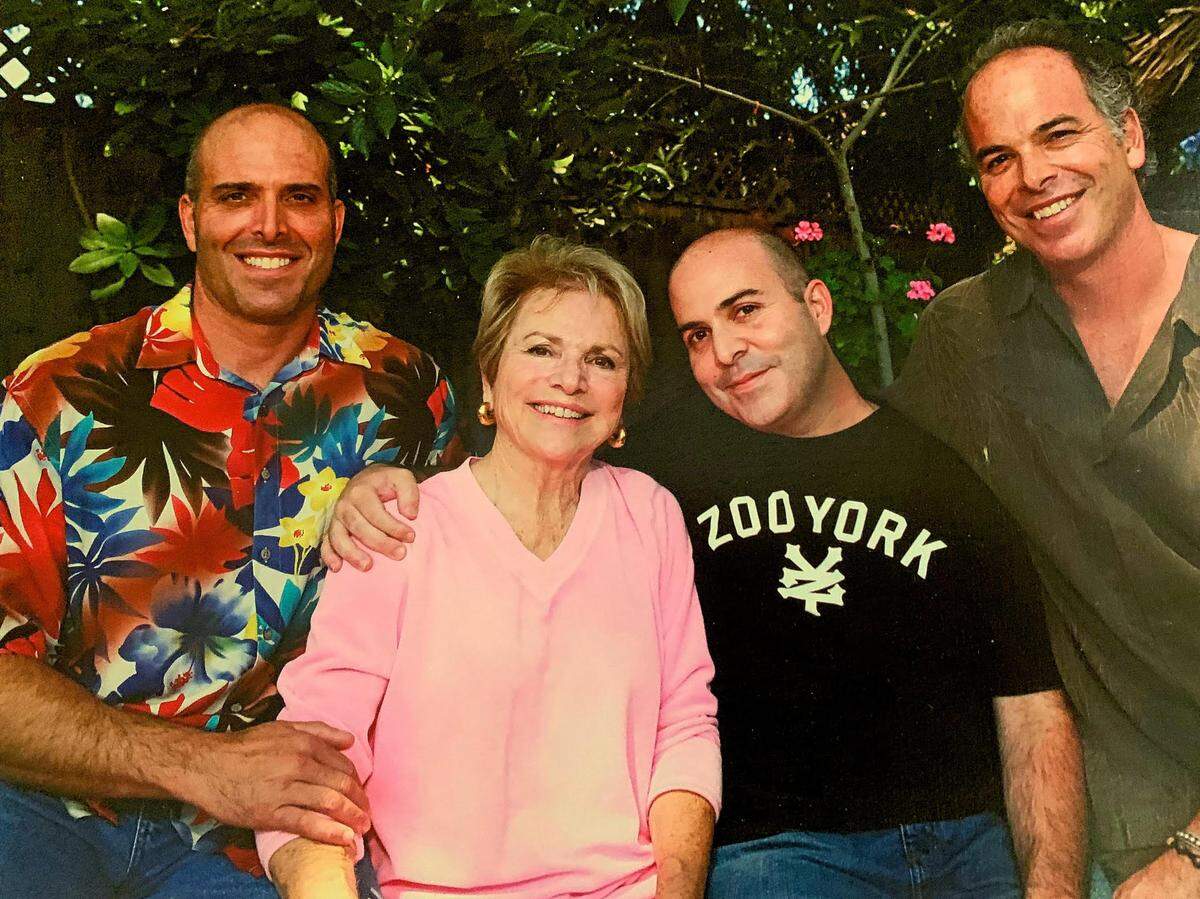
“I was shattered,” Farmanian’s husband of 58 years and retired rocket scientist, Arman Farmanian, 91, of Los Altos, California, told McClatchy News. “But the doctor said there was hope.”
Mary Jane lived for three more years before dying at 80 years old in 2017 from an infection in her intestines. She was the first patient to receive treatment with the RenovoCath in 2015.
“When you’ve got a death sentence, you’ll take anything that’s available,” Arman said. “There was no question, [my wife] just said, ‘yes.’ She was a pioneer.”
Pancreatic cancer treatment is complicated
About 57,600 people are expected to be diagnosed with pancreatic cancer this year, with 47,000 of them expected to die from the disease, according to the American Cancer Society. While clinical trials are considered risky by many, for patients with pancreatic cancer, it’s their only chance at life.
The disease is expected to become the second-leading cause of cancer-related deaths this year. It’s the same one that took the life of U.S. Supreme Court Justice Ruth Bader Ginsburg on Sept. 18 after a grueling 11-year battle.
The disease is so deadly partly because routine screening for pancreatic cancer doesn’t exist like it does for breast or colon cancer. Therefore, most patients are diagnosed when the tumor is no longer operable and has spread beyond the pancreas. Symptoms usually appear only once the tumor has started pushing on other organs like the gallbladder or stomach, causing abdominal pain, weight loss, nausea and vomiting.
Compared to other types of cancer treatment, those for the pancreas have seen the least progress over the last 20 years, despite the development of new drugs, experts say. That’s because blood flow to the organ is weak.
The pear-shaped pancreas, which sits behind the stomach, doesn’t have blood vessels dedicated directly to it. So, when chemotherapy is administered via the arm, the drugs have a hard time reaching the tumor, Dr. Ramtin Agah, co-creator of RenovoCath and an interventional cardiologist at El Camino Health in Mountain View, California, told McClatchy News.
Fewer than 1% of pancreatic cancer patients undergoing traditional chemotherapy and radiation would be cured of their cancer, Agah said. Without a surgical removal, the tumor is a death sentence.
“Because not a lot of people get cured, no one wants to talk about it,” Agah said. “It’s something they just want to forget about and move on because there are no good stories that come out of this disease.”
An interim analysis on phase 3 results will be conducted in June 2022, Agah said. In the meantime, patients will continue to be enrolled in the trial.
As for de Armas, her trial ended after her fourth treatment session (there are eight)when an artery in her abdomen became blocked, likely because of the tumor itself which was surrounding the blood vessel, Gandhi said.
“I’m grateful that I have come this far. Faith makes a big difference because when you have hope, you are confident that everything will happen for the best,” de Armas said. “This, too, shall pass. Nothing lasts forever, so I’m going to be enjoying my life until my time comes.”
Centers in the U.S. offering the trial
California:
Sutter Medical Center in Sacramento
VA Loma Linda Healthcare System
Florida:
Miami Cancer Institute
Sarasota Memorial Hospital in Sarasota
Moffitt Cancer Center in Tampa
ASCLEPES Research Center at Oak Hill Hospital in Weeki Wachee
South Carolina:
Greenville Health System
MUSC Health Hollings Cancer Center in Charleston
North Carolina:
East Carolina Heart Institute at Vidant Medical Center in Greenville
Atrium Health’s Carolinas Medical Center in Charlotte
Wake Forest Baptist Health in Winston-Salem
New York:
Albany Stratton VA Medical Center
Pennsylvania:
University of Pittsburgh Medical Center
Georgia:
Piedmont Columbus Regional Hospital in Columbus
Oregon:
Knight Cancer Institute in Portland
Louisiana:
Ochsner LSU Health Shreveport
Maryland:
MedStar Franklin Square Medical Center in Rossville
Iowa:
Holden Comprehensive Cancer Center in Iowa City
New Jersey:
MD Anderson Cancer Center at Cooper in Camden
Oklahoma:
Stephenson Cancer Center in Oklahoma City
New Hampshire:
Dartmouth-Hitchcock Medical Center/Norris Cotton Cancer Center in Lebanon
This story was originally published September 29, 2020 at 8:53 AM with the headline "New pancreatic cancer treatment may add years to the lives of those facing death."