
Jack Raskopf, WWII vet and ‘a force’ in education and media in North Texas, died Monday
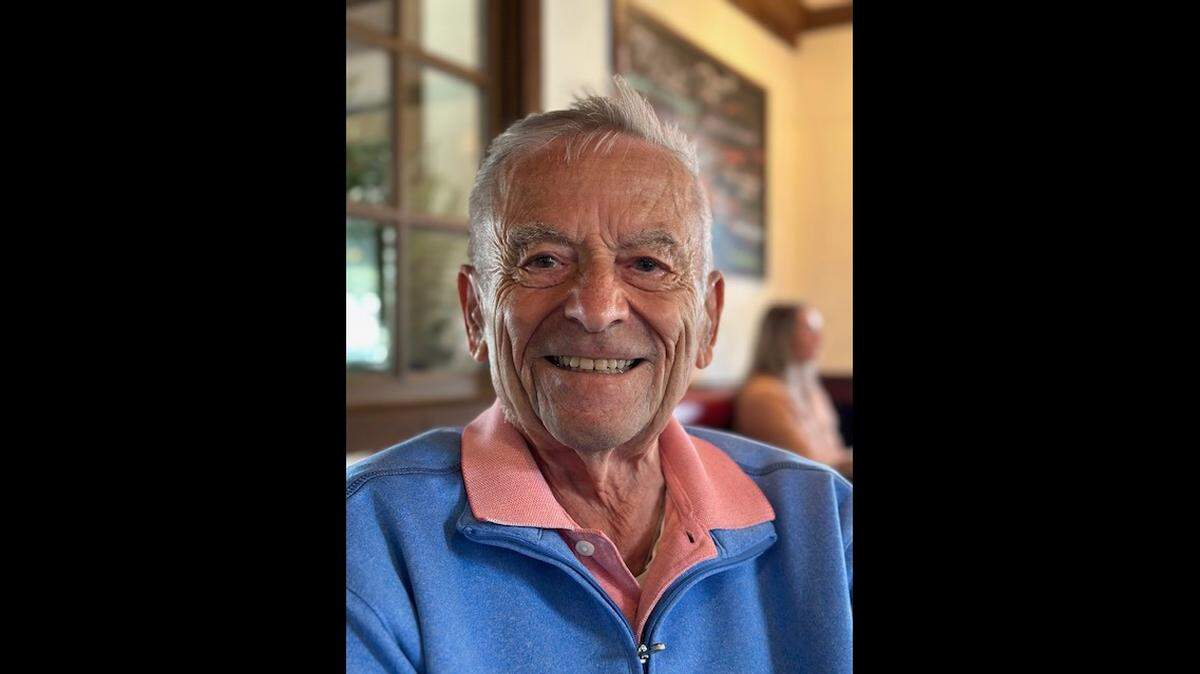
Jack Raskopf, a popular former professor at TCU credited with building the university’s advertising and marketing department and an important figure in local journalism, died Monday.
He was 98.
Raskopf is being remembered for his constant humor, depth of knowledge, enjoyment of writing and his love for horses.
A World War II veteran, Raskopf would tell stories of his time in the Navy, including accidentally being deployed to Utah Beach in Normandy, France, during D-Day and working as a radioman in mine sweeping operations in the Atlantic naval theater. He played a role in establishing the Dallas-Fort Worth National Cemetery for veterans, donated heavily to charities and had a passion for education, especially for his children and grandchildren.
Raskopf had several careers after leaving the military. He worked with local politicians like J. Erik Jonsson, the Dallas mayor from 1964 to 1971, taught at TCU and became a giant in the local advertising industry. He wrote freelance articles for magazines like Western Horseman and in 1994 wrote a special piece for the Star-Telegram about the 50th anniversary of the D-Day invasion.
Early life
Raskopf was born July 3, 1926, in Paterson, New Jersey, to Frederick Raskopf, a New Jersey state vehicle inspector who died when Jack Raskopf was 13, according to an obituary written by his family. He was a devout Catholic, in part due to his education at a Catholic elementary school.
He recalled several times how he came home from school one day to find his family, in their three-story home in New Jersey, gathered around a radio, listening to reports of the Japanese attack on Pearl Harbor, Karen Raskopf said. He told his daughter his family pulled out maps, trying to find out where Pearl Harbor was.
As soon as he turned 17, Raskopf enlisted in the Navy.
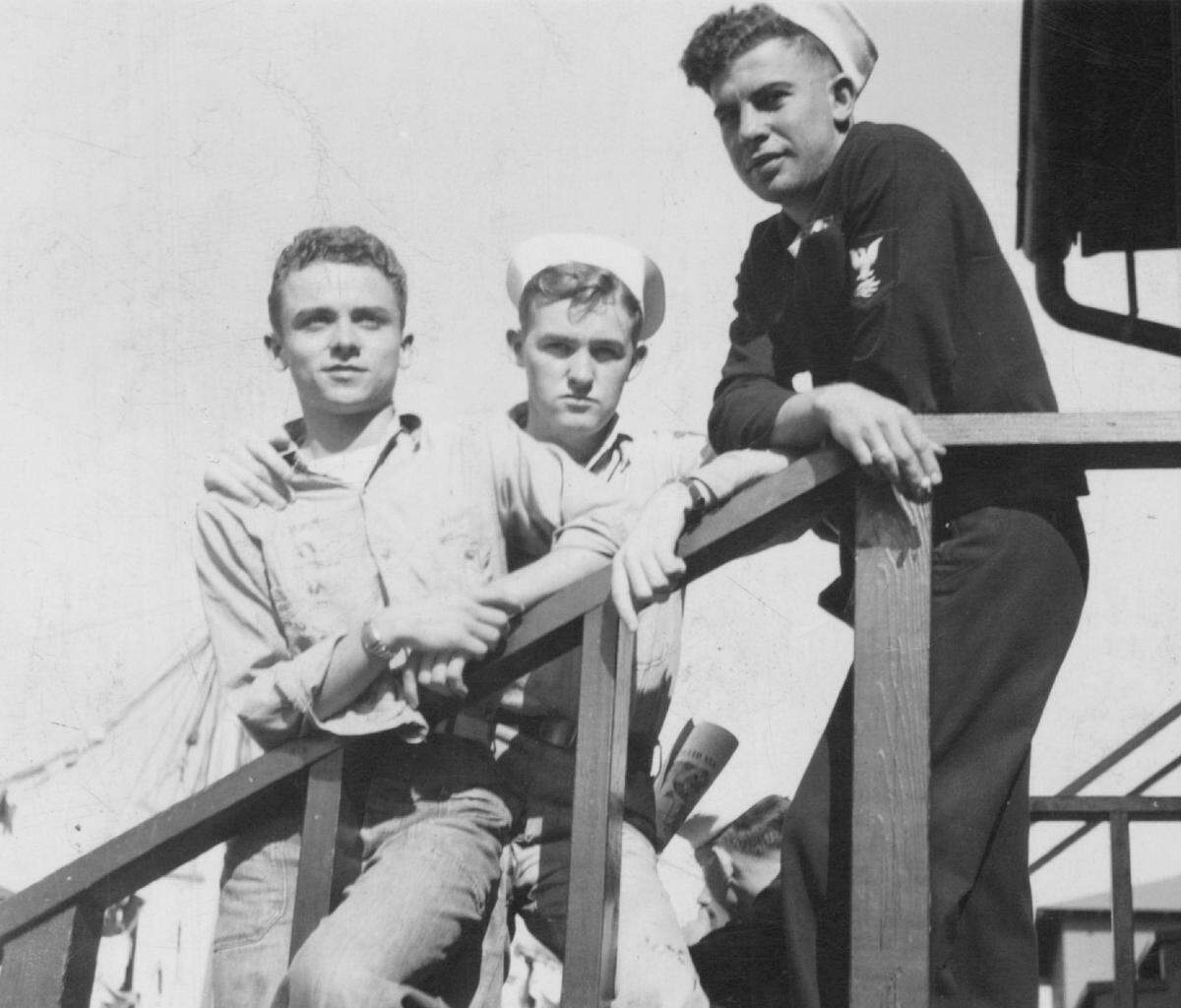
He first served in a destroyer escort group as a radio operator, but either due to a mix-up in orders or because he got on the wrong boat, ended up landing on Utah Beach. It was a story he retold several times, often with a pinch of self-deprecating humor, to his family.
His daughter Karen Raskopf told the Star-Telegram her father would recall how he was on a boat and saying over and over that he wasn’t supposed to be there. One older serviceman eventually put his hand on Jack Raskopf’s shoulder and looked him in the eye.
“Son, that’s how we all feel,” the man told him.
He was told to find a foxhole when they hit the beach and stay there. He did, and it was in one of those foxholes that he turned 18.
Later in his naval career, Raskopf took part in mine sweeping operations in the Atlantic Ocean, English Channel and North Sea, according to the family. He was expected to join the naval war efforts against the Japanese Imperial Navy, even being told he should visit a JAG officer to “get his affairs in order,” but the reassignment was canceled because the war ended.
After the war
Raskopf spent some time after the war in the Navy’s public affairs office, eventually retiring as a captain.
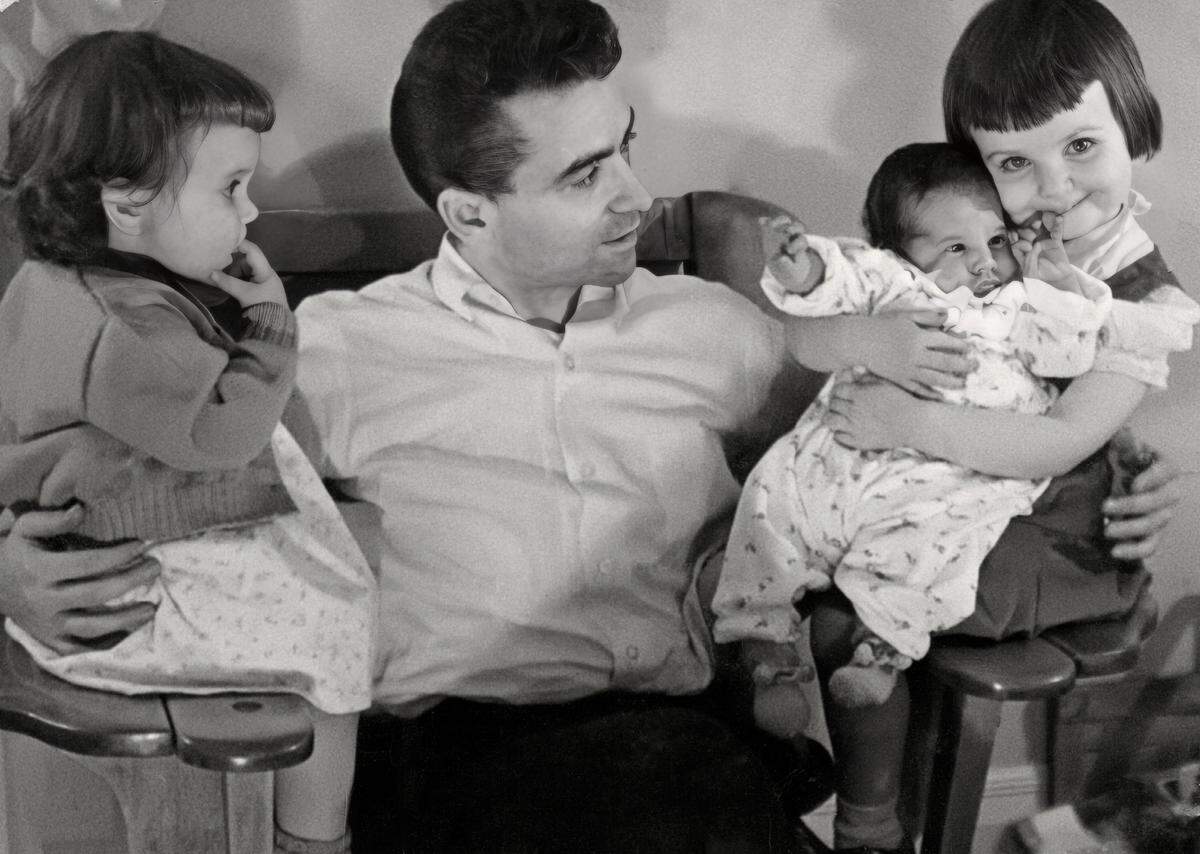
After he returned to the United States, Raskopf met his first wife, Ann O’Connor Raskopf. They had three children and were married for 23 years. In that time, Raskopf got a degree in English and started a career in advertising and marketing. As he was doing that, he wrote freelance articles about horses, marketing and World War II for publications across the country.
He also earned a master’s degree in advertising and public relations at the University of Iowa and a master’s and PhD in English literature at the University of Dallas.
Karen said he was such a prominent writer that on Tuesday she got a message on Facebook from someone saying she would pick up copies of Western Horseman just to read his columns.
Growing up in the 1920s and ‘30s, Raskopf knew how to stretch a buck, his daughter said.
When at one point the family had a 5-acre ranch in Rowlett, he went to Sears and bought a used riding lawn mower. When he brought it home, he told his children it would be their job to mow the property, but when they tried to use it they found it was broken and would only go in reverse.
Raskopf’s solution wasn’t to get the mower repaired, but rather to buy a rear-view mirror and duct tape it to the mower so he and his children could see where they were going while mowing backwards.
As part of his love for horses, Raskopf at one point fenced off the property and set up obstacles, taking his horses out and riding English, jumping them over obstacles. Karen said that led to neighbors stopping along the road a few times, trying to figure out what this man was doing jumping his horse over barriers in 1960s rural Texas.
Daughter Vaune Raskopf said her father got plenty of odd looks from neighbors, but eventually the things the Texans around him found weird became the start of friendships. His attire when riding and choice of horse were odd to them.
“Here came Dad with his riding boots and saddle and fancy reins, and everybody thought, ‘What are you doing?’ But everybody liked him,” Vaune said.
Raskopf would go for a ride like that regularly. It wasn’t uncommon to find neighbors stopped on the road to watch as his horse, a Tennessee Walker named Momma, would gallop around and jump over obstacles with Raskopf riding on a saddle Vaune said many probably found too fancy.
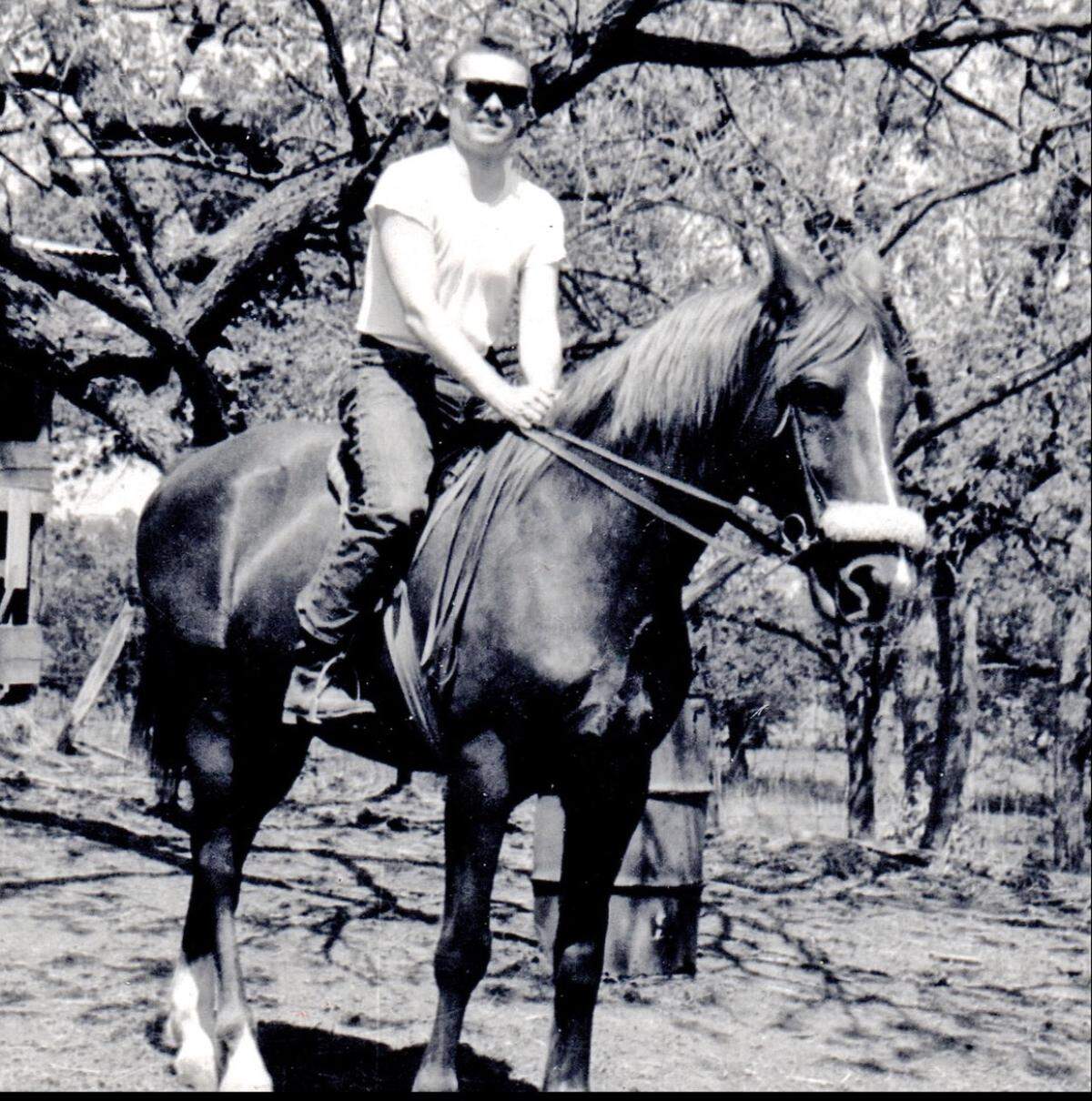
Vaune’s father taught her to ride, and she still does to this day. He continued riding until he couldn’t anymore, and even then he would take out his horse and meander around the barn with her. That horse was a gift from his wife, Rocky Raskopf. She bought it for him after his horse Momma died. It wasn’t a horse fit for riding English, but that didn’t matter to him. He couldn’t straddle the horse, which he named Momma Too, so he’d just get the reins on her and go for a stroll.
Vaune remembers when her father decided to build a barn and decided the best thing to do would be to read up on how. He bought the supplies and outlined the barn’s plan with string.
Neighbors would stop and gawk at the “Yankee” trying to build a barn on his TW Ranch (TW standing for “teenie weenie”), Vaune said, but after one neighbor stopped and offered to help, things shifted. That offer from one neighbor to lend a hand led to almost everyone in the area doing the same. It turned into a barn raising.
His support of the military never faded after Raskopf retired from the Navy, Karen said. He was thrilled when Vaune and his son, John Raskopf, both joined the Navy. He tried to convince Karen to join the Navy reserves.
“He said it would make a great family photo with all of us in uniform,” Karen said, laughing as she remembered the conversation. “I told him I wasn’t going to join the military just so we could get a cool family photo.”
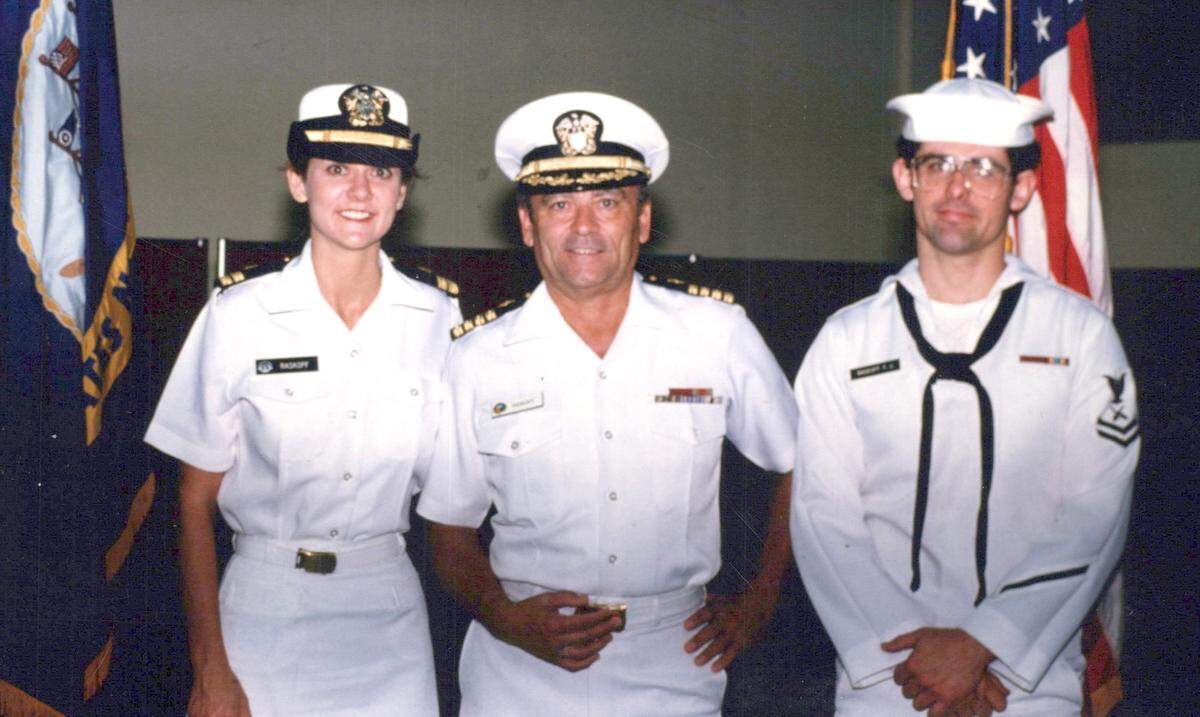
He would often go to ceremonies and recount stories of World War II and played a big role in establishing Dallas-Fort Worth National Cemetery, where veterans in North Texas are buried.
Raskopf’s son is buried there.
Legacy at TCU
While building a career in public relations and advertising, Raskopf taught students at TCU. He retired on three occasions, the first two times accepting offers to return to the classroom and only taking a permanent step away from teaching when he was 80 and found he had trouble keeping up with advancing technology.
One of those retirements was brief, ending when he was asked to return to TCU to help build The Real World, an advertising and marketing agency that works with nonprofits and gives students studying those subjects opportunities for practical experience, according to TCU.
Raskopf was known as an effective professor loved by his students, and even there he was a character.
Karen remembers one time when her father couldn’t get his car started in the parking lot. He somehow made his way home, got another car there and drove it to the one that was broken down. He used the second car to jump off the first, then drove each one two blocks at a time to get them back home, having to explain what he was up to when concerned friends and colleagues saw him and stopped to see if he was OK.
‘He was a force’
Raskopf may have practiced penny pinching in his personal life, but that didn’t stop him from donating generously to local charities, Karen said. He gave money to Catholic schools and helped raise money from other donors, believing that costs shouldn’t prohibit a child from getting a Catholic education.
“While he was very generous giving to charities, which he was, he didn’t spend money on himself,” Karen said. “He was notoriously tight with a buck.”
He worked hard advocating to keep Carswell Air Force Base (now Naval Air Station Joint Reserve Base Fort Worth) open and helped politicians and judges get elected to local offices.
“He was a force,” Karen said.
Raskopf was passionate about supporting local organizations that promoted education. While on the local Society of Professional Journalists Board of Directors, Raskopf would arrange learning opportunities and career fairs for students, often hosting them at TCU.
Eddye Gallagher, a longtime leader in the organization, said Raskopf was the kind of person she would look for at events. When he would walk into the room, she would make her way right over to him.
He could make any event enjoyable “just by being there, just by being nice and talking to you and giving you compliments and letting you know that you were doing a good job, being willing to help,” Gallagher said. “He never said no — he was always willing to help in any way.”
Karen and Gallagher said Raskopf would tell the most captivating stories, though rarely about himself. He avoided spotlights, wanting to help others and support causes without taking credit.
Gallagher said it was possible to get him to recount tales about himself, but it was a laborious task. He’d try to change the subject by telling a joke or instead recalling a story about someone else.
“There are so many people who are in the spotlight, want to stay in the spotlight, make everything about themselves. He wasn’t like that,” Gallagher said. “He wanted to put someone else in the spotlight. If you were talking to him, it was you he wanted to put in the spotlight.”
Raskopf played a role in training local journalists like Skip Hollandsworth and promoted training and wellness for reporters across North Texas. Gallagher said his legacy in journalism is strong, even if most people don’t recognize his name (in large part because he didn’t want the attention).
Raskopf is survived by his wife, Rocky, daughters Karen and Vaune, two stepdaughters Noelle Deutscher and Brooke Johnson, four granddaughters and one grandson. He is preceded by his son, John Raskopf.
The family has asked for donations to the Society of Professional Journalists Fort Worth in lieu of flowers.