
Quake outbreak intrigues scientists, rattles residents
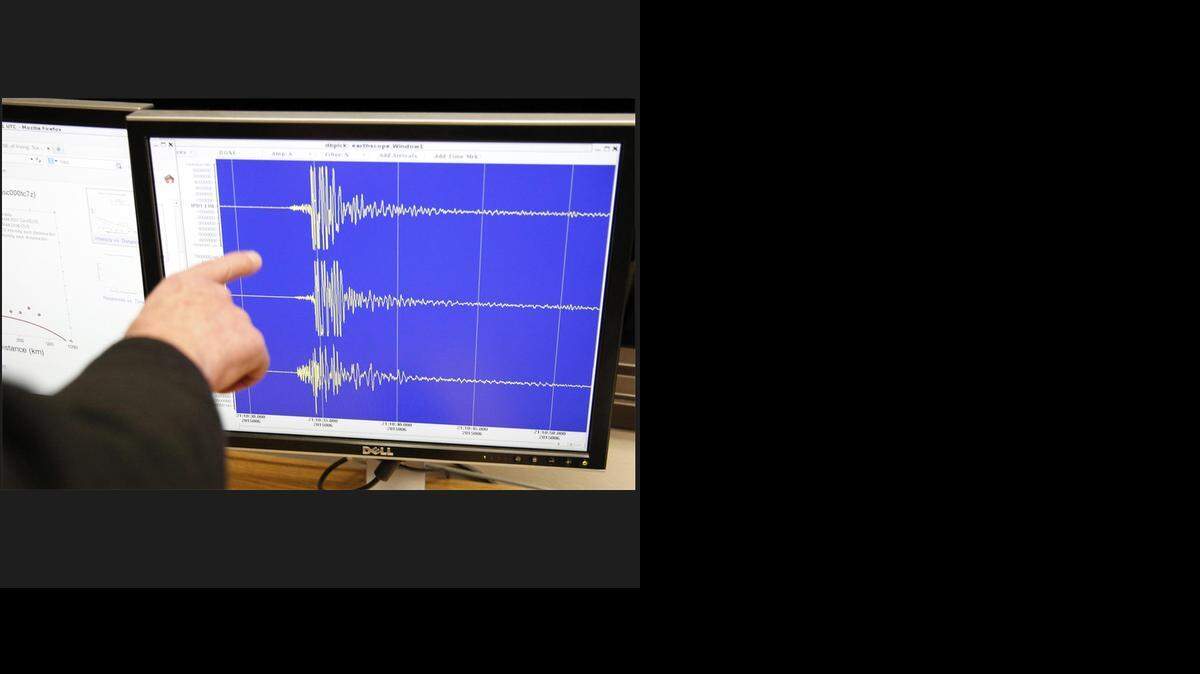
Why did 12 small earthquakes within 24 hours shake the Irving area this week?
What about that quake on New Year’s Day? And all those since September?
To try to find answers, SMU scientists are setting up 22 additional seismographs in the Irving area.
The seismologists, who have studied other quakes in the area since 2008, deployed 15 of the monitors Wednesday.
Earlier SMU studies of quakes in the Dallas/Fort Worth Airport and Cleburne areas concluded that wastewater injection wells used by the natural gas industry after hydraulic fracturing are a plausible cause of temblors in those areas.
But Craig Pearson, seismologist for the state Railroad Commission, said that’s not the case with the Irving quakes.
“There are no oil and gas disposal wells in Dallas County,” Pearson said in an email Wednesday.
Irving City Manager Chris Hillman said two natural gas wells were drilled in Irving in 2009 and fracked in 2010. One is inactive and the second stopped producing in October 2012. But the city doesn’t allow wastewater disposal wells, so the wastewater was trucked out instead of injected into the ground.
A report from the SMU team on 20 monitors near Azle and Reno, where another swarm of earthquakes took place, has not been completed.
This week, 12 small quakes were recorded within 24 hours Tuesday and Wednesday. Nearly all were near the site of the old Texas Stadium, an area that has had 27 minor earthquakes since September, according to the U.S. Geological Survey (see map of recent ones here).
A 3.6-magnitude quake at 3:10 p.m. Tuesday was the strongest in the recent swarm.
“We know the seismic activity has concerned residents and we understand they have lots of questions, as do we,” Hillman said in a statement.
The city has posted information about the quakes on its website.
SMU seismology professor Brian Stump is scheduled to brief the Irving City Council on Jan. 15.
Residents concerned that the swarm of little quakes means that a big one is coming can probably rest easy, said a geophysicist with the U.S. Geological Survey.
“There are no large active faults in Texas, just smaller-type faults,” John Bellini said Wednesday. “Because of that, it’s not likely that Texas would have a large earthquake.”
North Texas has had dozens of minor earthquakes since 2013, and some of the strongest were in November and December 2013. Three 3.6-magnitude quakes occurred Dec. 8 north of Azle, Nov. 28 north of Mineral Wells and Nov. 19 northwest of Azle.
No serious damage reported
Cracks in walls were reported in some cases, but home foundations are probably safe, said Bruce Talmadge at Discount Foundation Repair Specialists in Irving.
“If a homeowner had previous foundation repair work, there’s a good chance the earthquakes may have created problems,” he said. “But if a homeowner had a good foundation, I don’t see where these earthquakes have caused problems yet.”
A spokesman for DFW Airport said crews have felt the quakes but had no reports of damage or outages.
“DFW has responded to each report of an earthquake by conducting active inspections of runways and taxiways on the airfield and by conducting systems checks of all of the airport’s critical systems and infrastructure,” airport spokesman David Magana said in an email Wednesday. “The FAA has reported no issues with air traffic control operations in their towers, and all airlines have reported normal systems operations.”
Several of the quakes were near tracks operated by Dallas Area Rapid Transit, and a spokesman said crews were inspecting tracks daily as usual.
Irving reactions
On Wednesday, the Irving school district conducted “drop, cover, hold on” earthquake drills at all 38 campuses.
“The safety of our students and staff is always our top priority,” a news release said. “In the future, we will conduct earthquake drills in the same way that we have fire drills, tornado drills, etc.”
Irving police asked residents to stop calling 911 to report quakes unless emergency medical services were needed.
Detective James McLellan said dispatchers received about 100 earthquake-related 911 calls Tuesday afternoon and 150 more Tuesday night and early Wednesday.
“The 911 system was overwhelmed,” he said. “And operators were quickly trying to reach callers with a true emergency.”
The Stone Tree Mobile Park in Irving is within walking distance of the old Texas Stadium. Residents there felt the quakes.
“I got scared because it was strong,” Aracely Vasquez said in an interview in Spanish. “Why is it happening? It never happened before.”
Belinda Fair and her daughter, Erica, who also live at the mobile home park, said they felt several quakes Tuesday.
“You see it all over Facebook. Everybody is talking about it,” Belinda Fair said.
Diane Smith, 817-390-7675
Twitter: @dianeasmith1
Domingo Ramirez Jr., 817-390-7763
Twitter: @mingoramirezjr
Quakes Tuesday and Wednesday
▪ 2.7 magnitude, 9:57 a.m. Wednesday, 3 miles northeast of Irving
▪ 2.6 magnitude, 8:34 a.m. Wednesday, 2 miles north-northeast of Irving
▪ 2.3 magnitude, 1:24 a.m. Wednesday, 3 miles north of Irving
▪ 3.1 magnitude, 12:59 a.m. Wednesday, 3 miles north-northeast of Irving
▪ 1.6 magnitude, 11:02 p.m. Tuesday, 4 miles north-northeast of Irving
▪ 2.4 magnitude, 10:05 p.m. Tuesday, 2 miles north-northeast of Irving
▪ 1.7 magnitude, 9:52 p.m. Tuesday 4 miles northeast of Irving
▪ 2.7 magnitude, 8:12 p.m. Tuesday, 2 miles northeast of Irving
▪ 2.9 magnitude, 8:11 p.m. Tuesday, 3 miles east-northeast of Irving
▪ 3.6 magnitude, 6:52 p.m. Tuesday, 4 miles east-northeast of Irving
▪ 3.5 magnitude, 3:10 p.m. Tuesday, 3 miles east-northeast of Irving
▪ 2.3 magnitude, 7:37 a.m. Tuesday, 2 miles northeast of Irving
This story was originally published January 7, 2015 at 9:51 AM with the headline "Quake outbreak intrigues scientists, rattles residents."