
Fort Worth’s stinky sewage shows improvement
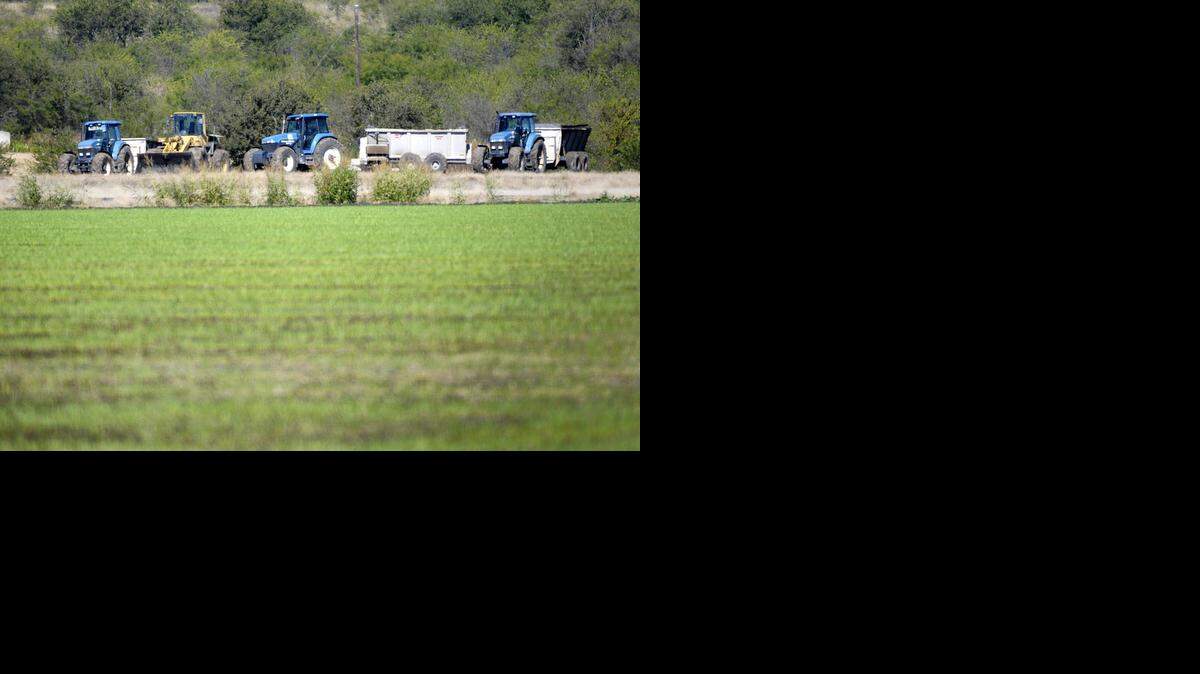
The stinky smell from Fort Worth’s “sewage sludge,” which is being recycled as fertilizer on nearby farms, is getting better, according to a presentation to City Council members Tuesday.
Buster Fichera, assistant director of the city Water Department, said the city is seeing “remarkable” results after adding iron to the sludge, which bonds with another chemical and reduces the smell, which some describe as similar to “rotting flesh.”
Adding iron to reduce the smell is in a four-month trial that cost the city $488,000. If the the data continue to show success, Fichera said, the new process will cost $1.5 million a year.
Using a nasal ranger, which is used by the Texas Commission on Environmental Quality to measure odor offensiveness, the sludge went from a score of 30, which smells like fish or decaying garbage, to between five and 10, which smells earthy and dissipates quickly. The test was done from 4 inches away.
Fichera said it is a “tremendous differense.”
It “is in fact working very well and we expect to continue this as we go forward,” Fichera told council members who are on the city Infrastructure and Transportation Committee.
Luanne Langley, one of the rural residents who complained about Fort Worth not being neighborly by dumping the smelly concoction, said she is optimistic that the new additive will work.
“I think they are really trying,” said Langley, who moved to Johnson County in 2011.
The sludge — or what Fort Worth calls “biosolids” — comes from each home, business and manufacturer in the city at about 90 tons a day. The sewage is treated daily at the Village Creek Water Reclamation Facility to rid it of disease-causing germs.
It is then handed over to city contractor Renda Environmental, which has a waiting list of eager farmers who want the sludge for the wealth of nutrients it returns to the soil, but the population in these rural farming communities has skyrocketed in recent years.
Johnson County, for example, had a population of 45,768 in 1970. By the 2010 Census, it had risen to 150,934, a jump of 230 percent.
The smell of biosolids has gotten worse in the last few years, Fichera said, at least partly because of water conservation: The less water going down the pipes with the waste, the more concentrated the waste is.
A second reason for the worsening smell is that the product has less iron now.
This report includes material from the Star-Telegram archives.
Caty Hirst, 817-390-7984
Fort Worth finishes 2014 in the black
The city came out of fiscal 2014 with good news and is showing a $21.6 million contribution to total fund balance when all the city’s funds are counted together, according to a report presented to the City Council on Tuesday.
The city used $1.87 million from the general fund balance in 2014 and has already drawn from the fund for fiscal 2015, but that “savings account” is still heading into 2015 with $59.3 million.
The city also had continued growth in revenue, with sales tax collections “achieving new record highs.” Sales tax revenue in Fort Worth was up 5.7 percent over fiscal 2013, which puts Fort Worth ahead of Houston and El Paso in sales tax performance, but behind Austin and San Antonio. The city’s fiscal year begins Oct. 1.
This story was originally published December 9, 2014 at 7:03 PM with the headline "Fort Worth’s stinky sewage shows improvement."