A Latino Cultural Museum is being planned for Fort Worth. Here’s what we know
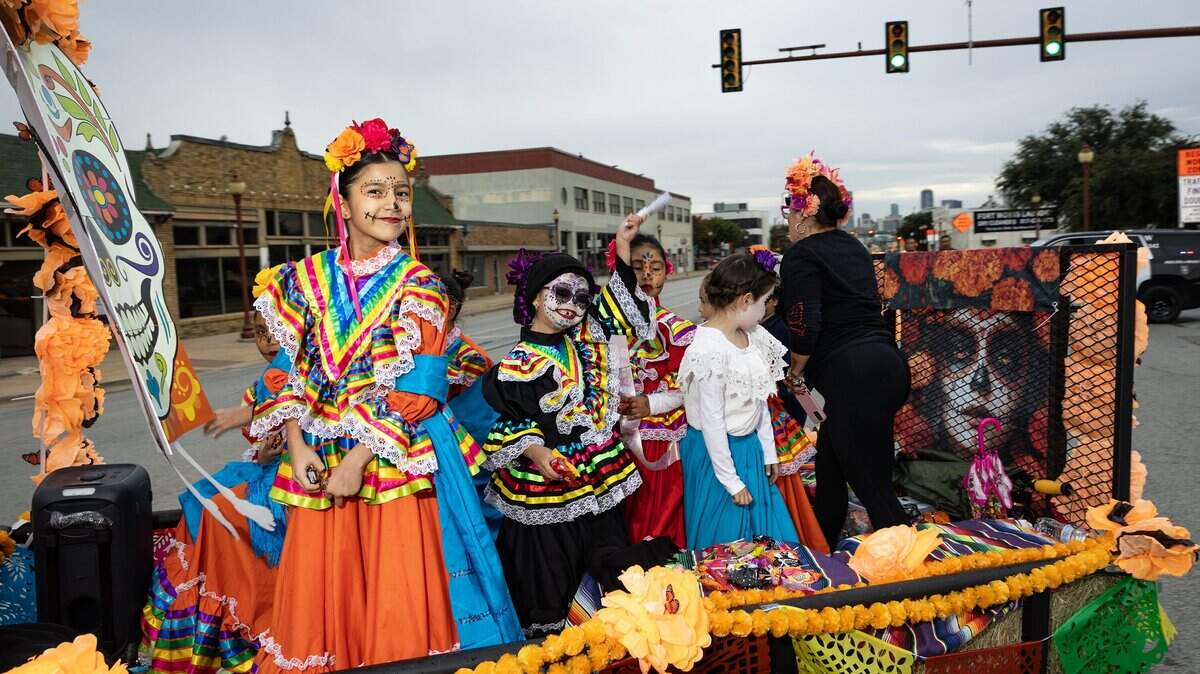
A group is working to bring a cultural museum to Fort Worth to celebrate its vibrant Latino communities, but first, they asked for a feasibility study to learn how the museum can become a reality.
A committee of 15 community leaders, called the Latino Cultural Museum de Fort Worth, has worked since 2023 to bring a museum to the city that would preserve the historical and cultural significance of Latino communities and their contributions to Fort Worth.
The group hired Keen Independent Research, a national arts, culture, and economic consulting firm, to conduct a feasibility study of the museum concept, including the cost, size, operating budget estimates, and location considerations. The study began in April 2025.
On April 9, the consulting firm made a presentation on the study at the Artes de la Rosa Cultural Center. The study shows that a museum would cost between $25 million and $65 million, depending on its size and other requirements.
Rosa Navejar, chair of the committee, says Fort Worth is diverse, and everyone should learn about its history and the communities that have contributed to it.
“How do we respect each other’s cultures unless we learn about them, and really embrace each other’s and respect that, and that’s how we become better humans,” Navejar said.
The funds required for the project were broken down into four categories based on budget level and scale, from an “entry-level” museum to a “world-class” museum, from approximately 15,000 to 30,000 square feet.
City Councilman Carlos Flores, a member of the committee, said the study will provide specific steps to follow and what should be done next. This includes identifying the type of funding, such as grants or public funding, how much money the group can expect to raise, and whether it should buy an existing building or land for the museum.
Flores said that once the group is further along in the process, it will begin seeking community input to determine the museum’s size, location, and contents, including artifacts and oral history interviews. So far, neither the location nor the timeline for the museum have been finalized.
“It’s more than just a mere preservation of our history, but a telling of that history to residents and to visitors alike,” Flores said.
The study showed the community is divided on whether to place the museum in the Historic Northside District, the Southside, downtown or the Cultural District.
The study outlined two years of activities the committee could follow, beginning with hiring a staff member to serve as a coordinating lead, then beginning a pilot program, and, by the second year, evaluating the program and securing a larger funding commitment from donors.
Fort Worth is about 35% Latino, according to the Census, and has various Latino-majority neighborhoods, including the Historic Northside District, Diamond Hill and the South Hemphill Corridor, which includes the Rosemont and Worth Heights neighborhoods.
The nearest Latino cultural center or museum is the Latino Cultural Center in Dallas.
Other museums planned in Fort Worth
The Latino Cultural Museum de Fort Worth is one of several museums planned in the city.
The Transform 1012 N. Main Street is a nonprofit coalition of organizations, founded in 2019 with a mission to transform 1012 N. Main St., a former KKK headquarters, into the Fred Rouse Center for Arts and Community Healing.
On Jan. 13, the city approved redirecting $40,000 in previously allocated funds to support construction and building improvements for the Fort Worth African American Museum and Cultural Center. In July, the museum purchased two units in an existing building totaling 5,000 square feet at 3100 and 3104 East Rosedale St. in Polytechnic Heights in east Fort Worth.
In the Historic Southside neighborhood, the National Juneteenth Museum will tell the story of the national holiday and its origins. In February 2025, the city leased the Southside Community Center property at 959 E. Rosedale St. — where the National Juneteenth Museum will be constructed — and relocated programs from the center to the Hazel Harvey Peace Center for Neighborhoods at 818 Missouri Ave.
Eva Bonilla, co-chair of the Latino Cultural Museum de Fort Worth, was inspired by her father, Jesse D. Sandoval, a World War II veteran and community activist who pushed for bilingual education, served as the first Hispanic precinct chair, and sat on the Building and Housing Standards Commission. In 2012, Linwood Park, off West Seventh Street, was renamed to Linwood-Jesse D. Sandoval Park in Sandoval’s honor.
Her father’s contributions to the community highlight the variety of lesser-known Latino stories in Fort Worth that still need to be told and recorded for future generations, Bonilla said.
“I want our history preserved,” she said. “I want our young people, even the old people, to recognize their neighbors and the people before us who opened the doors for us. And I think the only way we can do that is to have a Latino Cultural Museum to record the stories of our people.”