‘The greater good’: A tribute to Choctaw code talkers who helped America win WWI
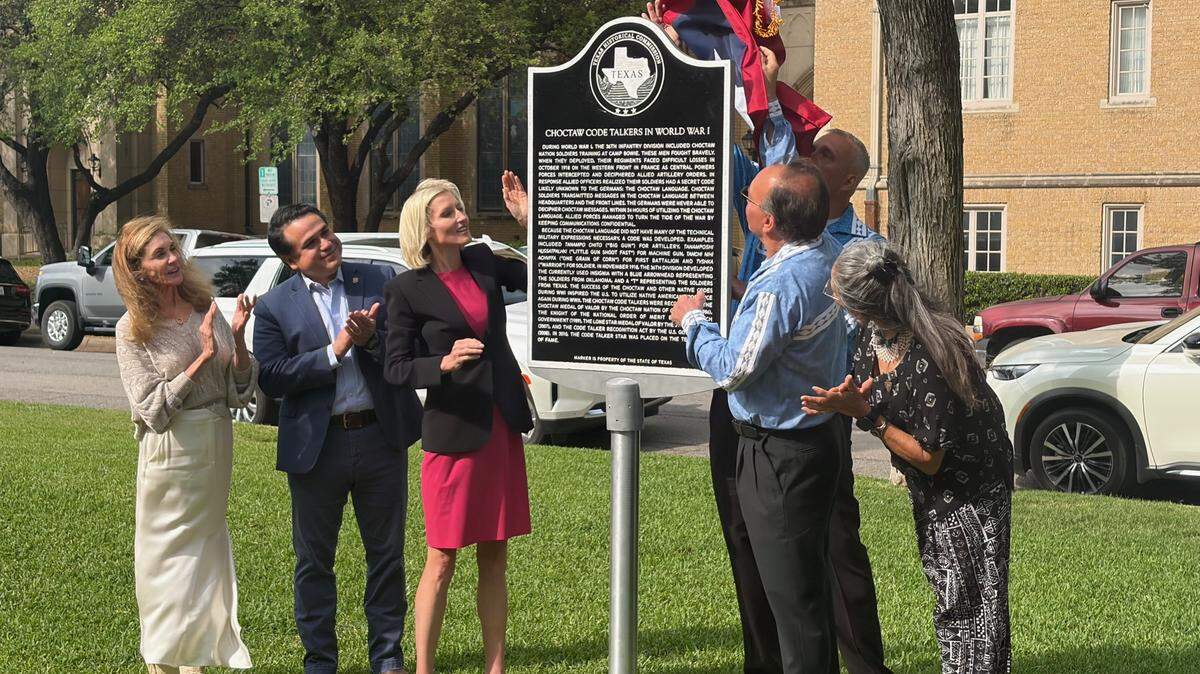
A new Texas Historical Marker at Fort Worth’s Veterans Memorial Park honors the first Native American code talkers to serve in the U.S. military.
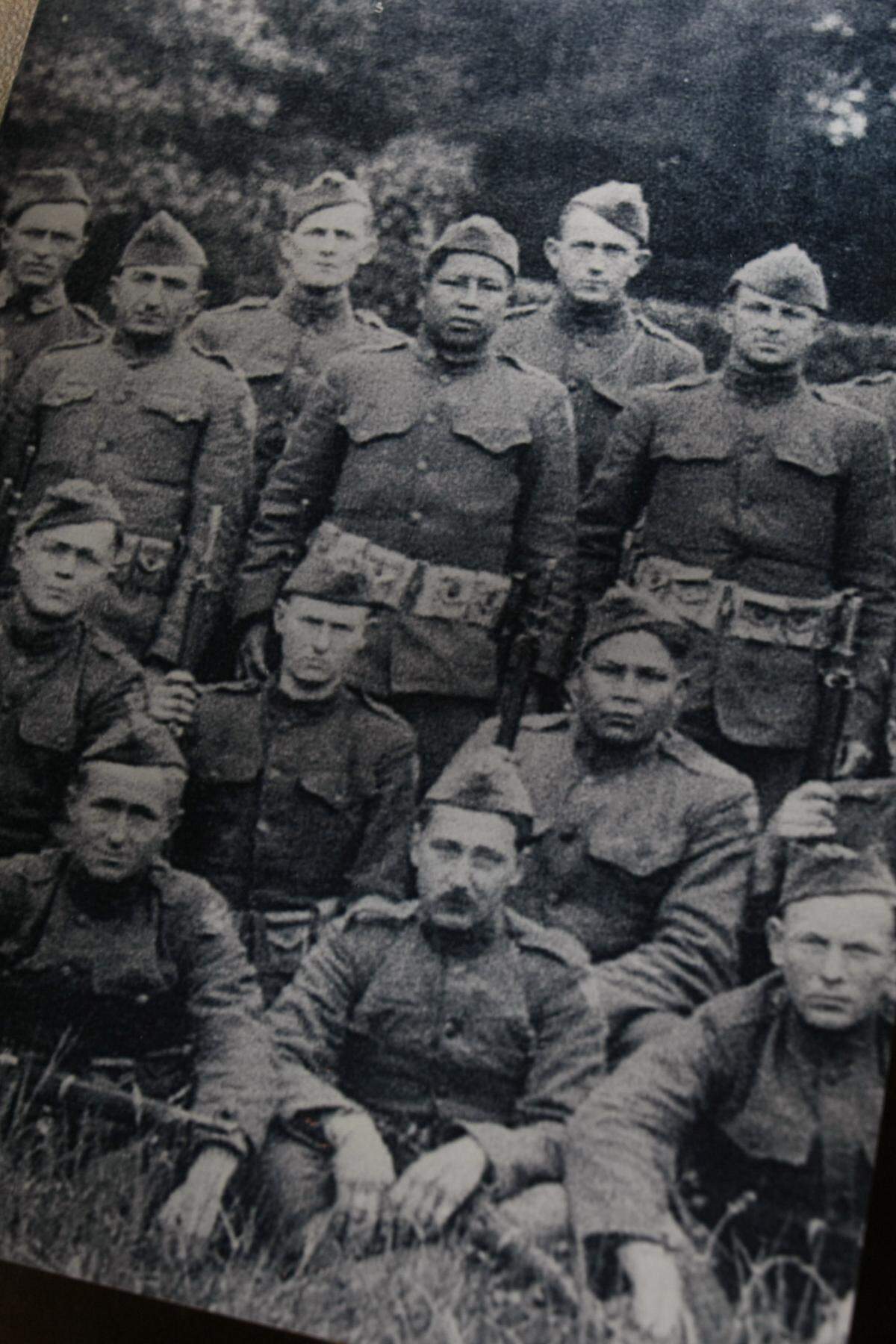
Over 50 people gathered Wednesday at the park on Camp Bowie Boulevard for a dedication, including leaders of the Choctaw Nation based in Oklahoma. Nineteen Choctaw code talkers were members of the 36th Infantry Division during World War I and trained at Camp Bowie.
These Native American soldiers played a critical role in Allied communications during campaigns in northern France. By transmitting messages and codes in their Choctaw language, which the Germans could not decipher within 24 hours, they became instrumental to U.S. operations and turned the tide of the war.
Nuchi Nashoba, the president of the Choctaw Code Talkers Association in Oklahoma, is a great-granddaughter of code talker Ben Carterby. She was never able to meet Carterby but grew up seeing pictures of him. She became the group’s president 19 years ago and has spent that time sharing the story of the code talkers and their importance in American history.
“These are men that helped win World War I, so in terms of winning for everyone, not just for natives, it was for every race in our country,” Nashoba said.
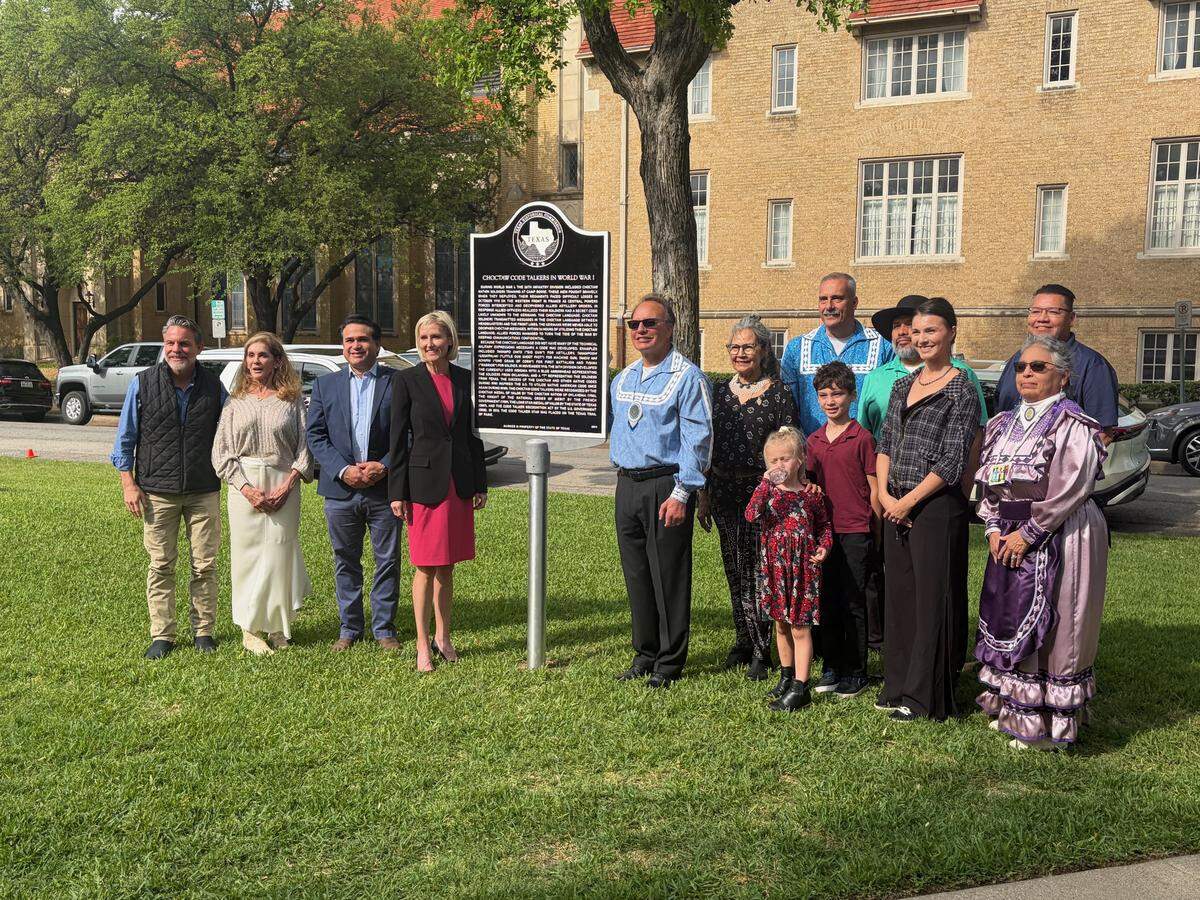
The marker was erected in partnership with the city Park & Recreation Department, the Texas Historical Commission, and the Choctaw Nation to expand the Fort Worth park’s mission to honor not only military service, but also the unique cultural contributions that have shaped U.S. history.
The 19 Choctaw Nation men hailed from Oklahoma. The American Army’s phone lines were tapped by the Germans, who were able to learn the location and supplies of the Allied Forces. When Col. Alfred Wainwright Bloor overheard two Choctaw men speaking a language he couldn’t understand, he had the idea to use them to transmit messages.
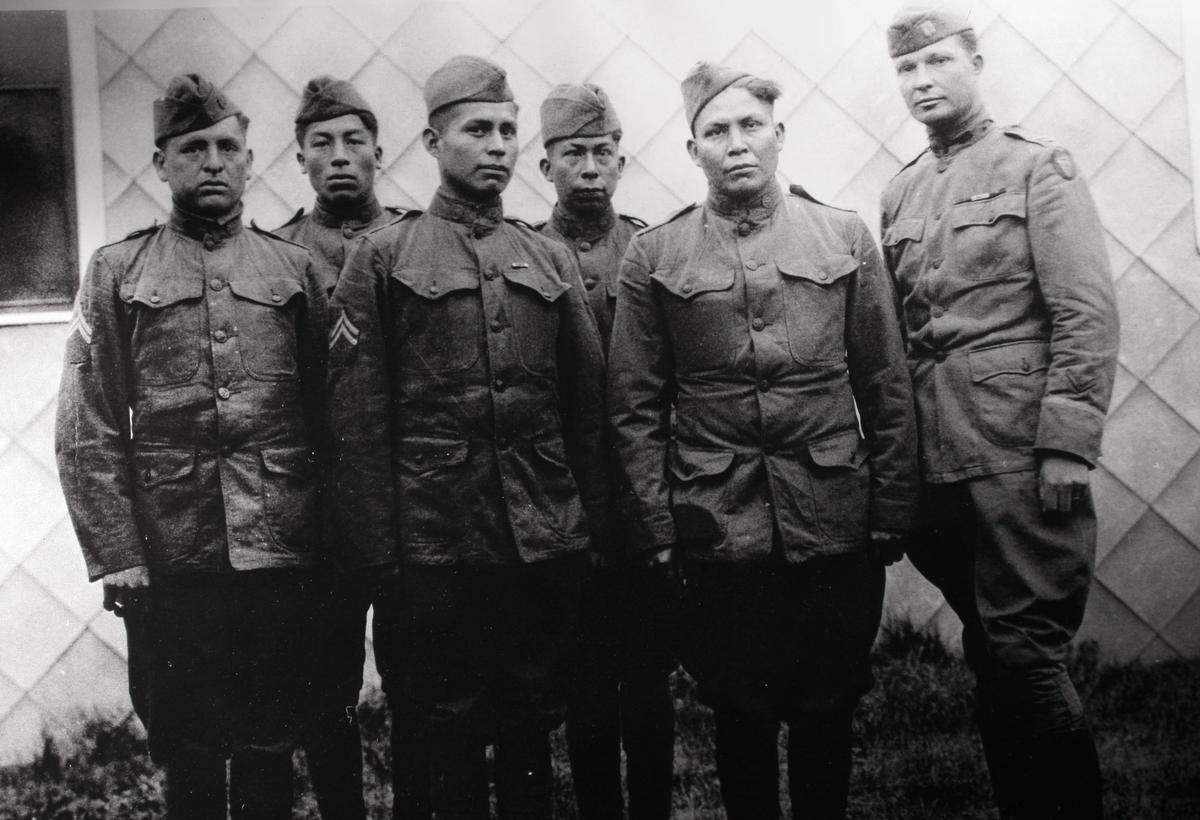
When the Choctaw men were put on the phones and spoke in their Choctaw language, it confused the Germans, who could not translate or decipher it. The code talkers helped change the outcome of World War I and demonstrated the patriotism of Native Americans.
In 2002, the film “Wind Talkers” starring Nicolas Cage helped popularize the story of Native American code talkers, mainly of Navajo descent. The Choctaw who joined World War I helped usher in the next generation of code talkers for World War II.
Native Americans did not receive citizenship until 1924 and weren’t recognized for their contributions until Nov. 15, 2008, when President George W. Bush signed The Code Talkers Recognition Act of 2008. The law authorized the award of Congressional Medals to recognize Native American Code Talkers who served during the world wars.
Gary Batton, chief of the Choctaw Nation of Oklahoma, said this marker helps preserve their culture, history and language. Native Americans were enrolled in boarding schools to strip them of their culture and language and assimilate them into modern society. What the code talkers represented, Batton said, were young men keeping their language alive and unifying Americans as a whole.
“It was at a time when our people could not even vote, we were not even recognized, if you will, as citizens,” Batton told the crowd. “That’s not a bad story, that’s a story, I believe, about sacrifice and being unified and doing the greater good. That’s what our people set the path for us. That’s what we’re trying to do today.”