
In 1935, a young woman died in Fort Worth jail. Her real identity still a mystery
On Oct. 19, 1935, Fort Worth police officers arrested a young woman at the Lubin’s department store in downtown for forging a check for $3.90 to buy a bottle of “Elizabeth Arden skin tonic.”
The arresting officers found she had also purchased similar items with a forged check at the Fair Department store for $3.85. The young woman was pretty and petite, standing just over 5 feet tall and weighing only 105 pounds. She claimed she was only 22 years old. But things didn’t add up. The woman had diamond rings and other jewelry, as well as cash and keys to a car. During the depression, she stuck out like a sore thumb.
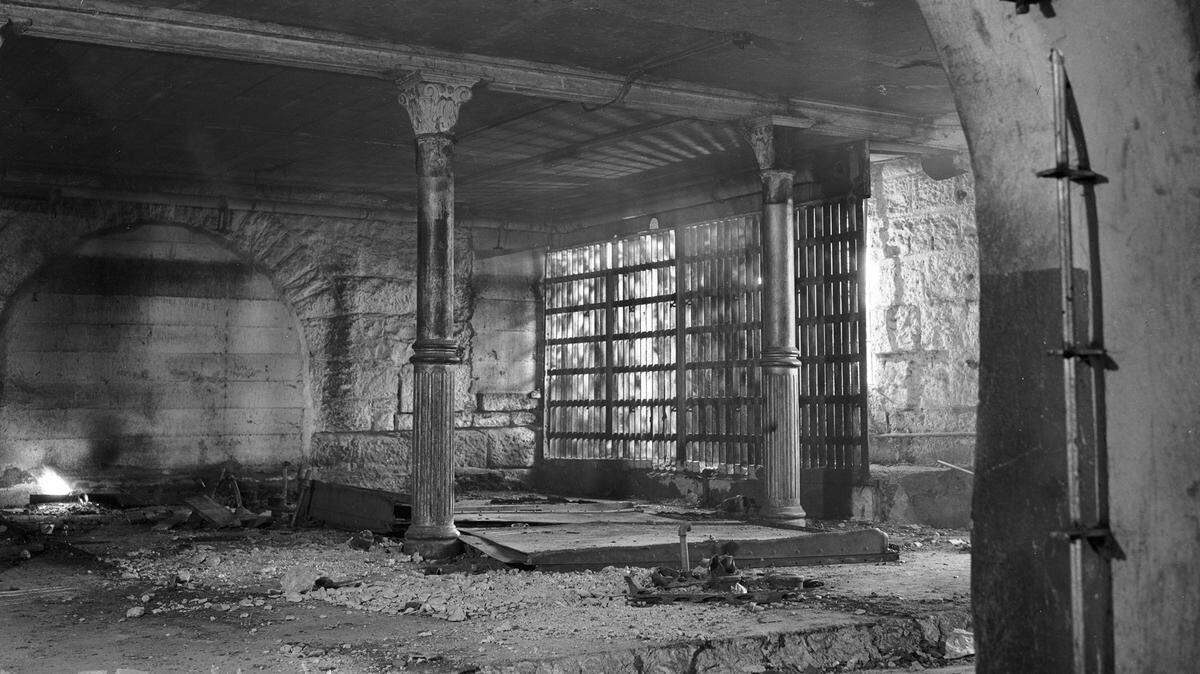
The woman was taken to the Fort Worth jail, by then best described as an old, filthy, rat-infested hole in the basement of city hall.
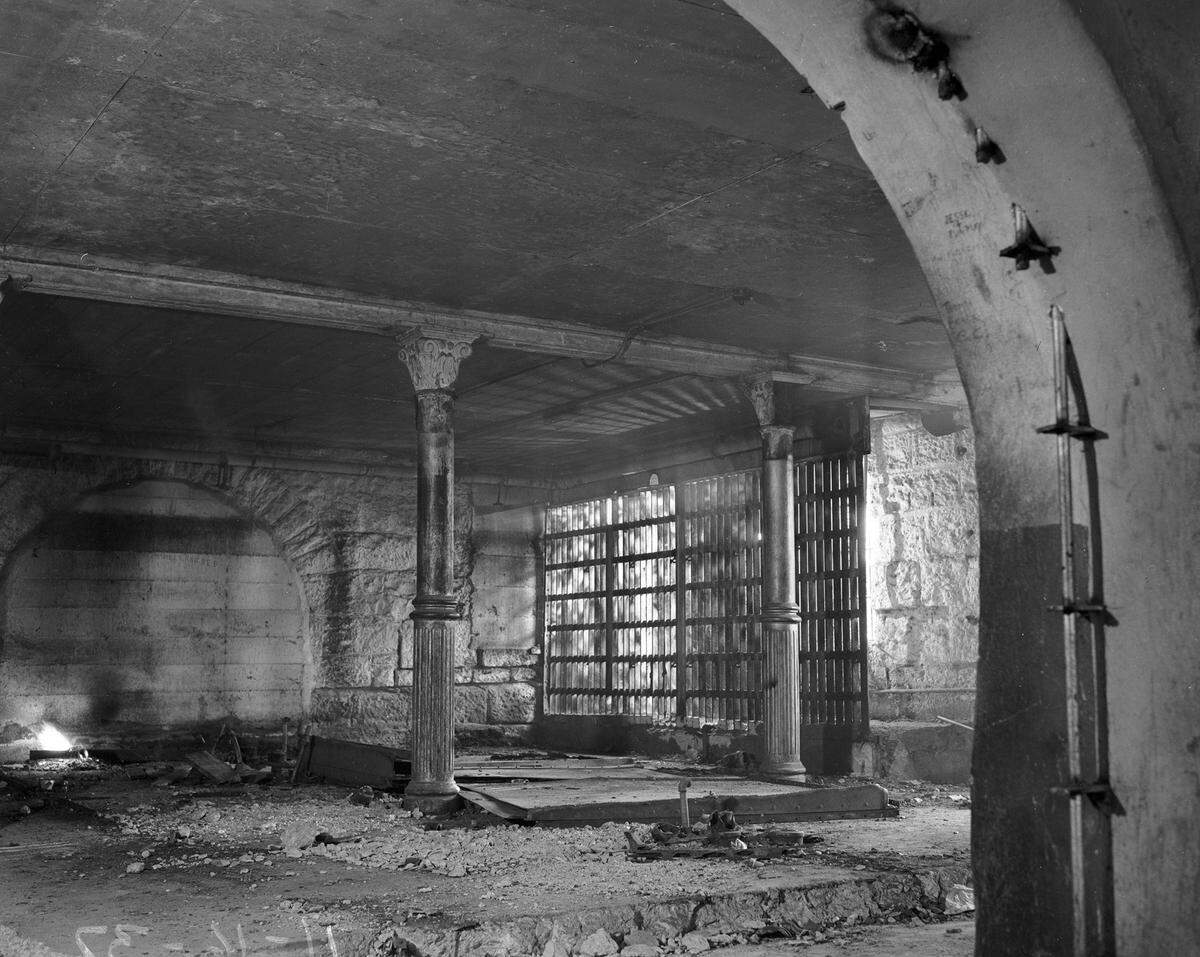
The jail was coming to an end of its usefulness and would be replaced in just three years.
The matron on duty, Annie Leewright, booked the woman into jail. She told Leewright her name was Elizabeth Curtis and that she was from Dallas. As she was led to her cell, she told Leewright she had lied about her name but refused to give her true identity. The woman refused any more information and was placed in the women’s ward.
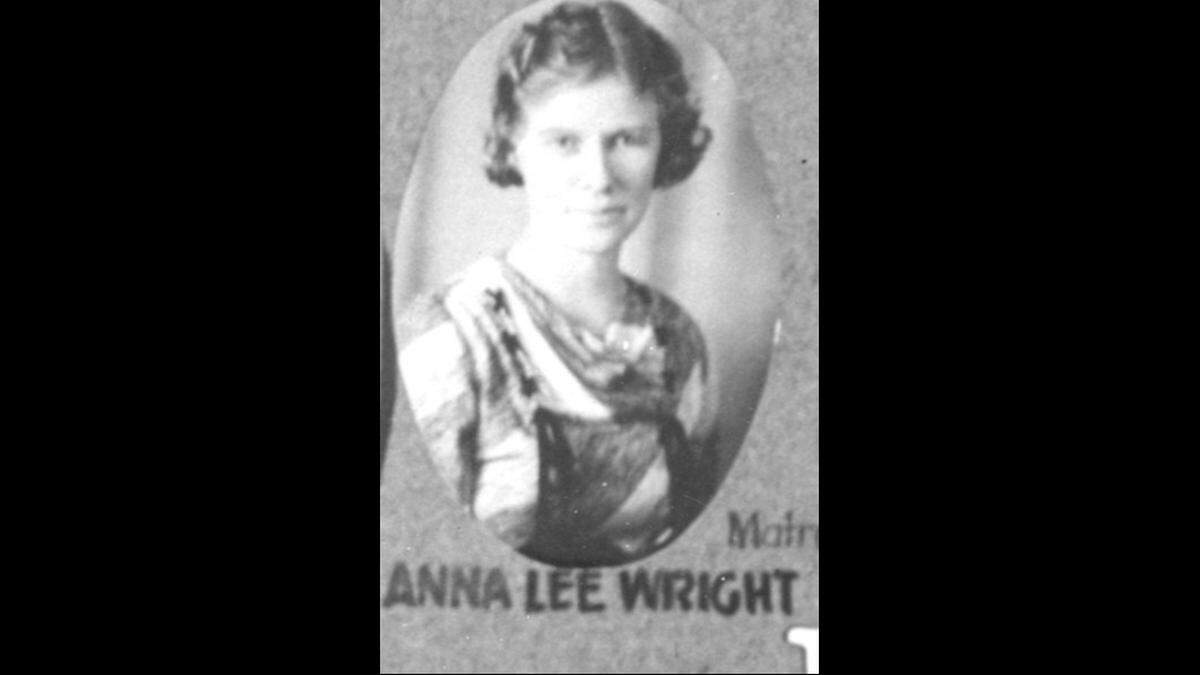
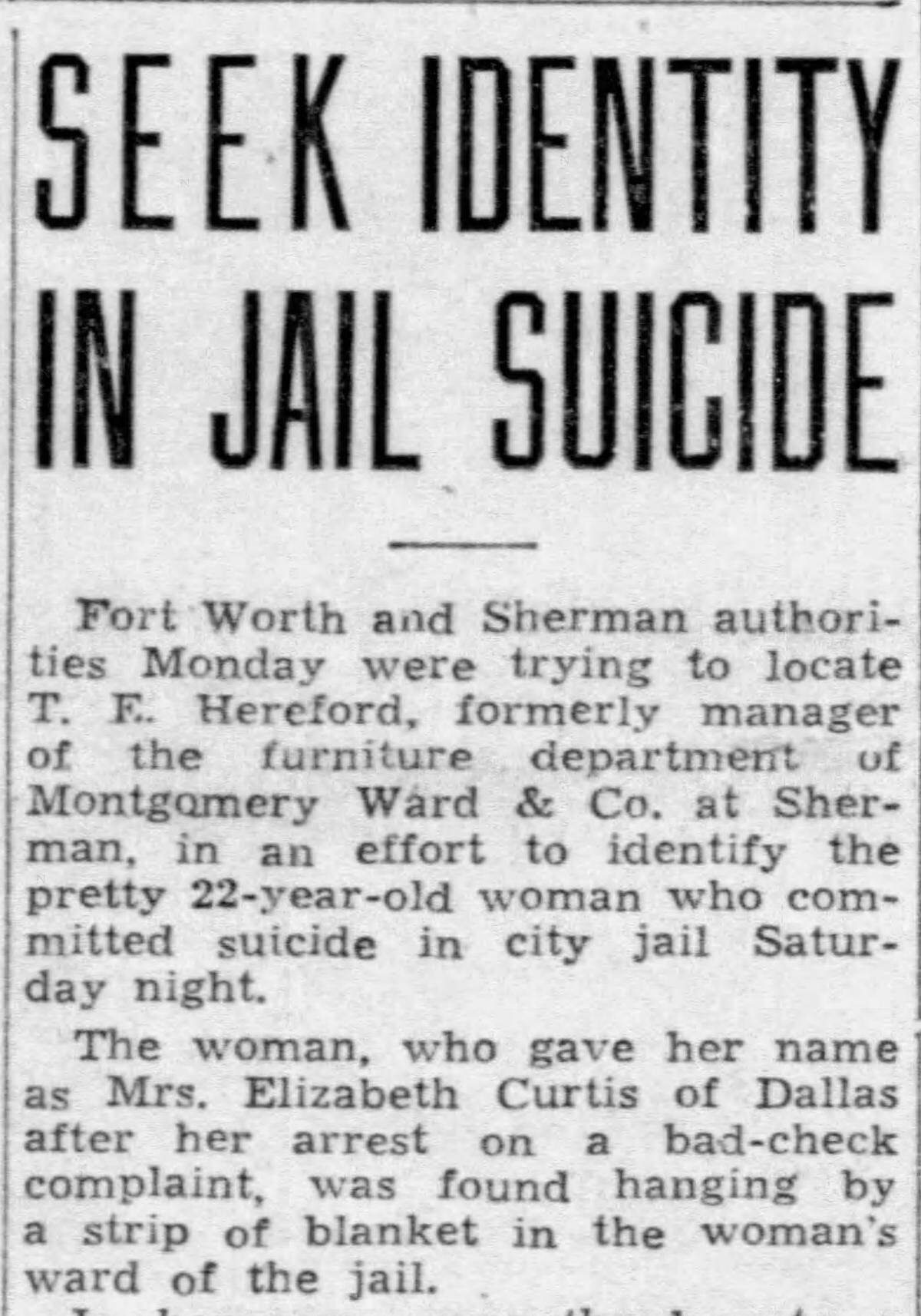
Leewright went back to her other duties. Two hours later, Leewright found the woman hanging from a water pipe in the bathroom, dead. She had torn a strip from her blanket to hang herself, leaving no note or reasons why she ended her life.

Detectives began working to identify the woman and found a key in her purse. A few hours later they found it fit the door of a new Plymouth coupe parked on Houston Street. They found an ad in the car for the “Riteway Tourist Court” on East Lancaster. The detectives went there and found that the woman had registered under the name of Mrs. D.E. Bennett of El Paso and was staying by herself.
The following morning, the detectives were able to check the license plate and found it registered to Mr. T.E. Hereford at Sherman. They tried to contact Hereford in Sherman but found he had moved the month prior. A representative of the company who sold the car, the “Rambo Motor Company,” said they had last heard from Hereford the prior month and that he claimed he was then in Atlanta. They added Hereford had stopped making payments on the car.
The detectives trying to identify the woman reached out to the Star-Telegram for help and the newspaper ran the story in the Sunday newspaper, giving a description of the woman and the car, as well as the license plate number. Their luck was about to change.
In the meantime, while the detectives were trying to contact the owner of the car, Fort Worth police Sgt. John Connelley, a nationally recognized expert in fingerprint and handwriting identification, began comparing the handwriting on the forged checks to other open cases.
He found the woman had also forged checks the same day for $35 at Monnig’s and $25 at Striplings department stores; a considerable amount of money in 1935. Connelley also found that in December of 1934, the same woman had forged checks for $10 at both the Fair and at Washer Brothers stores under the name of “Mrs. Louise Ferris” of Fort Worth. The Dallas Police Department got involved and added three more aliases, all involving forged checks.
Sgt. Connelley took a thumb print from the woman and sent it to the Federal Bureau of Investigation to see if they had a file on her. They did.
While waiting for a response from the F.B.I., the registered owner of the car, T.E. Hereford, called the police department from Waco. He told the detectives he read the story about the woman and the car and license and believed that to be his wife. He told the detectives that her name was Dorothy Hereford and that they lived in Waco. He claimed that Dorothy left Waco on Friday the 18th to come to Fort Worth to do some shopping and had not returned. He didn’t know what had happened until he read the newspaper.
Hereford was able to identify property in her purse, including the three diamond rings, a wristwatch, brooch, and a diamond stick pin, together worth over $350, and more than $15,000 in 2025 when adjusted for inflation.
The detective in charge, Fort Worth’s first homicide detective A.C. Howerton, released her property to Hereford, including the $58 in cash that was also in the purse. The car was repossessed by the Rambo Motor Company.
With nothing left to do and with no other relatives known, Hereford made arrangements for his wife’s burial at Greenwood Cemetery in Fort Worth.
The funeral was a sad and lonely occasion; her husband was the only mourner present at Shannon’s funeral home on the north side where he sat on the front pew while funeral home musicians played.

After a 15-minute service, she was taken to the cemetery while her husband followed in the funeral car. He sat by himself at the graveside and watched as cemetery workers carried his wife’s casket to her grave. Hereford told a newspaper reporter that somewhere his wife had two brothers, but he didn’t know their names – they were working in a Civilian Conservation Camp as part of the WPA and he had no way to notify them.
Back at the police department, a week after the funeral, a letter from the F.B.I. arrived, signed by the director, J. Edgar Hoover. The F.B.I. had been able to identify the thumbprint from their records.
The thumbprint was identified as belonging to a woman that was arrested as Margaret Folds in Macon, Georgia in 1930 for “passing worthless checks,” and was sentenced to a $250 fine or 12 months in the State Farm in Milledgeville, Georgia, and that she was currently wanted under that name in Atlanta, again for passing worthless checks.
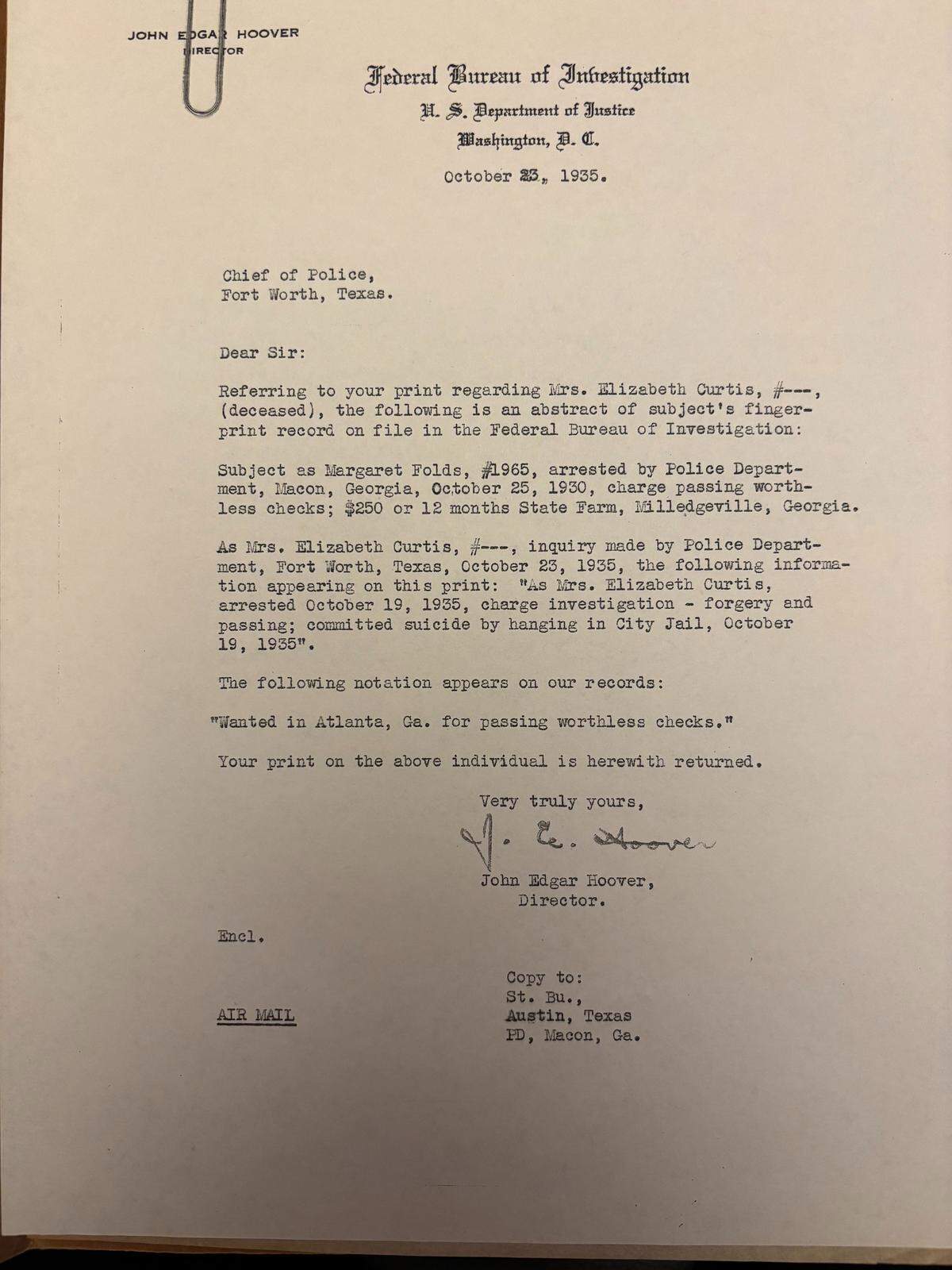
Fort Worth police records carry the woman’s name as “Mrs. T.E. (Dorothy) Hereford.” Her death certificate is simpler; it reads “Dorothy Hereford” with a maiden name of “Bennett” and her birthplace listed as Atlanta.
But F.B.I. records indicated she was Margaret Folds from Atlanta.
The Fort Worth Police Department closed the case on Dorothy Hereford in 1935.
It became clear that the couple were likely just another couple of Depression-era grifters, hitting the big cities and engaging in gambling and prostitution. Dorothy’s job was to get her hands on the checkbooks of wealthy men who for family and business reasons, had difficulty reporting her crimes.
Whoever she was, the woman that was arrested for forgery and died by herself in a Fort Worth jail cell was buried here as Dorothy Hereford and lies in an unmarked grave.
Author/historian Kevin Foster is a Fort Worth native and retired Fort Worth police sergeant with over 45 years in Tarrant County law enforcement.