
Her bones were unearthed in downtown Fort Worth. There may be others
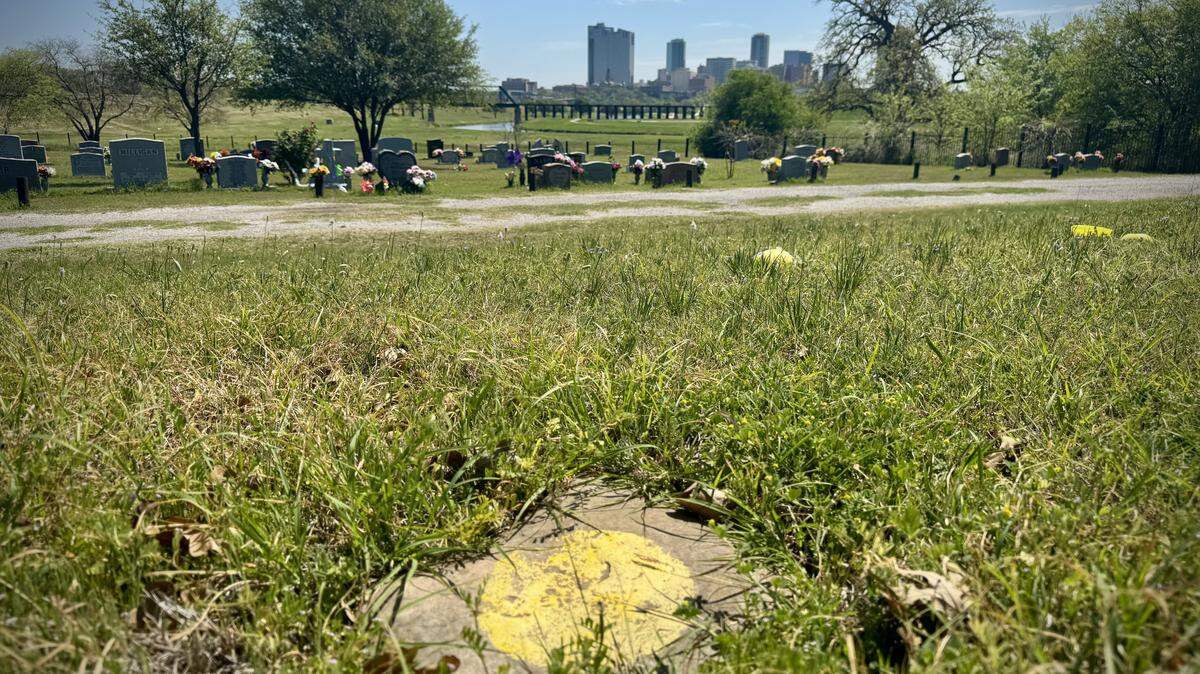
Eddie Sandoval calls her Trinity, and he still thinks of her often.
It was 10 years ago this month when construction workers unearthed her remains while digging on the west side of downtown, near the Trinity River. Police detectives examined the bones, but it quickly became evident that this was no recent homicide.
Trinity, as it turned out, died roughly 1,100 years ago. Experts determined she was probably an Indigenous woman in her 30s. Her burial site wasn’t far from where other prehistoric remains have been discovered over the years, on what was once a bluff overlooking the river.
Sandoval, who is a Native American elder, was called in to assist with a burial the following year at Oakwood Cemetery, and to ensure everything was done in accordance with Native traditions.
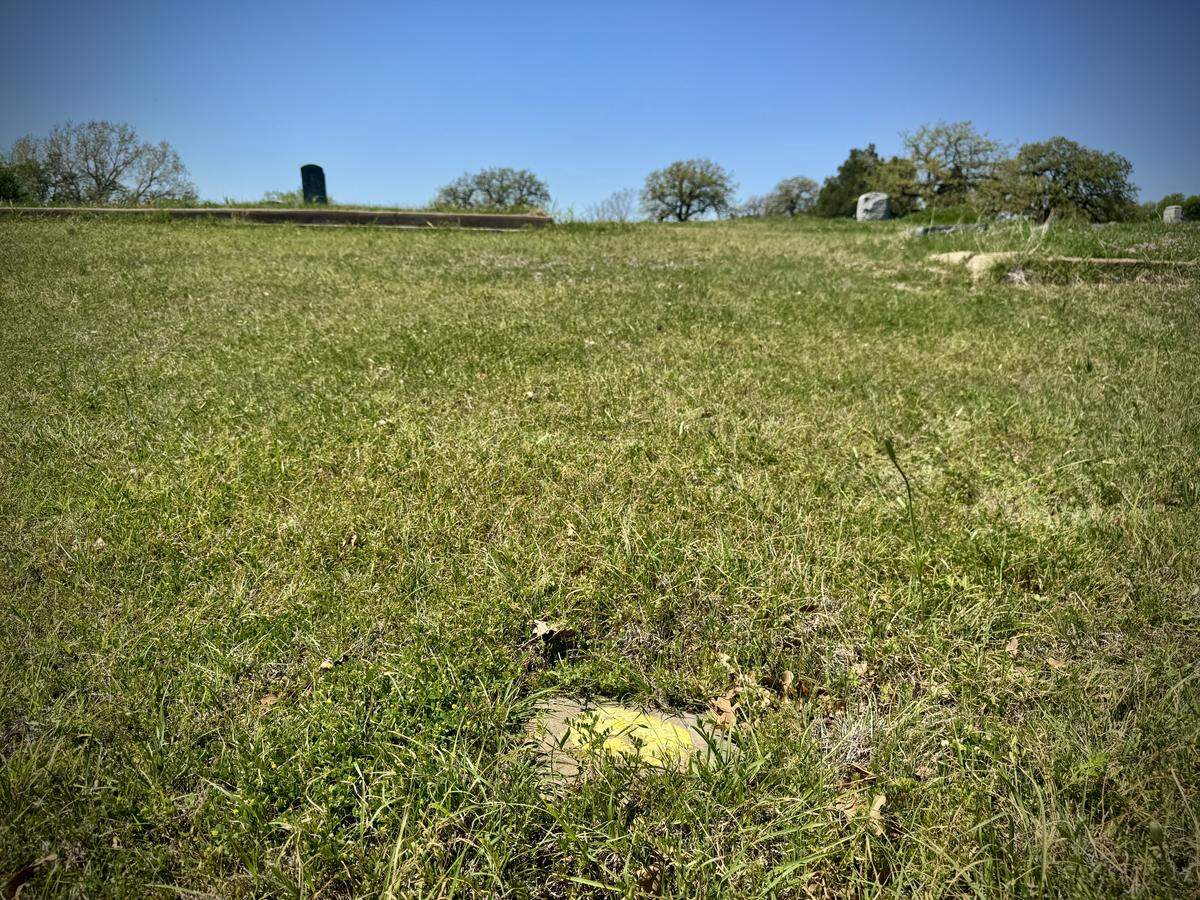
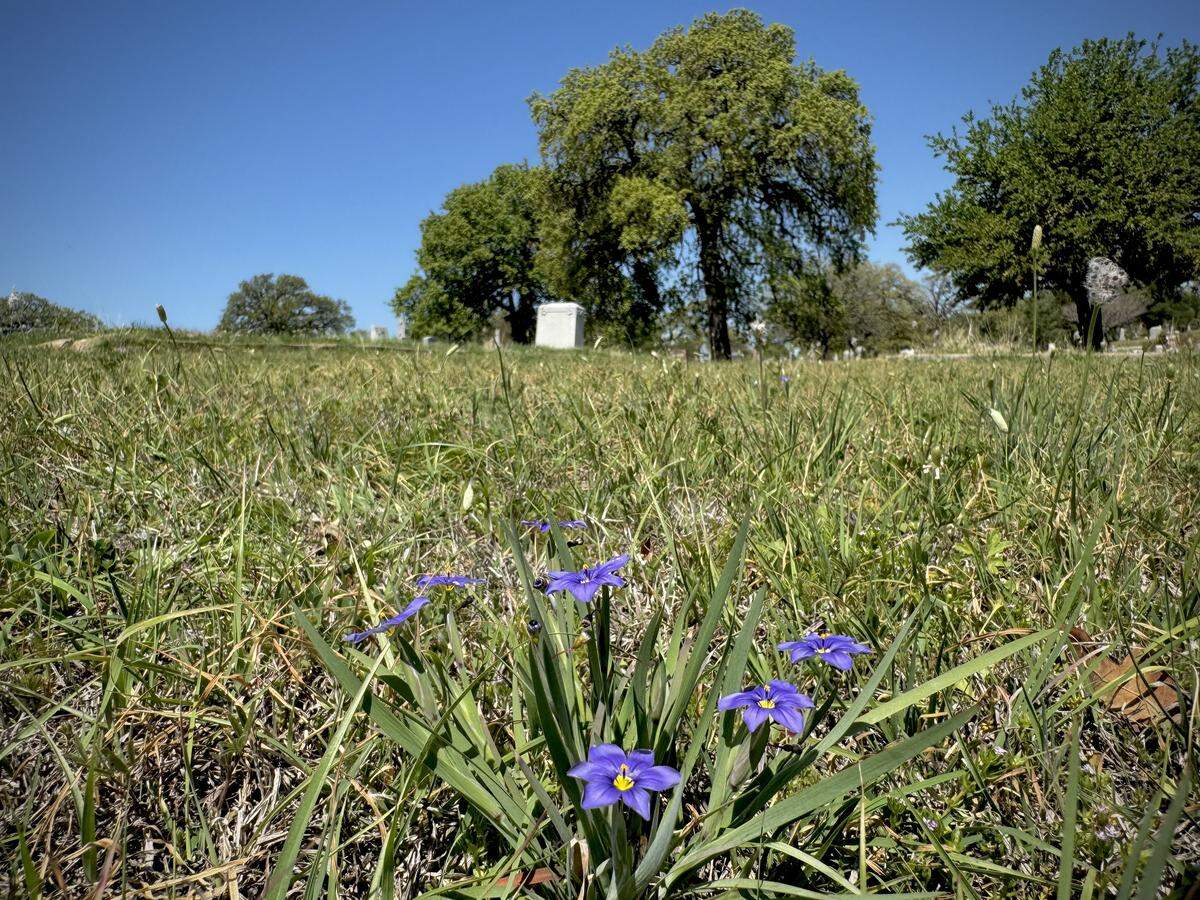
In an interview this month, Sandoval said he still visits Trinity’s grave on the far side of the cemetery, on a slope that overlooks the river and downtown skyline. He had marked Trinity’s resting place with a stone he’d brought back from a trip to New Mexico and Utah.
Now, Sandoval said, he’s trying to raise money for a permanent monument to the woman who so long ago called this area home.
.JPG "Native American bones buried 06 (1).JPG")
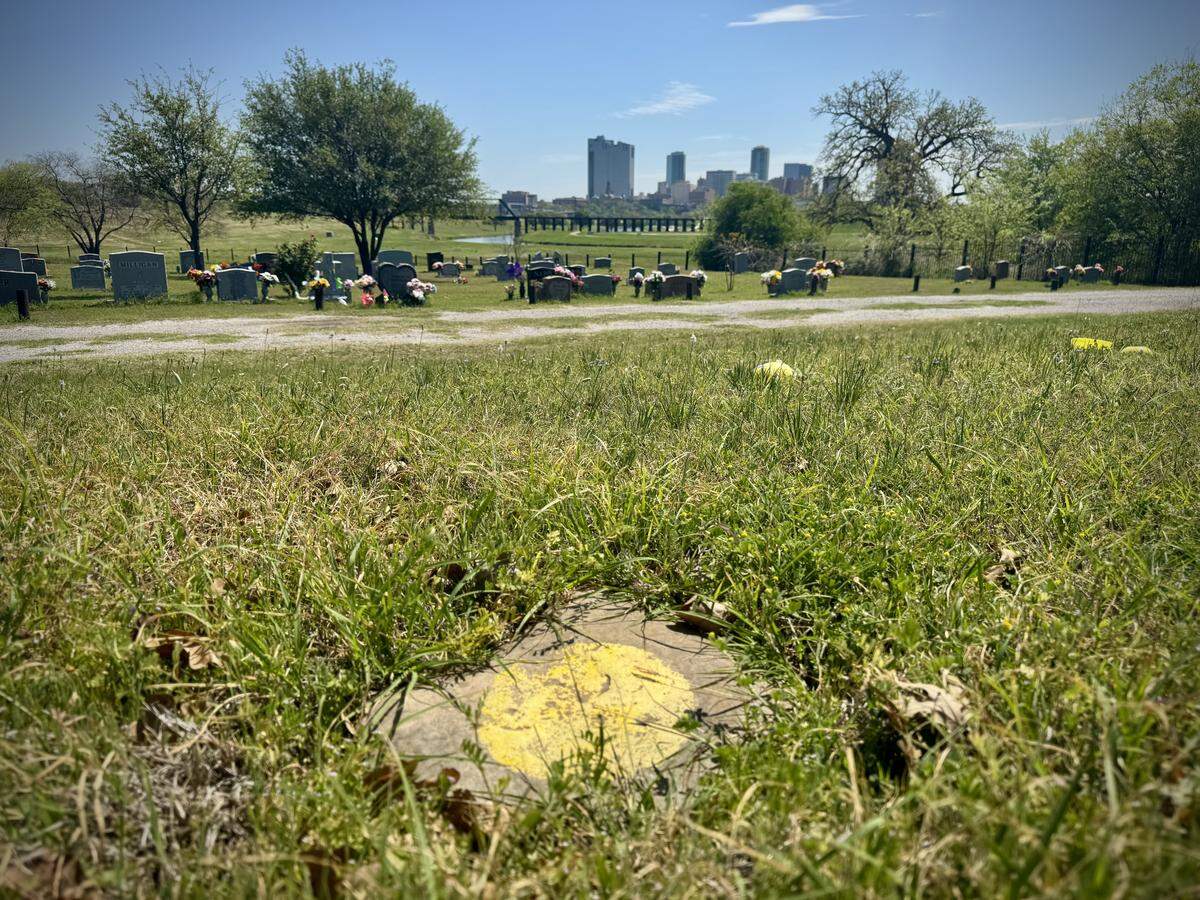
The discovery of bones in downtown Fort Worth
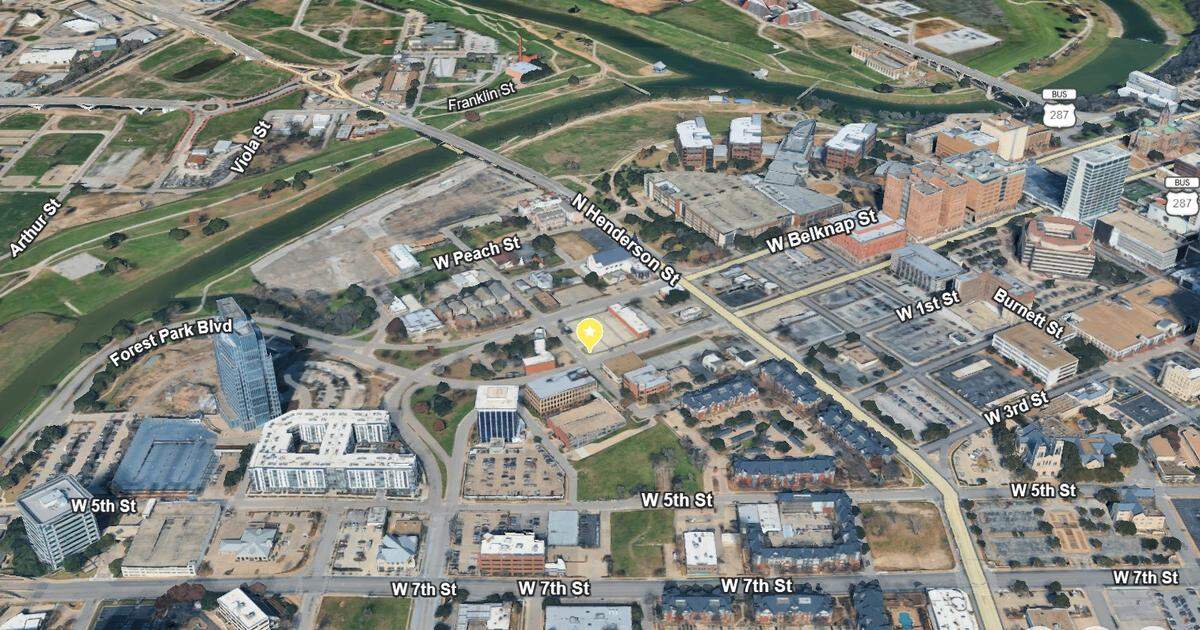
The construction crew had dug about 4 feet down when they struck something hard. They were digging a hole for a light pole in a parking lot at the corner of Lexington and West Weatherford streets.
The Tarrant County Medical Examiner’s Office confirmed the few pieces of bone were human.
Dana Austin, an anthropologist with the medical examiner’s office, used radiocarbon dating to determine the age of the woman and estimate her burial as between the years 790 and 990. Austin told the Star-Telegram at the time that only a handful of similar cases over the last 20 years had been investigated by the medical examiner’s office, and each involved remains from about the same time frame.
Sandoval remembers his first interaction with Trinity. He said initially he was unable to enter the medical examiner’s office to view the bones.
“The spirits would not let me in,” Sandoval recalled. “There was something that would not let me take another step forward.”
Sandoval said Trinity had “strong medicine,” or an essence, that he could feel. He went home that day and prayed and cleansed himself, and promised Trinity he would send her into the Spirit World with items she needed, including a bow and arrow, a knife, a plate for eating and a cup for drinking. The next day, Sandoval returned and communed with Trinity in a way that, he said, put him at ease.
“I felt good,” said Sandoval. “I felt something lifted off my shoulders.”
In December 2017, about 30 people participated in a burial ceremony at Oakwood Cemetery, including Sharen Wilson, who was Tarrant County district attorney at the time.
Sandoval provided a blanket and a bamboo cradle to hold the bones. At the ceremony, he exhaled tobacco smoke to the north, south, east and west, and then made a smoke tribute to Mother Earth and Father Sky.
.JPG "Native American bones buried 05 (1).JPG")
The respectful ritual provided for Trinity was not the typical way Native Americans’ remains were treated in Fort Worth’s early years. Newspaper accounts from the late 1800s and early 1900s tell of discoveries of bones around North Texas, including in 1895 along Big Fossil Creek about six miles north of town. An article in 1900 describes a fisherman finding two skeletons in a cave along the banks of Trinity’s West Fork, about 10 to 12 miles west of downtown.
And according to a 1949 Star-Telegram article, a Native American burial ground was found in 1901 at the corner of Lexington and West Bluff streets, two blocks north of where Trinity’s remains were discovered. Excavators found three skeletons, arrow points, a package of vermilion, a stone pipe, a 16-inch knife, small white beads and a mirror set in an iron frame, according to the article.
What North Texas was like 1,100 years ago
Trinity’s life predated the European discovery of the New World by some 600 years. In his sprawling book on Texas history, “Big Wonderful Thing,” author Stephen Harrigan described the period during which she lived as “an unimaginable stretch of deep time” from which no records, other than artifacts, exist.
Archaeologist Jimmy Barrera of the North Texas Archaeological Society said Trinity likely belonged to a nomadic group that migrated to this area seasonally when food was plentiful. The landscape they saw wouldn’t have been all that different from what we see today, sans buildings and roads, of course. Barrera said the Fort Worth of 1,000 years ago was partial prairie land with some wooded areas, predominantly near waterways.
Trinity and her people probably encountered many of the same animals we have around here today, like deer, rabbits and other small game, in addition to bison, said Barrera. The nomadic hunters and gatherers would have also used the Trinity River as a food source, Barrera added, harvesting mussels, fish and turtles from its waters.
In Trinity’s day, the bow and arrow would have been in use, but it would have been a fairly new technology, having only arrived in Texas around 200 years prior, said Barrera. Trinity’s people would have also been adept at making pottery, and Barrera said there’s evidence of there having been some agriculture in this area in the pre-colonial period.
However, Barrera cautioned that he was, to some extent, speculating on what Trinity’s world was like since the North Texas Archaeological Society didn’t examine Trinity’s remains or excavate the site where she was found. Barrera said during a proper analysis, archaeologists can analyze ancient botanical remains and even pollen remnants to determine what the landscape and climate was like during a given era.
Barrera said he wanted to make that clear, and he also wanted to praise the work crew who found Trinity for allowing experts to analyze her remains. Barrera said that doesn’t always happen, because workers either don’t notice when they unearth indigenous bones, or they fear delaying their projects.
“Kudos to the guys who discovered it and reported it,” Barrera said.
This story was originally published March 26, 2026 at 11:47 AM.