What’s in the air we’re breathing? Fort Worth ranks among nation’s most polluted
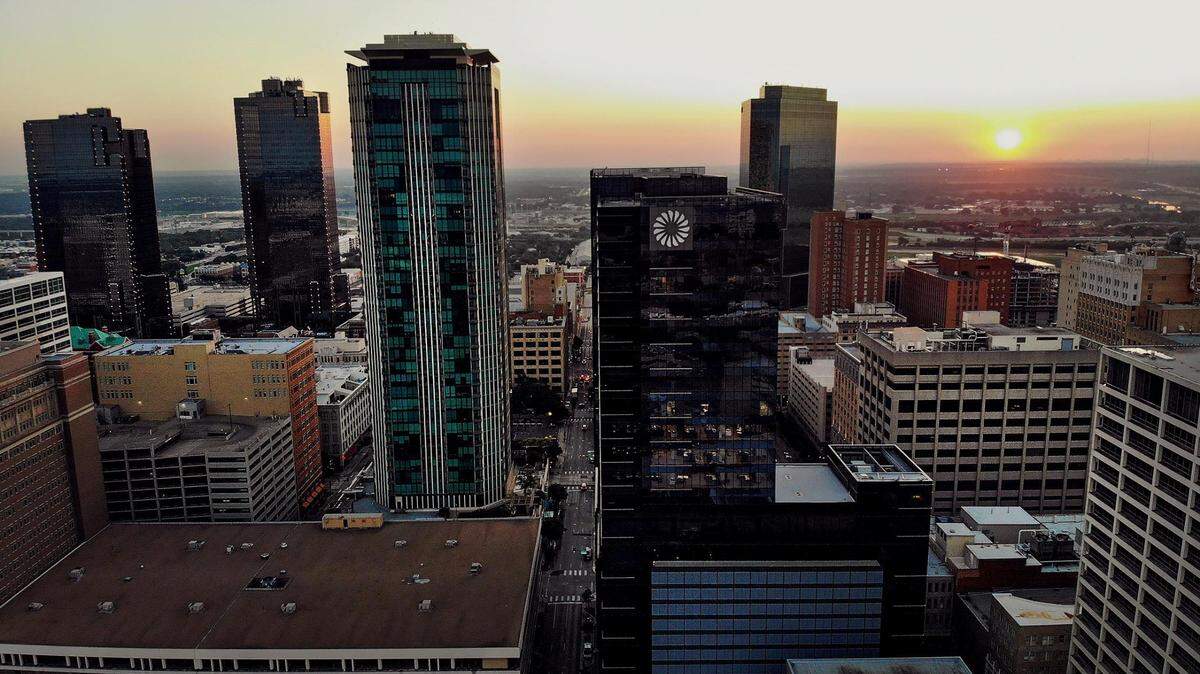
Fort Worth is the ninth most polluted major city in the U.S., according to a new report released by IQAir on Tuesday.
The report, compiled by a Swedish air quality monitoring company, analyzed the concentration of fine particulate matter, better known as PM2.5. IQAir prepares the report by analyzing data from thousands of ground-level air quality monitoring stations.
Fort Worth had an average concentration of 8.1 micrograms of particulates per cubic meter of air, according to IQAir. The World Health Organization recommends an annual average of 5 micrograms per cubic meter of air for PM2.5.
“There are a lot of different air pollutants, but PM2.5 in general is considered the most deleterious to human health for a couple of reasons,” said Christi Chester Schroeder, Ph.D. and senior air quality science manager for IQAir.
PM2.5 refers to particles less than 2.5 micrometers in diameter, meaning they’re small enough to bypass the body’s defenses and penetrate deep into the lungs and even into the bloodstream, Chester Schroeder said. Exposure to PM2.5 can cause premature death and a host of respiratory problems, like aggravated asthma, according to the U.S. Environmental Protection Agency. It’s also been linked to cardiovascular problems, like increased heart attacks and strokes, according to the American Lung Association.
The sources of PM2.5 differ by community. In the Metroplex, traffic and vehicle emissions are a major source of PM2.5 pollution, Chester Schroeder said. Vehicles in the Fort Worth area drive nearly 54 million miles every day, according to the Texas Department of Transportation. Other sources include DFW airport, industry, and home heating.
Although Fort Worth ranked in the top 10 most polluted cities, the concentration of PM2.5 is the lowest recorded in the report’s eight-year history.
Of the 25 most populous U.S. cities, El Paso had the worst PM2.5 pollution in the country, largely due to historic dust storms in 2025.
“We hope that people look at air quality like they look at the weather and kind of plan their day around it, because of how significant of an impact it can have on human health,” Chester Schroeder said.
Chester Schroeder said she hoped the report would help people recognize that air quality is a local issue. She added that Texas in general, including the Metroplex, had a relatively low number of air quality monitors, largely because people weren’t aware of air quality as an issue.
“There really aren’t as many air quality monitors as you would imagine in the state of Texas producing publicly available data,” she said.