Worried by demolitions, Fort Worth neighborhood weighs new conservation rules

Lake Como, one of Fort Worth’s oldest Black communities, may become the first neighborhood in the city with a “conservation district” to help preserve its historic character from encroaching development.
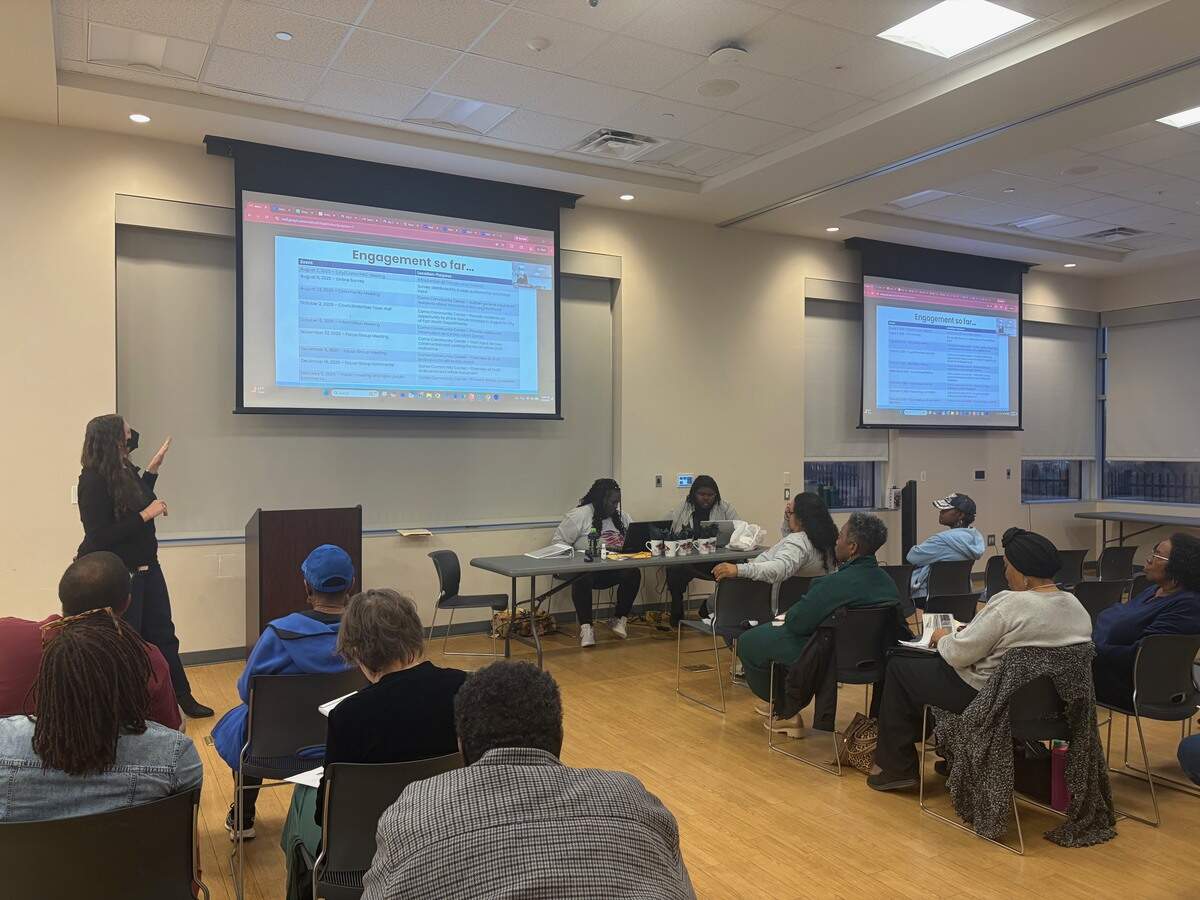
Residents have been exploring the idea for months. On Thursday, the city’s Historic Preservation team presented a draft to the neighborhood showing what a conservation district would look like, including design guidelines for new construction and renovations, trees, yards and fences. The community will offer feedback this month before deciding on next steps.
Lake Como’s roots date back to 1889, when Denver investors dammed a creek about 5 miles west of downtown and built a luxury resort, casino and amusement rides modeled after Como, Italy. A financial panic in 1893 bankrupted the developers, and the resort burned down the following year.
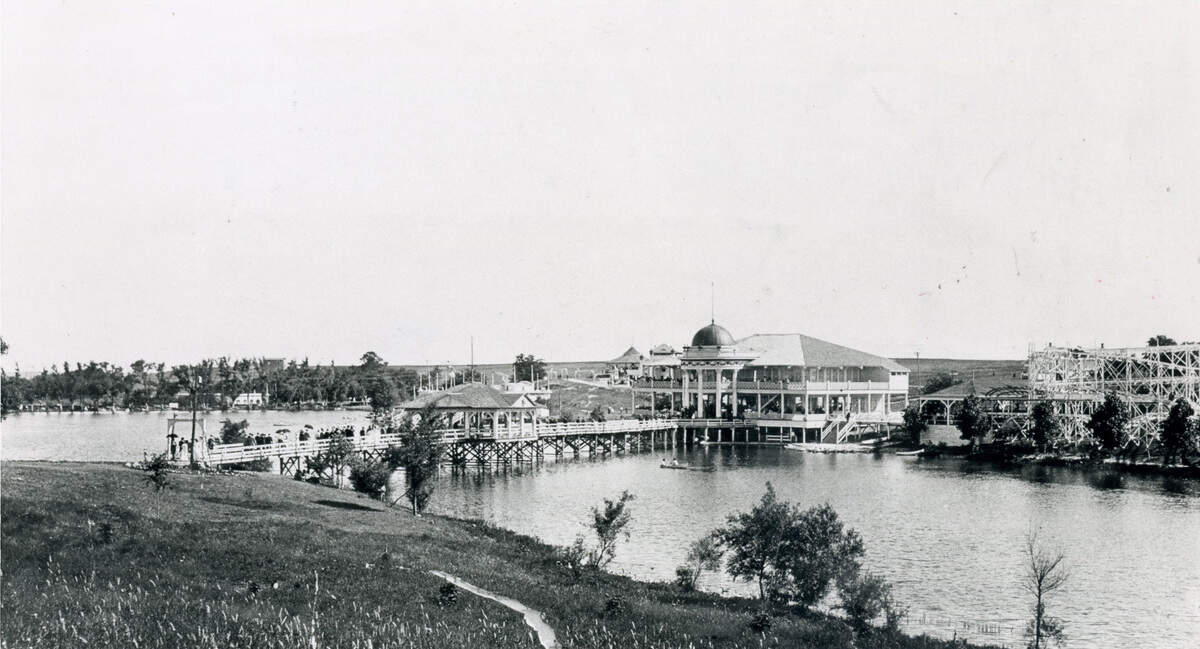
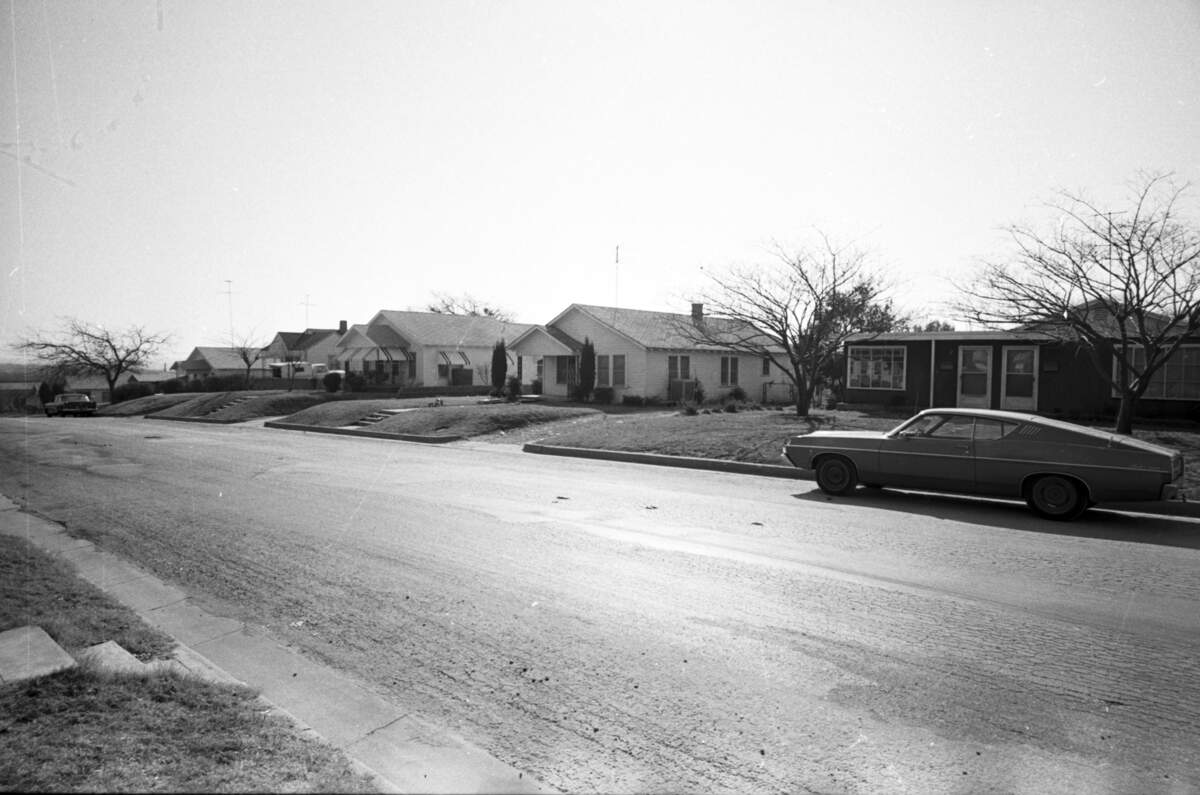
In the early 1900s, Black people who were domestic workers for wealthy white families in Arlington Heights began buying lots near the lake and building homes. Como became a tight-knit, self-sufficient community and a haven for Black travelers during Jim Crow.
“The neighborhood’s cultural and economic life flourished despite the segregation that defined midcentury Fort Worth,” the city’s Historic Preservation office writes. “Churches such as Zion Missionary Baptist, founded in 1919, and Lake Como Church of Christ, established in 1947, became spiritual and social anchors.

The Como Theater offered entertainment for Black audiences, and the Lake Como Weekly newspaper gave the community a voice from 1940 to 1986.
More recently, Como has attracted developers interested in demolishing older properties to build new homes or multifamily complexes.
What a conservation district would mean for Lake Como
A conservation district is a zoning tool that helps neighborhoods with a shared history, and cohesive architectural look, preserve their existing housing stock and regulate new construction. The goal is to give homeowners another tool to ensure that their neighborhood is developed in a harmonious and sustainable way.
Sandra Stanley, president of Lake Como Neighborhood Advisory Council, says residents have been concerned by developers wanting to demolish single-family housing.
The district adds additional protections on top of base zoning to preserve the neighborhood’s look and character. It will restrict demolition of existing buildings and ensure compatible infill. It doesn’t restrict most changes to existing houses.
The boundary of the district is roughly the boundaries of the neighborhood: Camp Bowie Boulevard to the north, West Vickery Boulevard to the south, Neville Street to the east, and Bryant Irvin Road to the west.
A focus group of about eight Como residents started meeting last summer with the city and a consultant to come up with draft guidelines.
Most of Como’s historic housing is considered “minimal traditional” or “folk Victorian” design. “These styles reflect the community’s layered development history — from late-19th-century vernacular forms adorned with Victorian-era ornament, to the modest, efficient houses of the post-Depression and post-war years,” according to the city.
Much of what’s been built in recent years is contemporary or “neo-eclectic” designs common in suburbs.
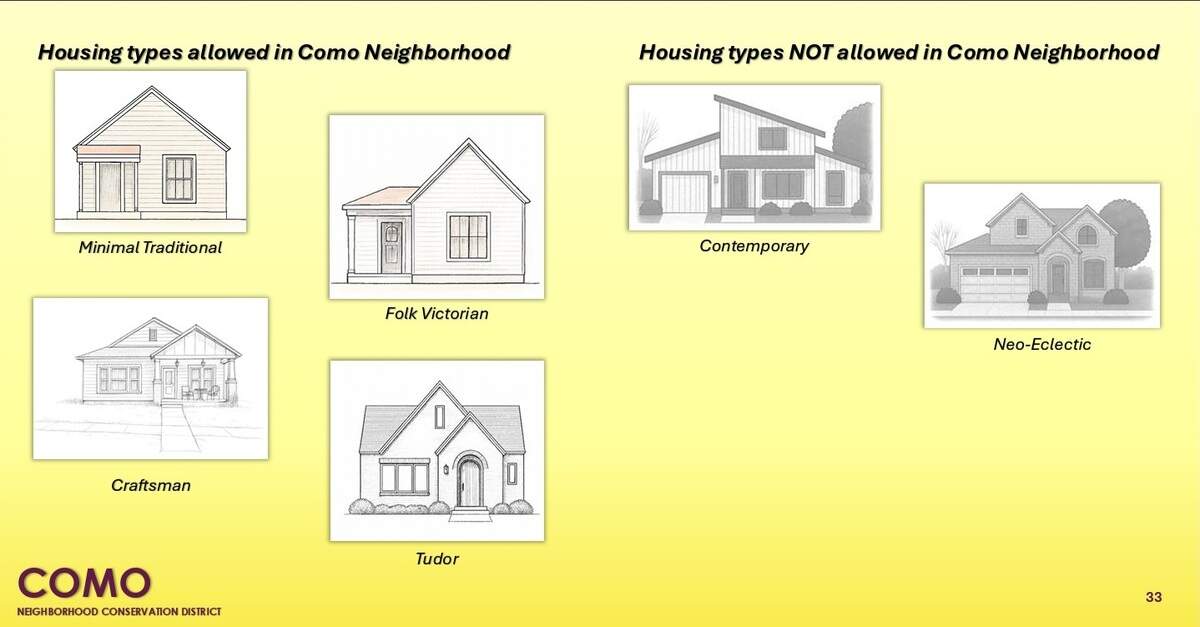
Under the rules of a conservation district, any proposal for new construction would require that the design of the home reflect similar styles and account for lot coverage, fencing, materials and window placement and scale.
Lorelei Willett, the city’s historic preservation officer, says the next step for Como is to submit public comments on the design guidelines online by Feb. 28. The city will then work with a consultant to make any changes and present a final proposal to the community.