As TCU grows enrollment, students worry the school will ‘lose its charm’
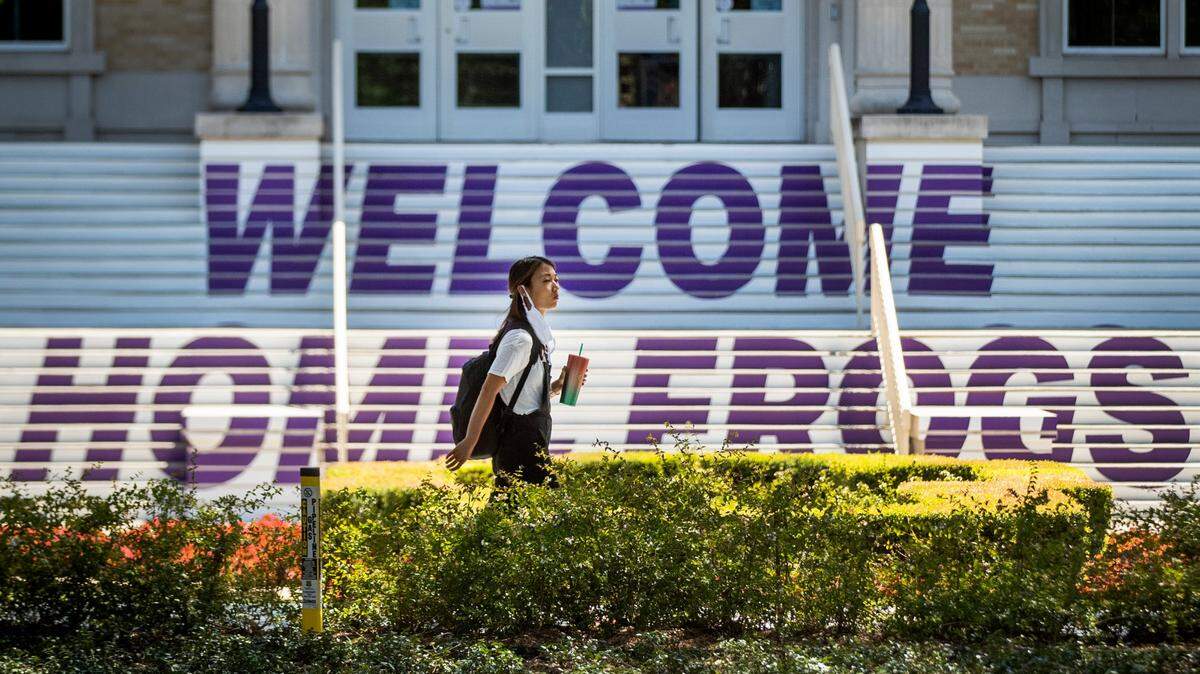
While deciding where he wanted to go to college, Simon Connor consulted with a number of TCU alumni to learn more about the school. Every single person he spoke with told him promoted the same thing: the school’s strong sense of community.
Alumni spoke especially highly to him about the school’s “close-knit environment” and “small-campus charm” that he wouldn’t be able to find anywhere else.
When Connor eventually decided to attend TCU, he quickly learned just what everyone was talking about.
“They all talked about this sense of community at TCU,” Connor, now a junior, told the Star-Telegram. “When I got there, I had everything pretty central to me. The cafeteria was right across the lawn, the library was about 200 feet away. And like everyone else said, the sense of community that they really tried to sell has actually been the case for me so far.”
But now, Connor is one of many students who say they’re worried the school’s ambitious enrollment plan to grow the student population to 18,000 by 2035 and expand the east side of campus will strip the university of what Connor and others say made them fall in love with the school to begin with.
TCU, on the other hand, thinks it can keep its charm. It also hopes that growing its student body will allow it to become the premier research institution in Texas and improve its national reputation by achieving Research 1 status, the highest research rating awarded by the Carnegie Classification of Institutions of Higher Education.
“The reaction [to expansion plans] I would say based on people I’ve spoken with is overwhelmingly negative,” Connor said. “If you think about it, here are real, right now tangible impacts on you, like ‘we’re going to reduce your parking, we’re going to increase your tuition.’ And then here is some abstract future benefit of becoming R1. If I’m the typical underclassman then I don’t really know what that means. So the reaction, from what I’ve seen has been super, super negative.”
University leaders say they hear students’ concerns about how a larger student body could potentially alter the identity of the school. But student affairs and enrollment leaders are doing everything they can to make sure that’s not the case, said Kathy Cavins-Tull, vice chancellor for student affairs.
TCU’s Board of Trustees has instructed the school’s enrollment office to raise enrollment by 3% each year until it reaches its goal. Cavins-Tull said that slow rise already mimicked the school’s natural growth in recent years even before the enrollment increase campaign came about.
“I’m in my 15th year and I’m not sure that there hasn’t been a year where students haven’t talked about how they don’t want to grow anymore because I really like the feel of TCU, and I hear them for sure,” Cavins-Tull said. “We want them to have that small school experience with all the big school opportunities. But we will continue to structure our programming and our experience in the first and second year so that students have a really strong foundation for the community in which they live.”
TCU leaders also say they’ve allowed students to be a part of the university’s most critical decision-making processes by including student representatives in strategic planning meetings and open forums to collect the widest variety of feedback possible.
The university also approached TCU’s Student Government Association and talked members through their strategic plan, said Provost Floyd L. Wormley.
“We believe that we’ve done as much as possible, and we continue to engage our students in student government and all students in general,” Wormley said. “We did a lot to try to engage our students about the enrollment campaign.”
Cavins-Tull also said the most appealing aspects of TCU, like personalized instruction from professors and attention to what students want, wouldn’t change because of an enrollment increase.
TCU’s current student to faculty ratio is a rather small 13-1, something students like Coleton Power say is why they chose TCU in the first place.
“Expansion is one of the many fears, not only I have, but a lot of students have,” said Power, a junior. “Not a lot of students are fans of it. The main concern of mine is that TCU will lose its charm if it does decide to be that big.”
Power said he understands where the school is coming from by wanting to expand to compete with larger institutions across the state and country, but he’s not sure TCU can ensure they keep the same quality of education that it has provided him and his peers, he said.
“With more students being enrolled, that means more professors,” Power said. “I am very fortunate that my professors have been awesome. That’s because they don’t have to hire very many because the school isn’t that big, and the majority of professors are extremely passionate about their subjects. Can you ensure that same quality of professor for students and their education going forward? Or are you just hiring on a rampant basis because we need bodies to teach? Based on my conversations with students, that is rather concerning.”
But TCU leadership is confident it can do things the right way. Vice Provost for Enrollment Heath Einstein and other enrollment leaders have spent extensive time mapping out how to efficiently and effectively expand the student body without sacrificing the parts that make TCU special to its students and alumni.
School leaders have thought comprehensively about things like student to faculty ratio, the amount of on-campus housing needed to support a student body increase, more academic halls, and ways to keep the student experience largely the same as it is now, even with a few thousand additional students expected to be on campus in the next decade.
TCU students are so worried about how increased enrollment will change university culture largely because they are so overwhelmingly content with the experience they’re getting on campus. TCU scores at or near the top in a number of campus life categories in the Princeton Review’s college rankings lists that are crafted through student surveys.
In 2025, TCU was ranked as the No. 1 college in the United States in student happiness. It ranked second in best quality of life, fourth in most beautiful campus, and sixth in best college dorms. The university feels an obligation to uphold those rankings as it looks toward expanding enrollment.
“If you don’t have the right order of operations, you actually could mess things up,” Einstein said. “We currently do not have the housing in place that would allow us to support more students in a way that we currently do. We already have construction underway, and we’ll have several new buildings opening in fall 2027 which aligns with sort of the anticipated spike of first-year students.”
The most important part of a successful enrollment hike is knowing what you want before you embark on it and being “intentional” about how you plan to do it, Wormley said.
“People of 2015 knew what their campus was like in 2015, in 2020 they knew what it was like to be there in 2020 and in 2025 those students knew TCU in 2025,” Wormley said. “They only know the environment that they’re in and any thought of changing or adding, of course they would be concerned about that. But everyone here is very intentional about making sure we keep students at the center of everything we do and that we maintain this family feel we have on our campus.”
This story was originally published January 24, 2026 at 11:51 AM.