$1B fraud on the backs of North Texas car buyers: ‘What are we going to do?’
Jazelle Gee felt excited after she bought a 2019 Honda Civic at Tricolor Auto in Fort Worth — and relieved she finally had a reliable ride after her last vehicle was labeled as a hazard.
The car wasn’t perfect. The inside smelled like marijuana and the front seat had a cigarette burn, Gee said.
But Tricolor Auto and its sister brand, Ganas Ya, made car ownership possible for many who couldn’t qualify for traditional auto loans. Tricolor, one of the largest used car companies in Texas, marketed specifically to Hispanic people with its in-house financing.
Then came an unexpected bombshell.
Irving-based Tricolor Holdings filed for bankruptcy in September, listing 26,688 creditors. The company suddenly went dark, not responding to some 60,000 customers with outstanding car loans. In December, the CEO and other top executives were indicted in federal court on allegations they committed a nearly $1 billion fraud scheme on the backs of customers’ loans.
“I wasn’t even surprised at all because the company had just seemed shady from the very beginning,” Gee told the Star-Telegram. “It’s hard to be shocked, but I was shocked by the number of people they victimized. I didn’t know they were as big as they were.”
The collapse of Tricolor Holdings, based in Irving with 1,500 employees at its peak, is stunning in how prosecutors allege top executives brazenly deceived banks and asset-backed securities investors. Secret recordings detailed in the indictment describe how Tricolor leaders financed their business by lying about inventory and their customer base. When the scheme began to unravel, and Tricolor’s lenders grew suspicious, executives privately suggested they could blame the banks for ignoring the “red flags” of their fraud — like how banks fell victim to Enron in 2001 — to get them to settle quietly.
“Enron obviously has a nice ring to it, right?” CEO Daniel Chu was recorded telling his team. “That Enron case is (expletive) perfect, I think.”
Less than four months later, Chu was arrested on charges that could put him in federal prison for life.
Tricolor’s prominence in Texas
Tricolor was founded in 2007 and grew to be the third-largest used auto retailer in Texas and California by 2025, operating about 65 lots in those states as well as Nevada, Arizona, New Mexico and Illinois.
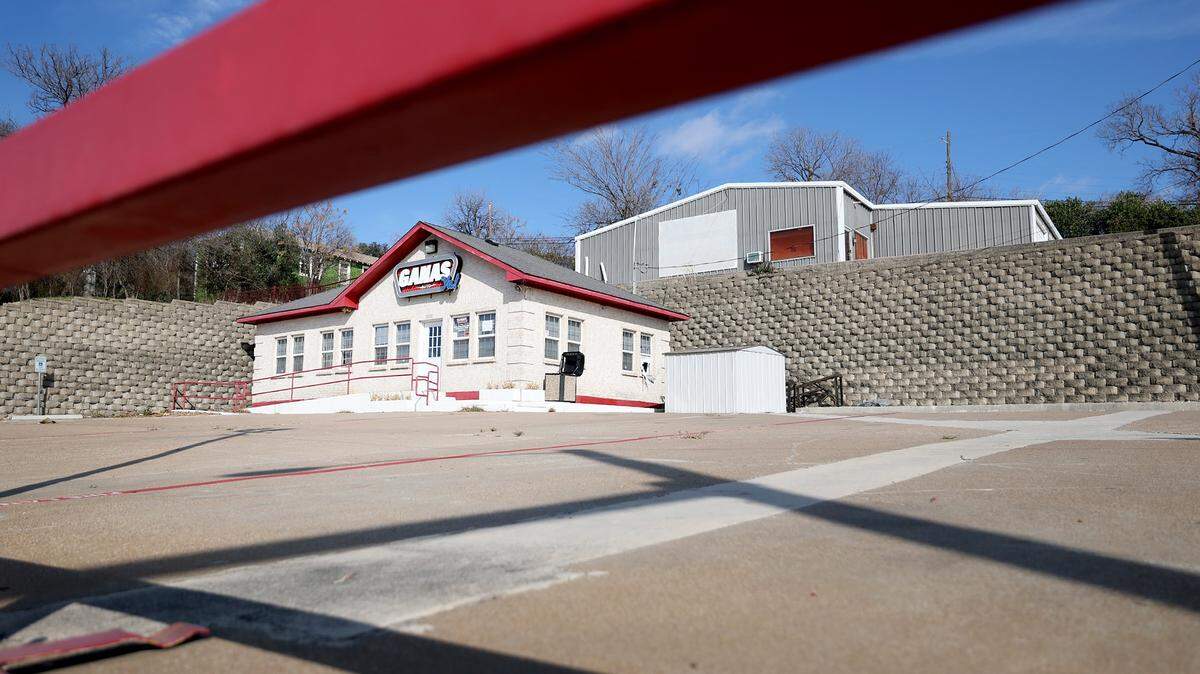
Tricolor had 14 car lots across the Metroplex that primarily served Hispanic buyers, including a Ganas Ya on Jacksboro Highway at Northside Drive, and another along I-35W in south Fort Worth. Tricolor Autos were on Alta Mere Drive, Jacksboro Highway, North Riverside Drive and in Haltom City.
Some customers were undocumented immigrants. About two-thirds of Tricolor’s borrowers had no credit score.
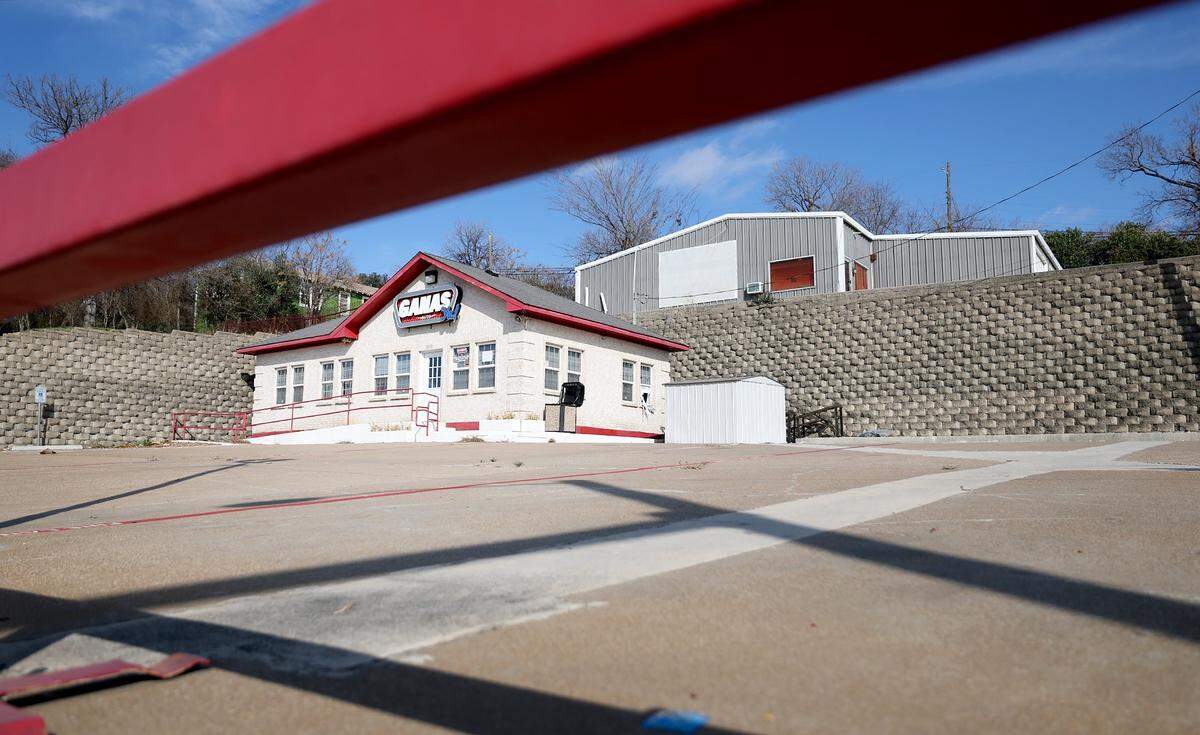
Following the collapse, Tricolor cleared out all its locations across multiple states. Ganas Ya now displays a banner on its website reading, “We are no longer offering financing or sales services. If you are an existing customer, please continue making your payments as usual.”
But customers aren’t sure what to do.
“It’s been harder to get in touch with the company (since the bankruptcy),” Gee said. “They don’t follow up at all, and even when the customer reaches out there are no answers.”
Gee still has $10,000 left to pay off on her car loan. She made two payments a month and got a seasonal job to help expedite the process. But even after making payments, her account balance did not drop lower than $10,000, and all her payments were going toward just interest, she said.
Gee also said no one reached out to inform her of the company going bankrupt. She received an email from Tricolor stating they were “working” on her account balance issue, but she has not heard back since early December.
Angela Boone, who lives in Marshall, Texas, had a similar experience following Tricolor’s bankruptcy.
She has been buying cars from the company for 16 years. She had a pleasant experience buying her first car from the company back in 2009, but the cars she bought in the last several years have been plagued with major issues. When she reached out to the company, she was met with resistance and an unwillingness to assist.
Since the bankruptcy in September, Boone said it has been nearly impossible to get in touch with anyone.
“I still have about $4,000 left to pay on the last car I bought,” Boone said. “I got a letter in the mail saying I had no more obligation to that vehicle at all, so you would think that means I have nothing more to pay. Then I got a tax paper for the cancellation of debt for $24,000. So my taxes are now messed up.”
Boone learned about the situation on Facebook and by seeing a banner on Ganas Ya and Tricolor Auto websites. She has no idea what her next steps should be.
“As long as they’re calling me under Tricolor, I’m not paying them,” Boone said. “Somebody needs to call me and tell me who the original creditor was that gave them the money so I can pay them directly.”
Attorneys representing Tricolor Holdings and Chu did not respond to the Star-Telegram’s request for comment for this story.
Hundreds other customers across North Texas say they are also in the dark. Tricolor Auto’s Facebook page has been flooded with comments in recent days and weeks from customers. Those comments have been left with no replies.
“What are we going to do? What’s going to happen to those who are paying for our cars?” wrote a Ganas Ya customer in Spanish on Tricolor Auto’s most recent Facebook post, which was in September.
‘Nobody would be that stupid’
According to the U.S. Attorney’s Office in the Southern District of New York, charges came after Chu and other top executives allegedly ran a long-running scheme that led to over $800 million in collateral fraud being used to secure loans from banks and investors. Also charged is David Goodgame, the chief operating officer.
Two others pleaded guilty in December: Jerome Kollar, the chief financial officer, and Ameryn Seibold, a finance executive. Both are cooperating with the government.
Prosecutors allege that the company “double-pledged” collateral — using the same inventory and customer portfolio to secure loans from multiple lenders. They also falsified records making it appear as if customers who had defaulted on car payments were still in good standing.
In August, lenders reviewing Tricolor’s records noticed discrepancies: Some car loans were shown as being current, but the outstanding principle remained the same, month after month. If a Tricolor customer were making timely payments, the loan would be paid down over time. But in reality, these loans were in default and couldn’t be used as collateral.
The “developing crisis” prompted a series of calls between Tricolor executives, which were secretly recorded. Chu suggested explaining the discrepancies as a “Trump administration deferment” policy. Chu also chastised Seibold, the finance executive, for failing to change the month-to-month loan balances on the falsified records.
Chu ended up telling the suspicious lender, “Look, if we were trying to commit fraud, we wouldn’t be so stupid as to keep the same balances on there... Nobody would be that stupid.”
In dealing with another lender who had discovered the collateral fraud, Chu and his team considered the Enron strategy. He could compare Tricolor’s situation to the energy trading firm that collapsed in bankruptcy after the discovery of accounting fraud and other misconduct in 2001. “I mean, Enron, Enron raises the blood pressure of the lender when they see that,” Chu said, laughing, according to the indictment. “It has to, right? ... ‘Cause who wants to be thrown in (that) category?”
When his plan to hide the fraud failed, Chu — whose salary was $2 million — extracted millions more before the bankruptcy filing. He directed the CFO to pay him the rest of a $15 million bonus. On Aug. 27, Chu got $6.25 million, which he used to buy a multi-million dollar property in Beverly Hills, according to the indictment.
Days later, Tricolor placed more than 1,000 of its employees on unpaid leave.
This story was originally published January 7, 2026 at 2:02 PM.