‘A great deal of need’: Fort Worth food banks stretched thin after shutdown
Before 9 a.m. on Nov. 10, when the temperature hadn’t yet hit 50 degrees, cars wrapped around the block outside Community Food Bank of Fort Worth and people lined up outside the front doors to get groceries, diapers and food.
Kia Geary-Reed has been volunteering here for 14 years. She was one of several volunteers working on the assembly line in the building’s warehouse.
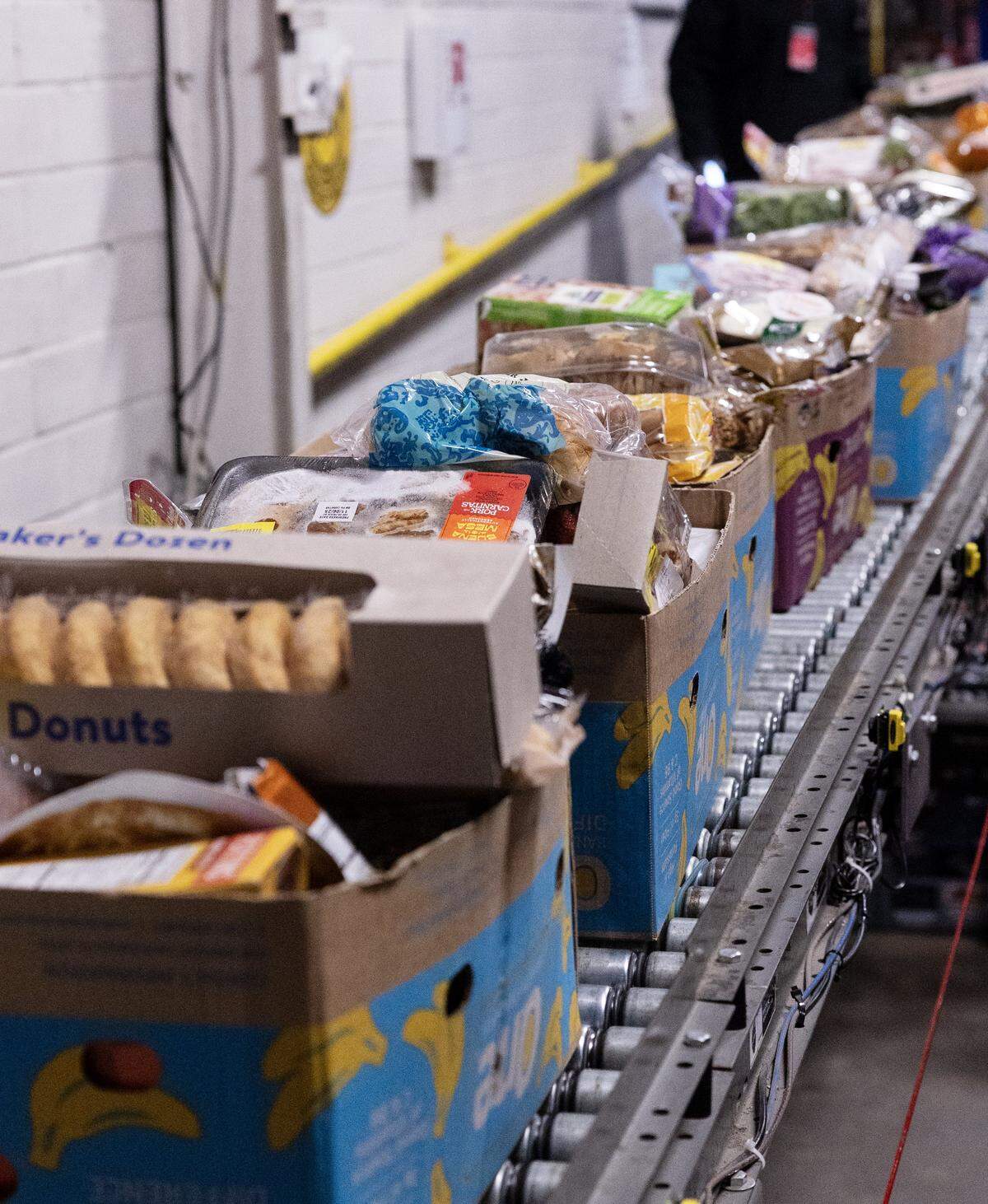
“I feel very sad about what’s going on with the shutdown, as far as the president trying to weaponize hunger against people,” Geary-Reed said. “These clients deserve help, and we try to provide — as much as we can — a balanced meal for them and their families.”
More than 40 days after the federal government shut down, Fort Worth’s food banks have seen a spike in demand and new struggles to keep shelves full.
The shutdown ended Wednesday night, when President Donald Trump signed a funding package passed by the House of Representatives.
Leaders said earlier this week that they did not expect change to happen overnight once the government reopened.
“We’re grateful for the federal government for providing those benefits, but there’s still a great deal of need out there — it just won’t be quite as knuckle biting,” said Clarissa Clarke, North Texas Food Bank’s government relations officer. “Toward the end of the month, things should get back to our ‘normal,’ which is high demand.”
On Nov. 12, back at Community Food Bank, hope and reality collided as members of the House of Representatives began to fly back to Washington after eight Senate Democrats broke with their party to end the shutdown.
“I don’t think the ‘normal,’ from when we first began this process, will be there, because there are just too many factors to figure in,” said Karen Harris, a staff member at Community Food Bank explained. “There are a lot of variables that go into that equation.”
Some Texans have begun to receive partial SNAP benefits after a directive from the U.S. Department of Agriculture. But the increased demand when the benefits ended put a stress on food banks.
“It’s very stressful trying to keep up with the additional folks that we’re trying to serve,” said Rudy Taylor, Community Food Bank’s chief operating officer. “We normally see anywhere between 45 and 50 new clients per day, but once the SNAP benefits were gone, we’re seeing upwards of 90 to 100 new clients that never been here before.”
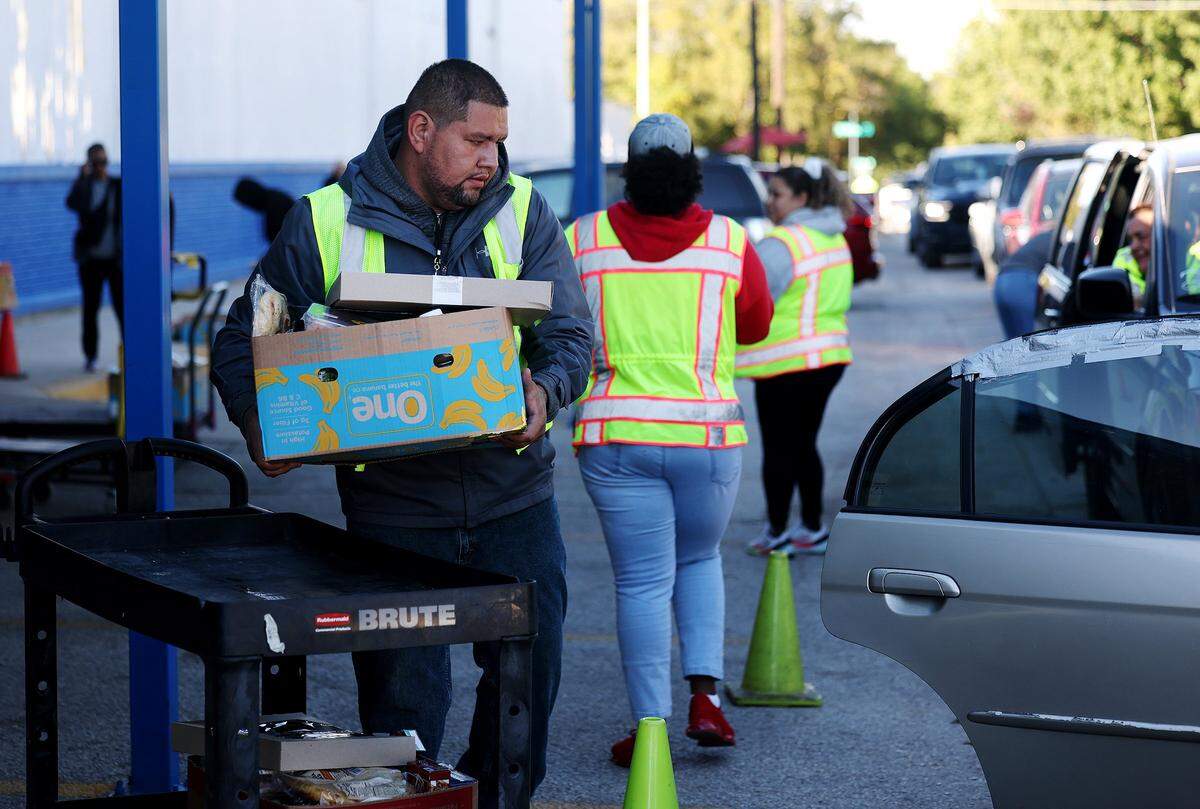
Community Food Bank has been serving several hundred people per day, Taylor said. For Thanksgiving, it will distribute more than 5,000 turkeys. The organization does not receive federal assistance to purchase food, and relies on donations from the community as well as big box stores like Walmart and Trader Joe’s to stay afloat.
Even for larger operations, like the Tarrant Area Food Bank, times are tough.
On Nov. 7, at the warehouse in the organization’s main distribution center, almost an entire aisle of shelves normally stocked with non-perishable foods sat empty.
“I was here during the pandemic, and I’ve never seen multiple rows empty,” said Jared Williams, a spokesperson for TAFB, as he walked through the warehouse. “It was nowhere close to this. Last week, we had three aisles empty.”
Williams said that it normally takes between one and two days for non-perishables to cycle through the warehouse. Right now, they can’t get it back on the shelves fast enough.
“With the number of folks who are impacted currently by the shutdown, our partners have seen an increase in demand, as well as our own distributions,” Williams explained. “We’ve seen orders picking up to try to keep pace with that demand.”
In 2024, TAFB distributed 62 million meals. 40% of those were funded by the government.
During the government shutdown, TAFB doubled its operations, Williams said, and saw a 25% increase in the number of volunteers.
“We have a network of over 500 nonprofit partner agencies in our 13 counties that provide food directly to community members in need, and their orders have already substantially increased,” said Julie Butner, TAFB president and CEO. “There is no amount of money that the local community can provide to try to address this gap that will fulfill the need of the federal government.”
How you can help
On Nov. 11, Tarrant County commissioners voted to donate $200,000 to food banks through the Housing Finance Corporation.
Texans who want to help can volunteer their time or donate to food banks.
To get a list of food banks in your area, visit the websites for Tarrant Area Food Bank or North Texas Food Bank.
Food bank staff said these items are in high demand:
- Canned foods, especially canned meats
- Diapers
- Fruit cups and snacks for children