
Fort Worth nears goal to reduce euthanasia at animal shelters but protesters have questions
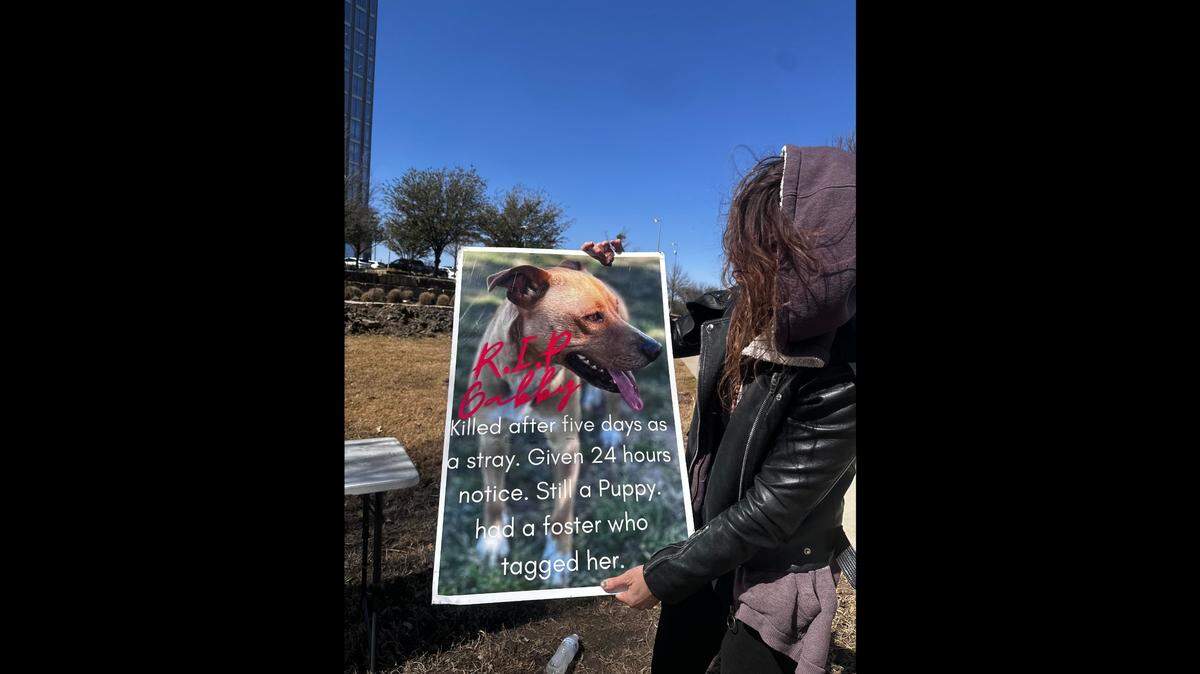
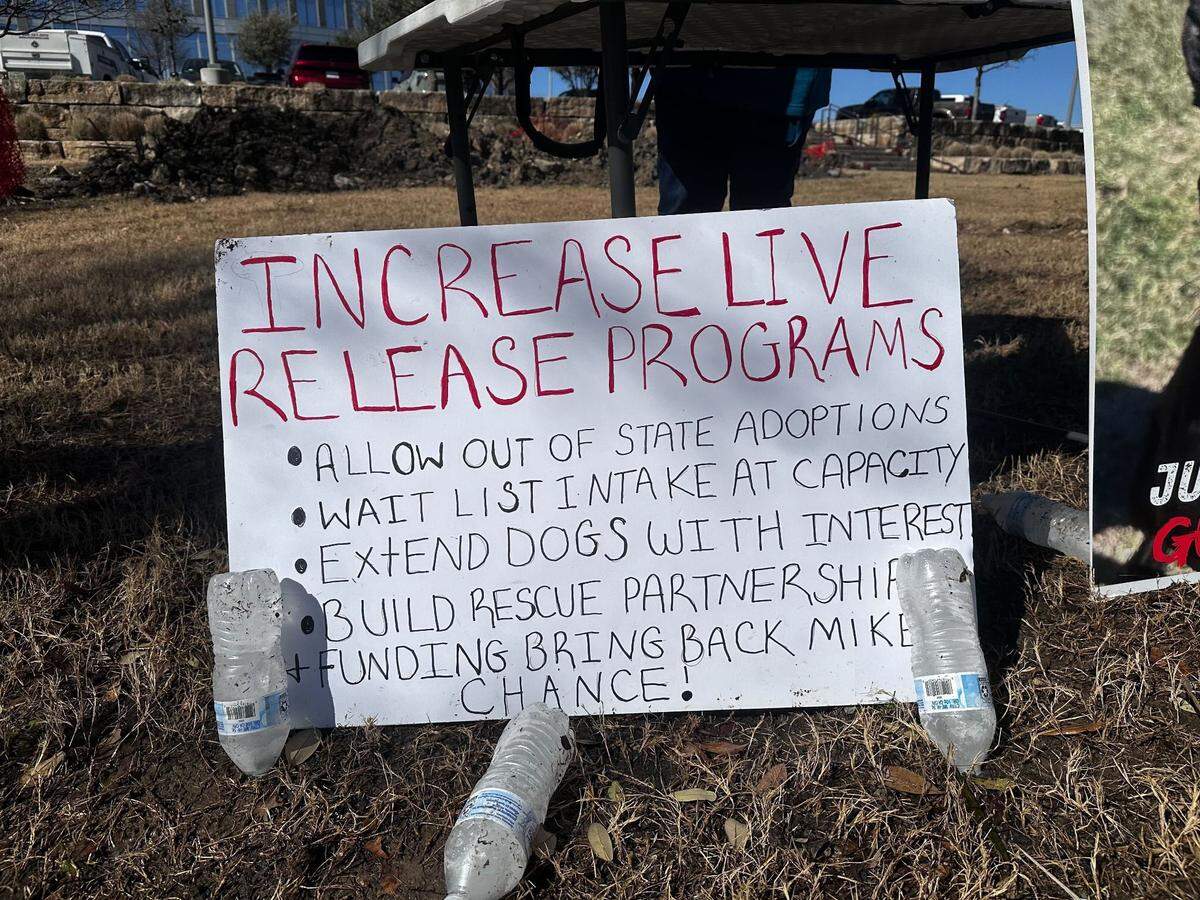
The extreme wind on Tuesday morning blew away posters that a group of advocates supporting the Fort Worth Coalition for Animal Welfare brought to a protest demanding transparency and accountability from animal shelter management.
The activists gathered outside Fort Worth City Hall demanded justice for many dogs that they claim the city’s shelters have been mislabeling and euthanizing.
Lynne Collier, a networker who connects shelter pets with rescues and other organizations that can help them find homes, said that dogs in Fort Worth’s shelters are being put down needlessly because the staff is not allowing enough time to home them.
Collier said there have been instances where dogs have been put down 30 minutes before rescue groups find a solution. “They just are unwilling to give extensions,” she said.
“Fort Worth in particular is putting down dogs that are highly adoptable, friendly, no issues whatsoever, and it’s just really awful, and it’s a lot about their policies,” Collier said.
Collier, who started fostering about two years ago, said she had no idea the shelters had such a long list of dogs that will be euthanized if homes aren’t found. “We’ve got a list of, let’s say, 50 to 80 dogs, and we can’t possibly network that many.”
She added that the shelter in Dallas does it differently with five to 10 dogs a day, which can be “manageable.”
More than 300 people have signed a petition asking for more humane protocols at the shelters. A group of five advocates attended the protest on Tuesday, waving posters outside City Hall.
Director of Code Compliance Brian Daugherty and Christopher McAllister, assistant director of Animal Care and Control, stepped outside to speak to them.
What started as a small protest soon turned into the first face-to-face meeting between the two parties after weeks of back-and-forth emails.
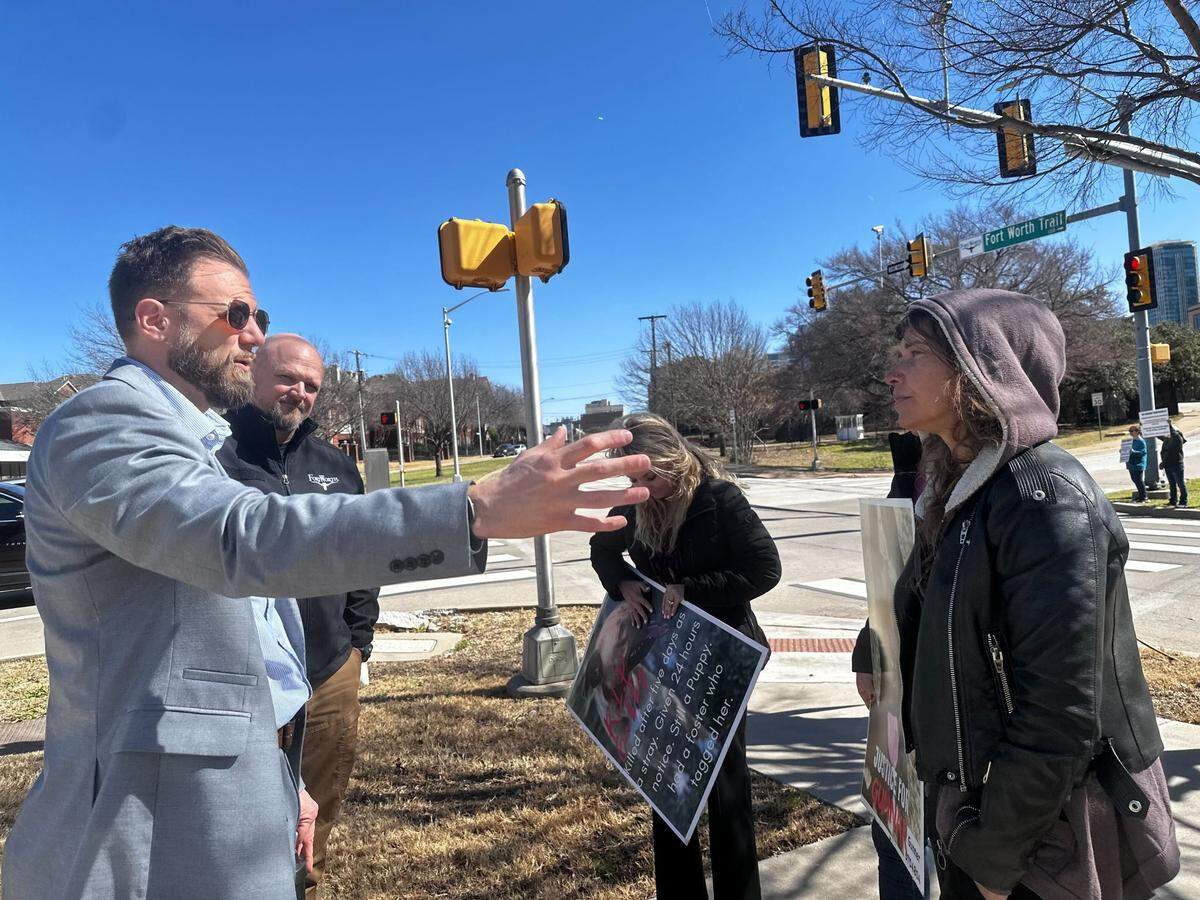
“Anybody that wants to get involved and even when it comes to protesting, it just says they care,” Daugherty said. “It’s just we’ve got to channel all the efforts in the same direction.”
According to a news release last month, Fort Worth’s shelters recently achieved a 89.42% live release rate for animals, which is a significant improvement in reducing euthanasia. The rate is the percentage of pets that leave the shelters alive through adoption, rescue, or go back to their owners.
“Our goal is to stay above 90% and we’re real close. We’re inching closer and closer and closer, and I think we’ll be there before the end of the year,” Daugherty said. A rate of 90% or better generally means a shelter is considered “no-kill.”
According to the city data from December there were 1,484 animal intakes that month, 740 adoptions and 665 pets fostered, with a live release rate of 87.26%.
In January the live release rate increased to 89.42% with a total intake of 1,358 animals, 683 adopted and 679 fostered. “This achievement is the result of the tireless dedication of shelter staff, volunteers and supporters, who continue to make a profound impact on the welfare of animals in Fort Worth,” the city said in the news release last month.
The live release rate is February was 88.05%, an Animal Care and Control spokesperson said in a news release this week. “A key driver of FWACC’s success is its strong partnerships with rescue organizations, which have helped facilitate the transfer of nearly 23,000 animals since 2020 to rescue partners across the state and country, where they’ve been placed in permanent homes,” according to the statement.
During their conversation with Daugherty, the advocates addressed their concerns which included the shelter not having a direct contact number, possible expansion to out-of-state adoptions, hold time for animals, and determining factors before animals are euthanized.
“They don’t just walk by and label a dog as aggressive just because it’s barking,” McAllister said. “They go through a more thorough assessment process.”
When the advocates asked about specific instances of dogs being mislabeled, both Daugherty and McAllister said that they would need to get detailed information to review on a case-by-case basis.
One of the protesters, Fallon Hill, said that a 9-month-old puppy named Cupid, who had been in the shelter for three days was put down. “On intake he was struggling like most dogs do, fighting for their lives,” she said.
Hill said Cupid had a volunteer in the shelter’s system waiting to meet him but he was killed on Monday.
“It’s a common problem that dogs are getting assessed (as aggressive) on intake,” she said. A lot of them are in a fearful state and they need to be given at least a week to open up before the behavioral assessment, she said.
Daugherty said staff members at the shelters do a thorough behavioral assessment on every animal before it is decided whether to euthanize them.
McAllister added that they do a number of in-shelter behavioral tests with the animals, including testing them with other dogs, seeing how they respond on a leash, and checking for aggression toward staff.
“I think this is where we need to differentiate; we don’t know who is going to be euthanized the next day,” Hill said.
“And that’s the problem, because we’re just guessing ... out of these 100 between the two shelters on the urgent list, we don’t know who’s actually up for euthanasia,” she said.
Hill said some shelters like Dallas send out a list of dogs that are going to be euthanized the next day, or even in two days. “We could have saved all six of those (that were put down) yesterday,” she said on Tuesday. “We had out-of-state adopters ready.”
Daugherty responded, saying, “We don’t want to euthanize animals any more than you guys do. That is always the last option.”
“There is no harder job than working in a municipal shelter because you’re working on both sides of it, where you have to love, nurture, take care of this thing,” he said. “And obviously the other 10% of that job involves euthanasia.”
Daugherty and McAllister invited the advocates to tour the shelter to see what goes there on a daily basis.
“I love that you all care,” Daugherty said. “We’ve just got to work towards the same goal. I appreciate the conversation.”
Daugherty said Animal Care and Control is creating a mobile clinic to provide spay/neuter, vaccinations, and other services in neighborhoods, with the goal of launching it in late summer or early fall.
The city also has a new managed intake program, which “provides alternatives to surrendering pets by offering behavior support, temporary foster placements, and other resources to ensure animals remain in safe and loving environments,” the city said in a statement.
Hill said she has been involved in animal rescue for 10 years, with a focus on Fort Worth due to a history of comparatively high euthanasia rates.
Hill told the Star-Telegram that her discussion with Daugherty seemed productive. But she said she’s not sure a tour of the shelter would help solve the problems and she still wants to see officials take accountability for “disorganized mismanagement that cost dogs’ lives.”
Hill believes there’s a “crisis of consciousness” in society where pets are seen as disposable.
“We don’t know how productive we would be just coming down to the shelter and looking at things,” she said. “We need to get to the core issues, the root issues.”
How to adopt a pet in Fort Worth
The city’s website lists hundreds of cats and dogs available for adoption, on the “Adoptable Pets” page. If you see an animal you like, you can click on that animal’s profile to see which location they’re housed at.
If you’re specifically interested in adopting an animal that’s at risk of euthanasia, the city website has an Urgent Placement Pets page that lists animals in urgent need of a placement because of health conditions, limited shelter space or other critical factors. A Facebook page, not affiliated with the shelter, called Code Red Animals of FWACC also posts animals that are scheduled for euthanasia or soon will be.
To claim an animal on the euthanasia list, you can email FWACCTAG@fortworthtexas.gov. Each animal on the list has a deadline by which it must be claimed. Some animals may have adoption restrictions if they have health or behavioral concerns.
This article includes information from the Star-Telegram’s archives.
This story was originally published March 6, 2025 at 5:12 PM.