
This Black woman made the high bid for a Stock Show champion among a sea of white men
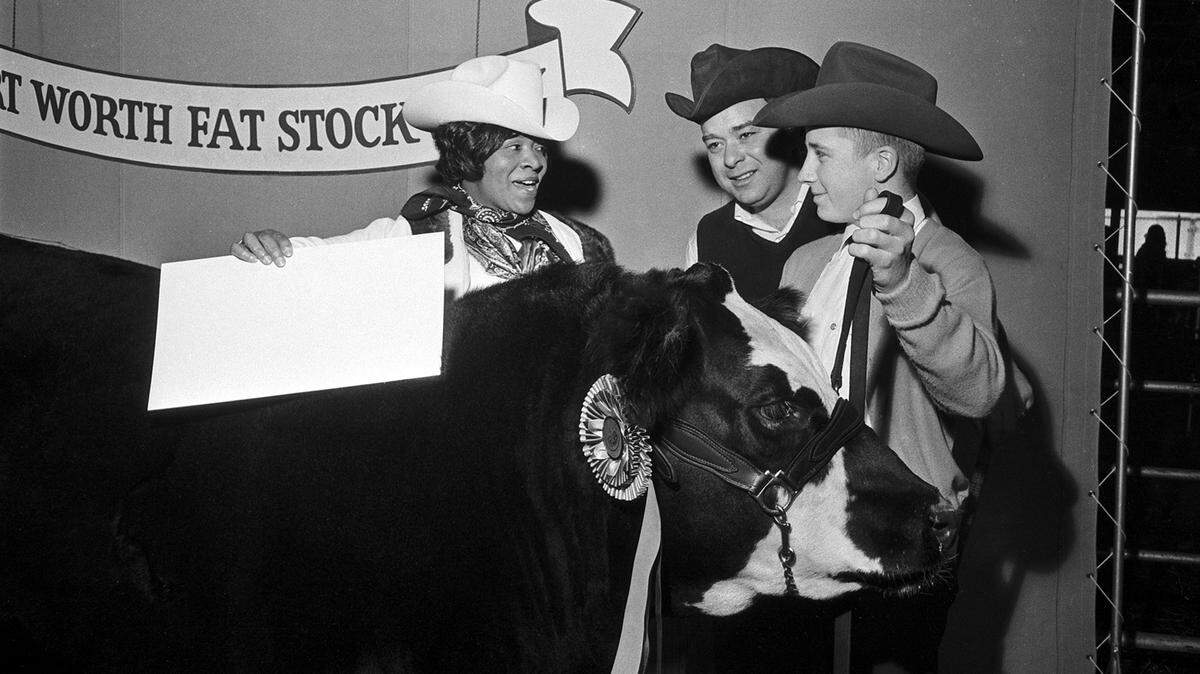
The Fort Worth Stock Show & Rodeo is now in full swing, and I wanted to share a recent interaction I had with a patron during a research request. As part of my job duties working at UTA Special Collections, I work extensively with our photograph collections, with our largest being the Fort Worth Star-Telegram photograph collection.
When Fort Worth pastor Kyev Tatum approached me one day last summer on a quest for information, he introduced me to a notable Fort Worthian, Beatrice Pringle, and her Stock Show story.
This is the part of my job that I’m most excited by — getting to be a part of and help further someone’s research journey while also learning more about the rich history of this community in the process.
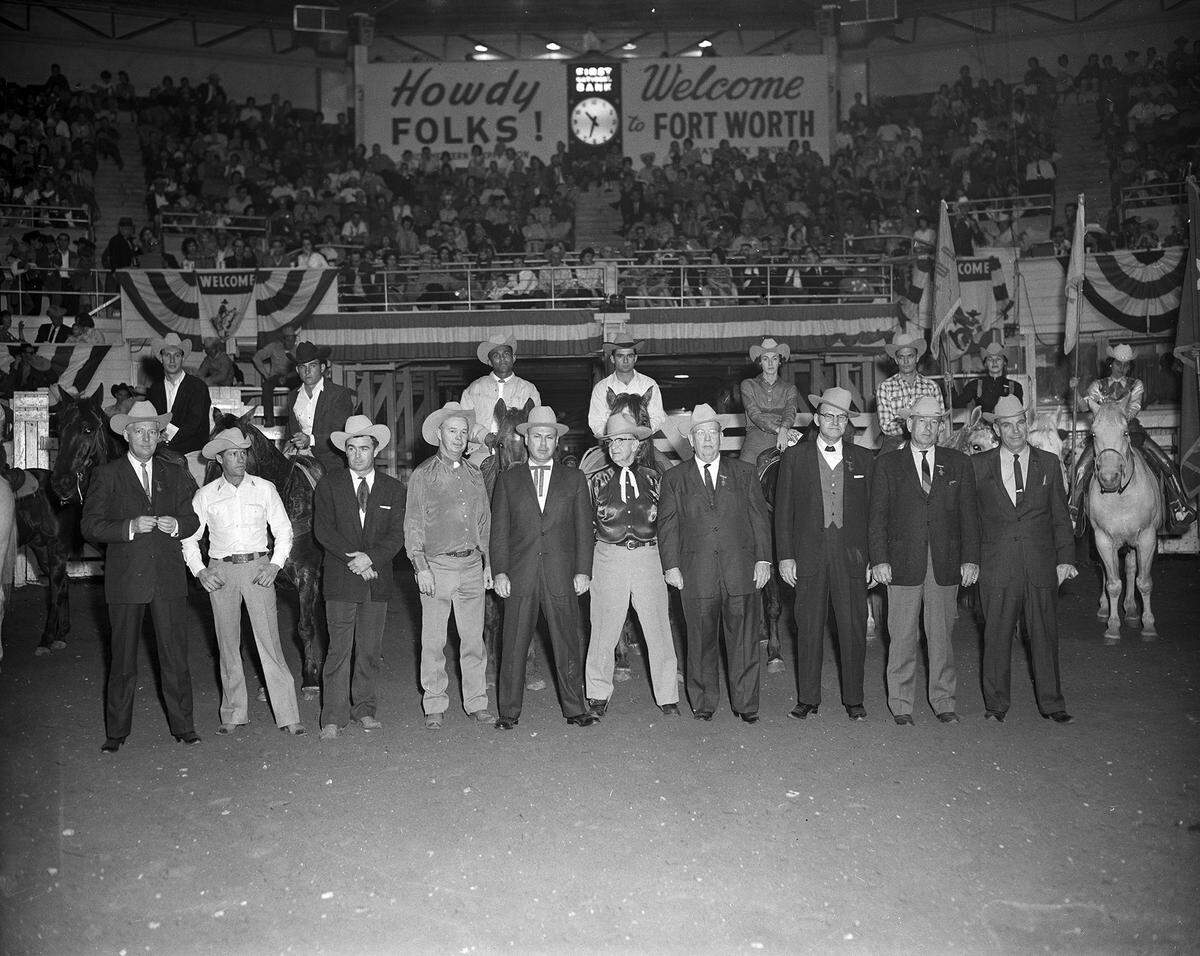
As far as Stock Show history goes, many know the story of Bill Pickett and how he dazzled crowds at the 1904 Fat Stock Show with his never-before-seen bulldogging technique. Pickett, a Black cowboy, was often barred from rodeos because of his race, so his exhibition at the Stock Show was uncommon, given that Fort Worth was still entrenched in Jim Crow-era segregation at that time.
For a period from 1945 until 1953, the Stock Show held a livestock competition for young Black men that was separate from a similar contest for young white men. There was a significant inequity in prize money awarded between these two categories — with $645 offered to the winner among the Black contestants versus $2,040 awarded to the winner among the white contestants.
It wouldn’t be until 1956 that the Stock Show allowed Black cowboys to compete in rodeo for the first time in its history. Among the first five Black cowboys to enter rodeo competition that year was Willie Thomas of Richmond, Texas, who placed first in Brahman bull riding. In 1962, the Stock Show awarded its second first-place rodeo title to a Black competitor, Ernest “Bud” Bramwell, in steer wrestling. Following this win, Bramwell helped co-found the American Black Cowboy Association in 1968 to increase Black representation at rodeos across the country.
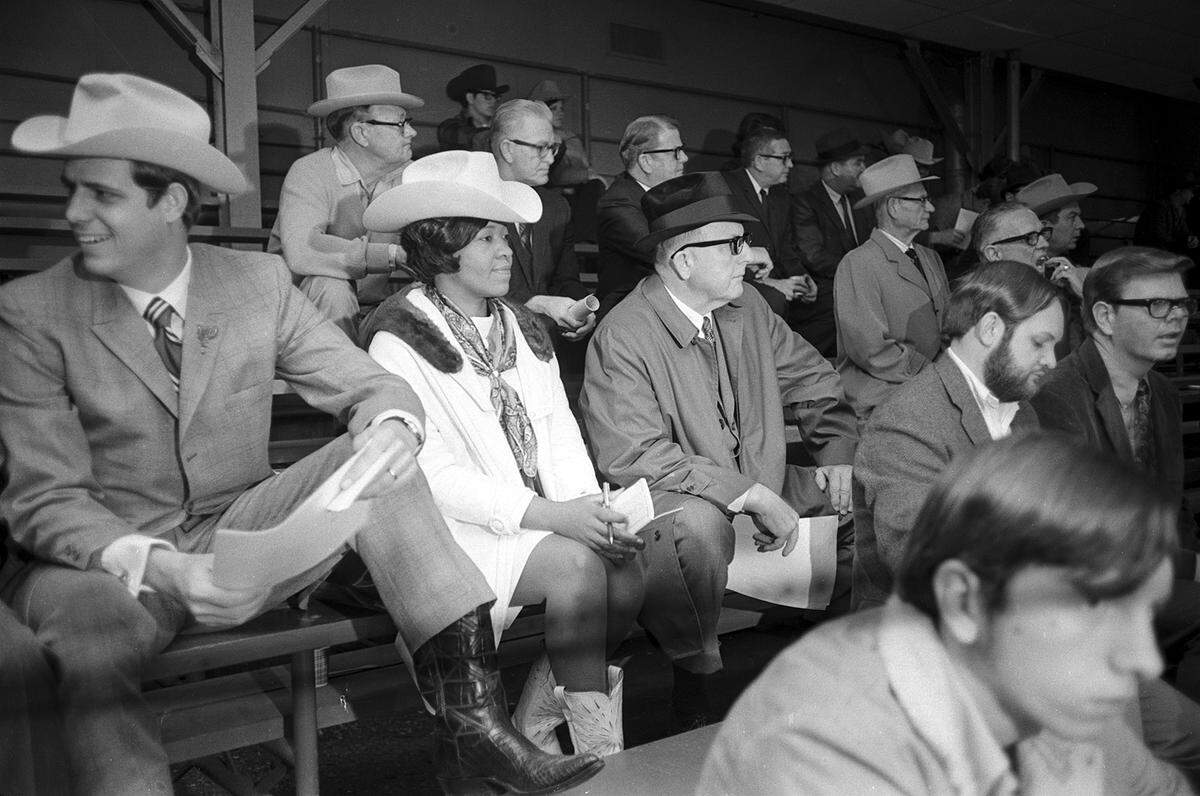
This leads us to the 1970 Southwestern Exposition and Fat Stock Show, where a Black woman named Beatrice Pringle eagerly bid on the grand champion steer inside the packed auction arena filled with dozens of white men. She didn’t appear to be the least bit fazed by the fact that there was not a single person in that arena who looked like her — she was on a mission.
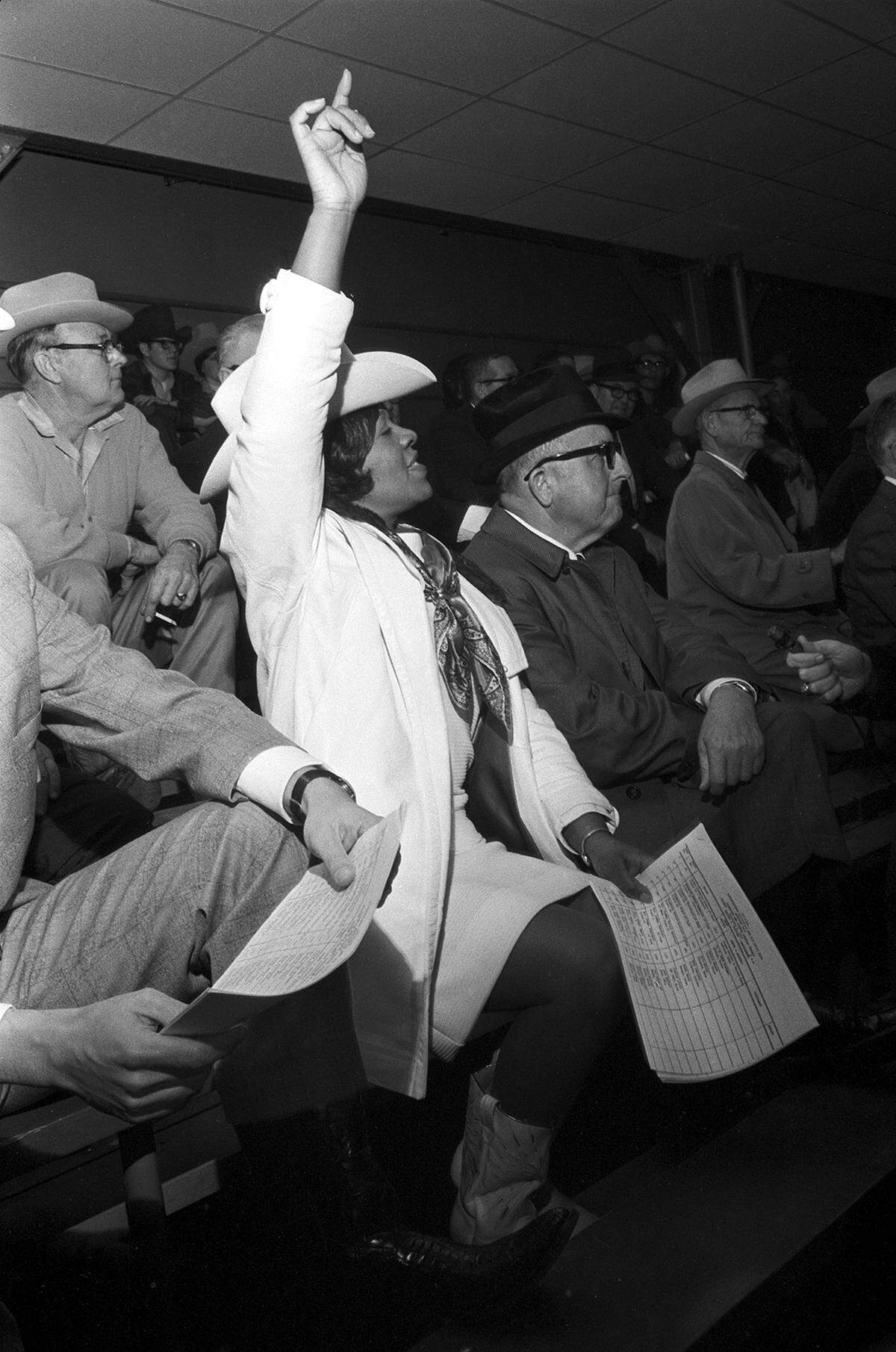
As I viewed this series of negatives for the first time, I was immediately in awe of Pringle. Frame by frame, I took in her outfit, her body language, her laser focus on the task at hand. She was radiant in her all-white cowgirl clothing among a sea of dark colored suit jackets. She exuded sheer confidence, and it was difficult for those around her not to notice. Two Star-Telegram photographers captured her from different angles as she exuberantly threw her hand up with each bid.
Pringle, public relations director at Good Publishing Co. at the time, was sent to bid on the grand champion steer by her boss, George Levitan, owner of the publishing firm. Good Publishing Co., based in Fort Worth, published four nationally distributed, Black-oriented magazines, including Sepia, Hep, Jive, and Bronze Thrills, each focusing on various aspects of African American culture.
Bidding for the 18-month-old, 1,215 pound Hereford-Angus crossbreed named “Corky” opened with a $1,000 bid by a representative of Amon Carter Jr., president and publisher of the Star-Telegram. Other bidders included First National Bank, Buddies Super Market, General Dynamics-Fort Worth, Continental National Bank, Piggly Wiggly, Jetton’s Cafeteria, and a car dealership owner Bill McKay.
Pringle entered the bidding war with a $5,800 bid, and she continued bidding against representatives from Fort Worth Cab and Baggage, Fort Worth National Bank, and a few more back-and-forth bids from First National Bank reps. After what was probably only mere seconds of bidding, Pringle secured the top bid at $7,000, which is worth about $57,000 today.
Upon winning the auction, Levitan ordered that the steer be re-auctioned and the funds raised from that auction be given to Josephine Marshall, a Fort Worth woman who was in danger of losing her 11 foster children due to poor housing conditions. The year prior, Levitan made a similar move to buy the grand champion steer and gave it to “Mama Josephine,” as she was known, who then sold it to Piggly Wiggly for $1,000.
Like Mama Josephine, George Levitan also saw greatness in Pringle. In May 1975, Levitan promoted Pringle to publisher after she served the company for 19 years in various roles. By 1977, Good Publishing Co. distributed over 750,000 copies of six different magazines all over the world.
This is just a brief glimpse into Beatrice Pringle’s impact in the community and in the field of communications, and I am grateful to Tatum for introducing me to her.
Tatum plans to present his research findings on Pringle through an upcoming exhibit titled “The Trilogy of Her Story: Black Women History Makers in Fort Worth,” which will be on display at the Fort Worth Museum of Science & History from March-June, 2025.
Sara Pezzoni works toward promoting greater access to Fort Worth Star-Telegram archival collection materials as a staff member of the Special Collections department at the University of Texas at Arlington Libraries.