‘Devastating’: Will Rogers’ historic ranch in California destroyed by the Palisades fire
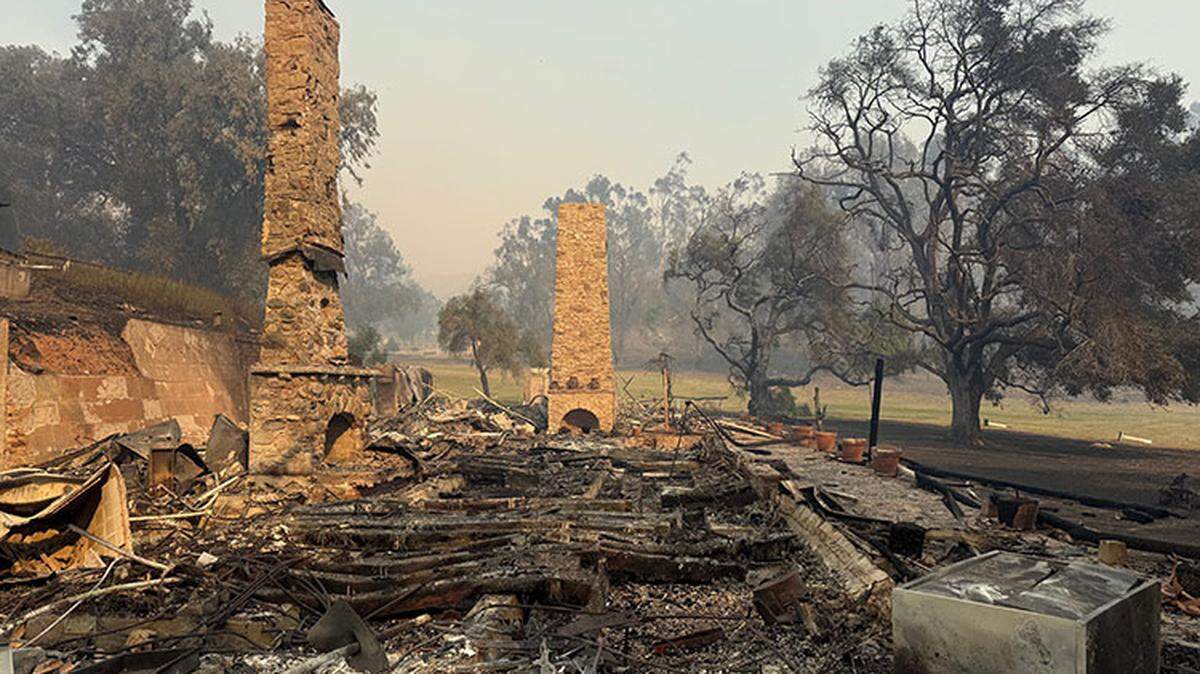
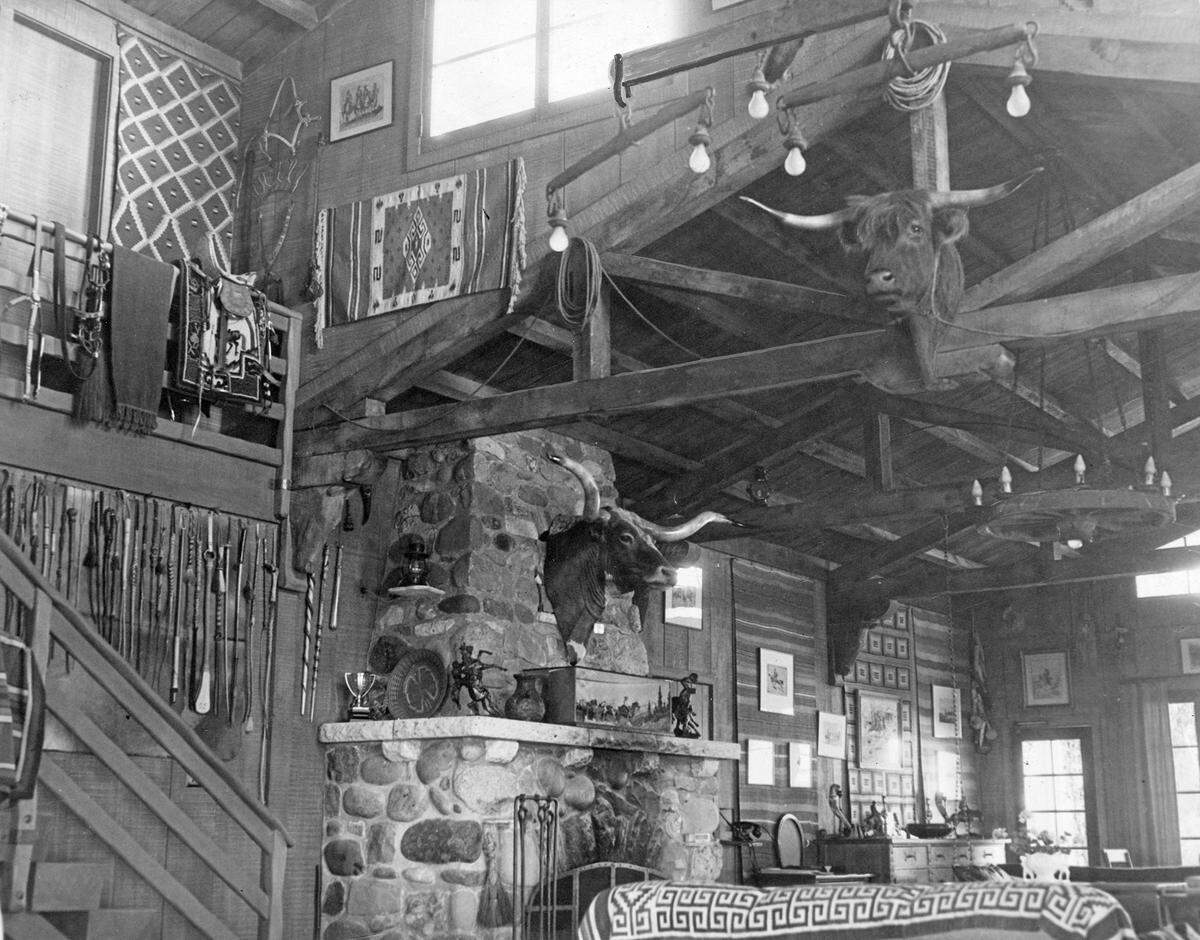
The fires in Los Angeles have destroyed the Will Rogers State Historical Park, including the 31-room ranch house built nearly a century ago by the cowboy humorist considered an “adopted citizen” of Fort Worth.
The Palisades fire consumed the buildings Wednesday. Photos show nothing but charred remains of the property, which also included a stable, corrals, polo field and hiking trails.
Rogers, an Oklahoma native who was the highest paid actor and performer of his era, was a frequent visitor to Fort Worth from the 1920s until his death in a plane crash in 1935. The city’s Will Rogers Memorial Center, home of the annual Stock Show, was built in 1936 in his memory.
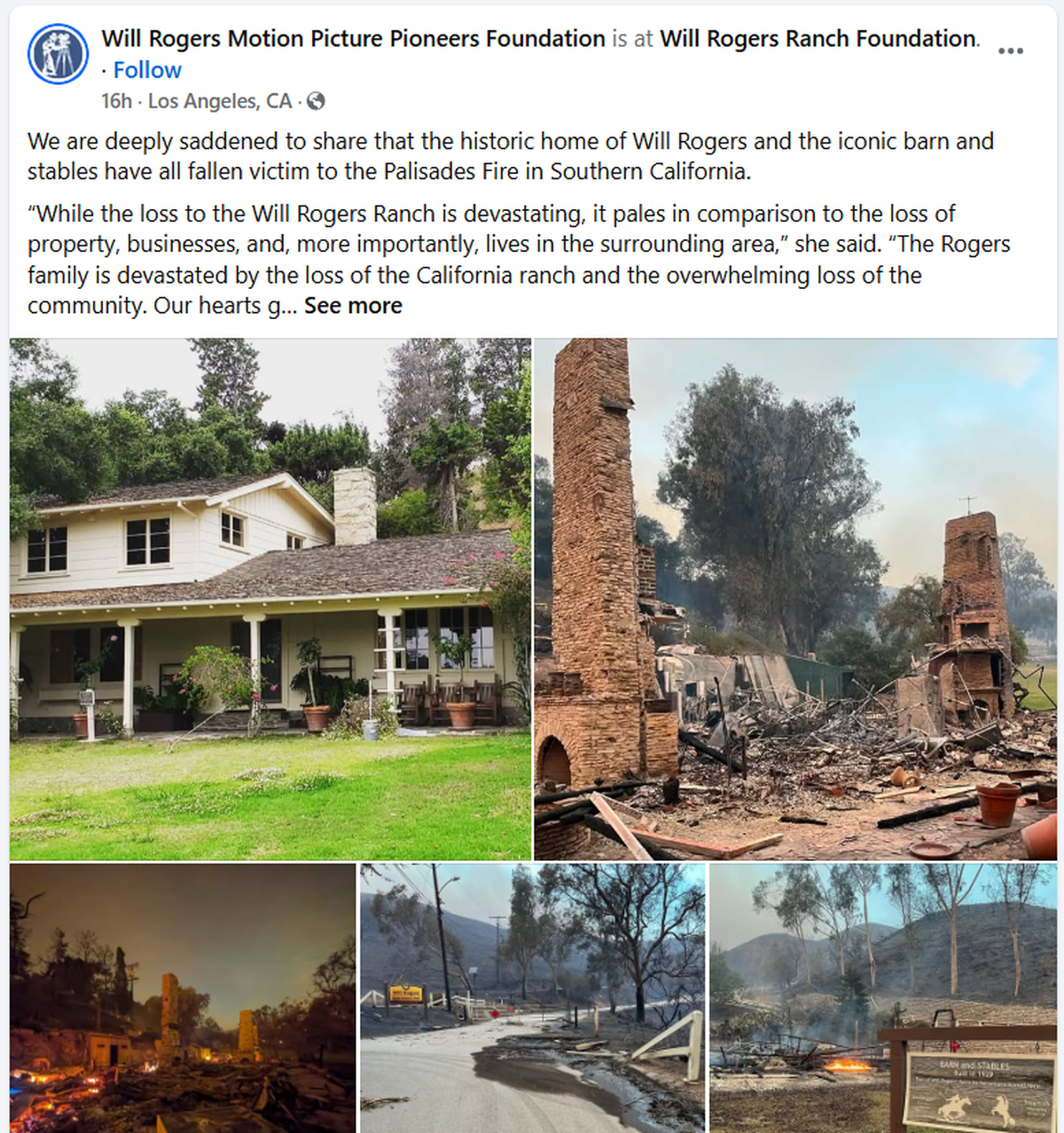
Rogers’ widow donated the California ranch property in 1944 to the state.
The ranch house was on the National Register of Historic Places and contained “priceless paintings and lots of western memorabilia,” according to the California State Park’s website.
Park workers were able to evacuate the horses and some cultural and historical artifacts, including artwork. The losses are still be assessed, but the park service said the ranch house and other historic buildings were destroyed, as well as state park employees’ homes.
The fire, fueled by wind gusts up to 80 mph, also destroyed parts of Topanga State Park, including a historic motel once owned by William Randolph Hearst. Multiple other historic sites have also been lost in the fires raging across the Los Angeles area this week.
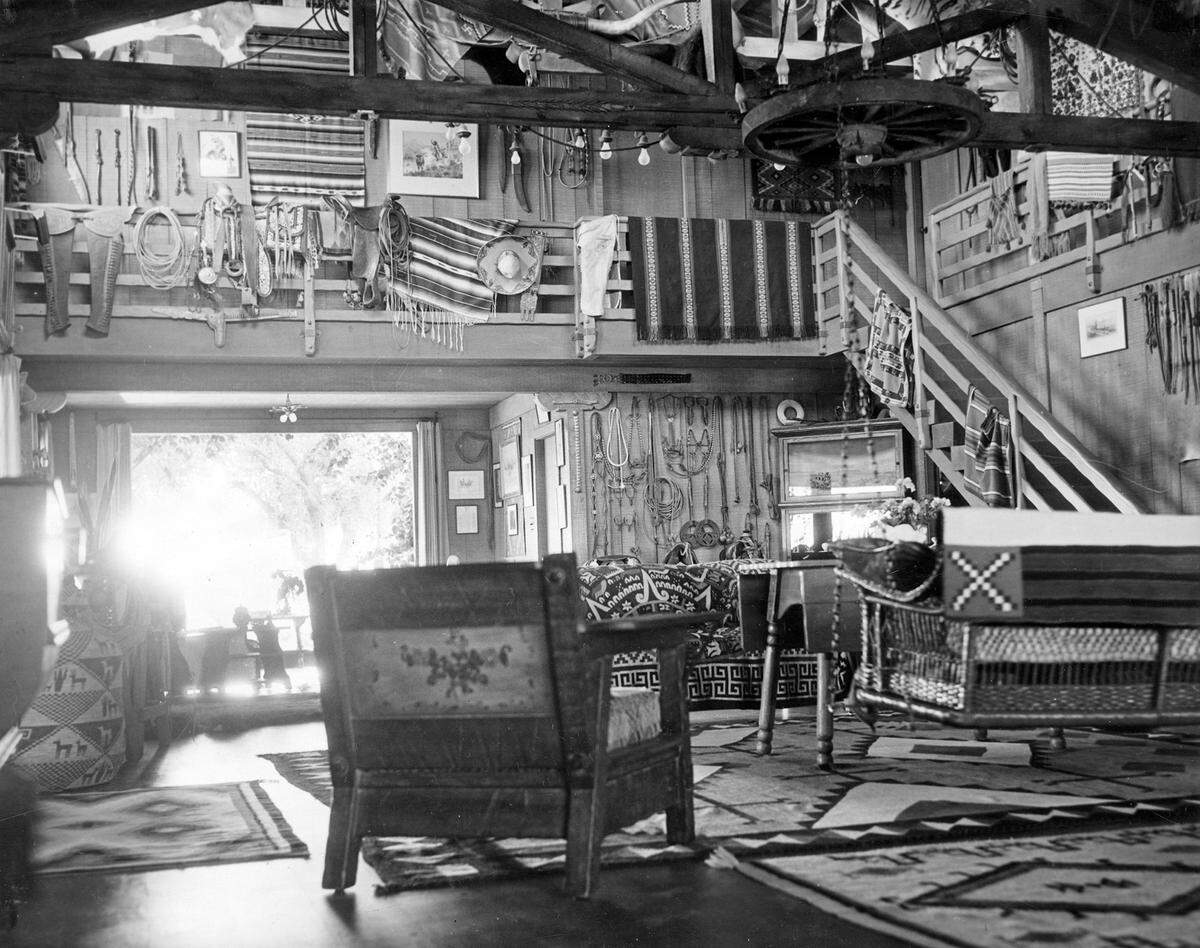
The Rogers family posted a statement on the loss of “the Barn that Jokes Built.”
“While the loss to the Will Rogers Ranch is devastating, it pales in comparison to the loss of the property and businesses and, more importantly, the lives of those in the surrounding area,” said Jennifer Rogers, a family representative. “Our thoughts are with the park staff and community of the Pacific Palisades. This loss is immeasurable, but we remain committed to preserving Will Rogers’s legacy for future generations.”
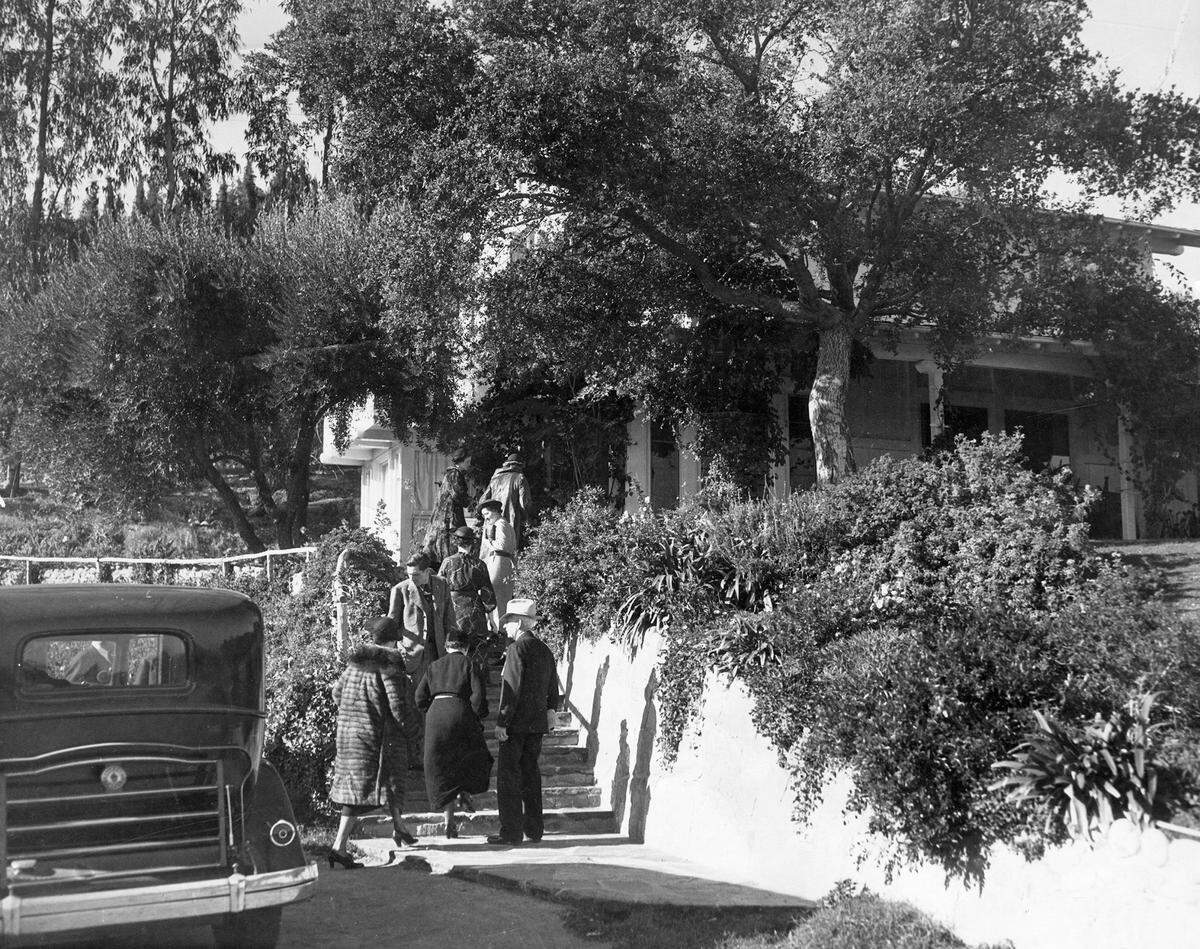
Amon G. Carter Sr., the Star-Telegram publisher, was a close friend of Rogers and kept on display at his Shady Oak Farm near Lake Worth a battered 10-gallon hat that belonged to the performer. Carter often visited Rogers’ ranch in California.
.JPG "HI_J0078(2).JPG")
A 2002 column in the Star-Telegram by history enthusiast Bill Fairley said Carter “prevailed upon Rogers to perform in Fort Worth, often for free. During the 1930s drought and Depression, Carter wrote to Rogers about his personal concerns. The humorist wired back: “I will come to Texas towns, pay all my own expenses and devote all proceeds to [the] unemployed.”
Carter furnished a plane and pilot, and Rogers canceled his showbiz engagements to begin stumping all over Texas to raise money for needy farmers and the unemployed, Fairley wrote. His Fort Worth appearance netted $18,000 for the relief fund.
.JPG "AHi_j0175(30).JPG")
In July 1935, Rogers made his last visit to Fort Worth and told Carter about his planned flight to Alaska with a “famed one-eyed pilot,” Wiley Post. During the trip, Rogers sent dispatches to the Star-Telegram recounting his experiences, which appeared in the newspaper.
On Aug. 15, their plane crashed 16 miles south of Point Barrow, killing both of them. The next day, the Star-Telegram printed the last telegram it had gotten from Rogers the day before.
.jpg "Fort_Worth_Star_Telegram_1935_08_16_1 (1).jpg")
This story was originally published January 9, 2025 at 11:45 AM.