
Mercy Culture’s proposed human trafficking victim shelter hits a roadblock
The Fort Worth Zoning Commission voted 6-4 at its Wednesday, Nov. 13, meeting to recommend denying a site plan adjustment for Mercy Culture Church’s proposed human trafficking victim shelter.
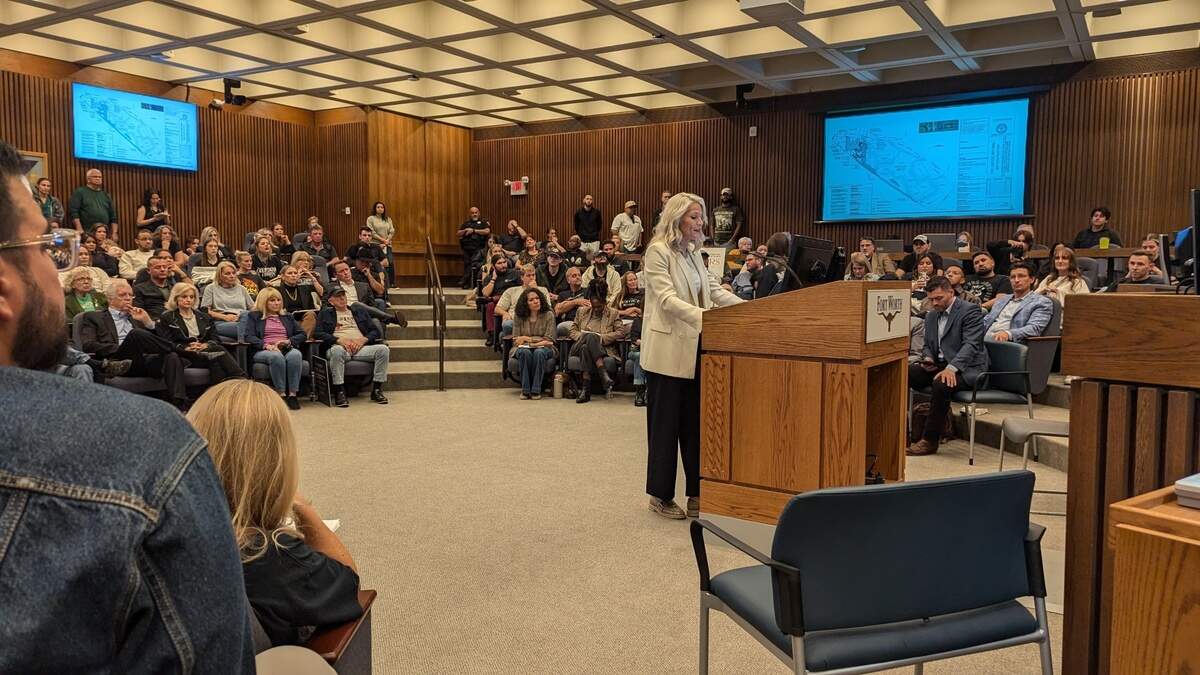
The vote came after supporters and opponents of the project packed a normally sparsely attended meeting to argue the shelter is needed to help thousands of victims of human trafficking.
Fort Worth marshals escorted roughly 100 attendees out of the 240-seat council chamber into an overflow room next door. Some also watched on televisions that were set up in the lobby outside the council chamber.
Proponents of the project pointed to the need for long term shelter beds for survivors of human trafficking. Opponents of the project said the shelter would exacerbate existing issues of parking and traffic while stressing they were not against Mercy Culture’s mission of helping trafficking victims.
What are they building?
Mercy Culture has been trying to get the project built since December 2021. The proposed shelter is part of the church’s Justice Reform Ministry, which seeks to rehabilitate victims of human trafficking.
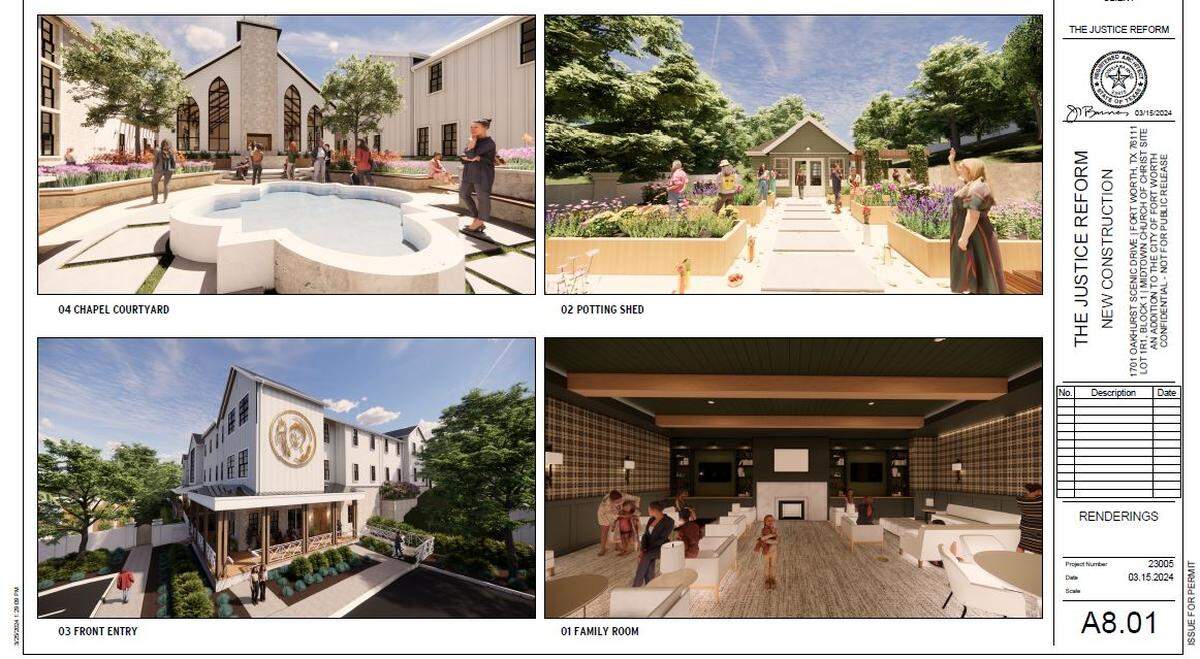
The two-story building would be on the northern edge of the church’s campus at 1701 Oakhurst Scenic Drive. Plans show the building including a dining hall, exercise room, offices, gathering spaces and two stories of residential sleeping rooms with room for 107 beds and 16 staff members, according to records obtained by the Star-Telegram through an open records request.
Mercy Culture Senior Pastor Heather Schott pointed to statistics showing a disproportionate number of federal cases involving human trafficking in the U.S. District Court of North Texas to argue the shelter is needed to help victims.
Of the 262 federal prosecutions of human trafficking in Texas since the turn of the century, 95 have been in the U.S. District Court of North Texas, according to data from the Human Trafficking Institute. That distirct covers most of the Metroplex with the exception of Denton, Collin, Cooke, Grayson, and Fanin counties.
The institute estimates those cases involved 936 victims, however, that may be an under count because of limits on the amount of publicly available data on victims.
Supporters of the project also held up signs citing statistics from a 2017 study by the International Labour Organization showing an estimated 40.3 million people globally were victims of modern slavery. This includes a combination of forced marriages and forced labor, in which someone is compelled to work under threats of violence.
An updated study from 2022 showed those numbers could be as high as 49.6 million with roughly 6.3 million people forced into commercial sexual exploitation.
Mercy Culture hopes the Justice Residences will meet some of that need. The church filed building permits with the city in early July, however a city review determined the project would require a site plan change application to comply with city regulations.
Issues from the neighborhood
Oakhurst neighborhood association president Katherine Bauer emphasized that her neighbors are not against the mission of helping victims of human trafficking.
There isn’t enough room to add another development to the property when church services regularly overflow the 150-parking space lot, leading to people parking on the side of Oakhurst Scenic Drive, Bauer said.
She noted that residents had counted 54 cars parked along Oakhurst Scenic Drive during services on Nov. 10.
Having a well publicized location for the shelter next to Interstate 35W creates a legitimate safety concern for the community, Bauer said.
Schott noted the shelter will have state of the art security and patrols by Fort Worth police to ensure the safety of residents.
Bauer countered the police department does not have a formal relationship with Mercy Culture to provide security for the shelter.
The Star-Telegram reached out to the police department to get clarification about the security arrangements, but did not get an immediate response.
The case will now move onto the Fort Worth City Council, which will make the final decision.
“We will be building the Justice Residences,” Schott said after the commission hearing. “There will be more to come and we will be building the Justice Residences.”
The church has threatened legal action against the city if the site plan amendment isn’t approved, however, Alison Ashmore, an attorney representing the Oakhurst Neighborhood Association, said legal action from the neighborhood is also possible if the city approves the change.
The city council will take up the case at 6 p.m. Dec. 10 at 200 Texas St.
This story was originally published November 13, 2024 at 4:51 PM.
.jpg)