TAD just changed how often Tarrant County homes are appraised for taxes
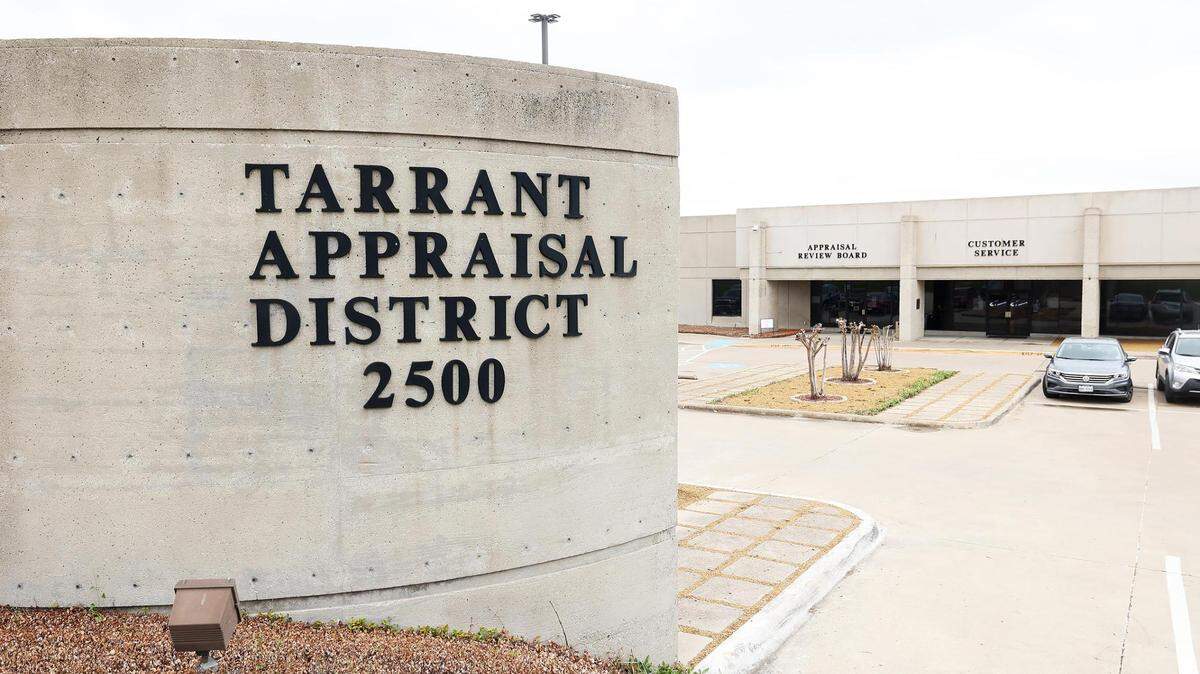
Tarrant County homeowners will see big changes to their property tax bills.
On Monday, the Tarrant Appraisal District voted 6-3 to change the frequency of property valuations from yearly to every other year.
The vote followed the failure of a motion from the board’s three newly elected members to change appraisals to every three years. They had hoped to begin delivering on this and other campaign promises but appeared to meet opposition from the board’s appointed members.
The newly elected board members are Callie Rigney, former mayor pro tem of Colleyville; Eric Morris, a former Haltom City council member; and Matt Bryant, a real estate investor and former Southlake-Carroll school board president. All three were endorsed by Tarrant County Judge Tim O’Hare.
The board also approved a 5% “threshold” on recalculated appraisals of a property’s market value. This threshold sets a soft limit on appraisal increases, but it can be exceeded up to 10% as long as the appraisal district shows clear evidence that a home’s value is higher.
Rigney, Morris and Bryant had initially pushed for a 5% annual cap, but the language was changed to “threshold” after the board met in executive session with their lawyer for nearly four hours.
Morris declined to comment after Monday’s session. Rigney and Bryant did not respond to requests for comment.
Even though they did not get everything they wanted, the reforms started by the newly elected members will make significant impacts on how property taxes are collected in Tarrant County, according to Chuck Kelley, who ran for Bryant’s place on the board.
Cities benefit from automatic annual increases in property taxes, using them to pay for fire, police, sewer and other services residents need. Without that guaranteed increase in tax revenue, they will have to raise taxes, Kelley said.
“The ripple effects of what happened up there today have not even begun to become apparent, but every city out there that takes advantage of that automatic increase every year is now in jeopardy,” he said.
If cities are forced to raise taxes higher than the caps that are set on them, they’ll have to put the issue to a vote, he added.
“Voters will vote them down, so the first thing they do is threaten to cut fire and police to create the fear that if I don’t vote for the tax rate increase, I may not be safe,” Kelley said.
Before the election of the new board members in May, chief appraiser Joe Don Bobbitt told the Star-Telegram that state law prohibited the board from capping or limiting appraised values at 5%. The law caps annual increases at 10%.
When the Texas House considered changing the law last year to lower the cap to 5% as part of a tax relief package, experts told the Texas Tribune that local governments and school districts could raise their tax rates to offset the lower property values.
Public comments at Monday’s TAD meeting were divided, with some saying the moves are needed to provide much needed tax relief as home values skyrocket. Others feared the changes will hurt school districts and shift the tax burden from homeowners to renters in apartments and other multi-family units.
“Property owners, we need relief,” said Arlington resident Lucila Seri. “This is craziness. Our property values are going up 10% every year.”
Seri worked as campaign manager for John O’Shea, who lost his Republican primary race for U.S. Congressional District 12 to Craig Goldman in May.
“Clearly, there’s problems in the ways that we are appraising,” she said. “The law says that you can appraise an increase up to 10% for residential. Doesn’t mean that you have to go to the full 10%.”
Fort Worth real estate broker Chandler Crouch commended the TAD board members for attempting to reform property taxes in the county, but said that the proposed changes could have unintended consequences.
“I don’t know that these are the right decisions,” he said. “I think that every three years is dangerous. Every two years is a lot safer.”
Crouch argued that the three-year plan would put appraisals out of sync with school districts’ biennial property value studies, thus leading to a loss of funding.
“Homeowners have been getting screwed by this appraisal system for years,” Crouch told the Star-Telegram in an interview. “We’re jumping for joy that they’re trying to come up with a solution. The real question is, how is it going to affect school funding, and what are the unintended consequences of this?”
Representatives of the Azle, White Settlement and Birdville school districts echoed those fears in public comments, saying the reforms would affect their abilities to meet their bond debt requirements.
Several board members expressed similar concerns about the reforms’ effects to school districts.
Crowley-based property tax consultant Ryan Ray accused the board of “picking winners and losers” by shifting the tax burden away from neighborhoods that are increasing in value and placing it on neighborhoods that aren’t increasing as rapidly, or that are decreasing in value.
Several property tax experts told the Star-Telegram last week that a 5% appraisal cap would be a disincentive to move.
The appraisal district sets property appraisals and administers exemptions for tax purposes.
Correction: An earlier version of this story failed to note that the 5% threshold is on a property’s market value, and not the taxable appraised value.
This story was originally published July 22, 2024 at 5:19 PM.