These men want to improve their community and Fort Worth. Here’s how they’re doing it
There is a mix of pride, sadness and humility when men from the CommUnity Frontline organization remember their Stop 6 neighborhood from the 1980s to early 2000s.
The Martin Luther King Jr. Community Center was packed every weekend with events. Dunbar High School’s basketball team, led by legendary coach Robert Hughes, dominated and won championships. The stands were packed for the football and track teams.
But crime was at its peak in Fort Worth between 1985 to 1995, when an average of 138.5 murders occurred each year, including a high of 200 in 1986. Stop Six, a predominantly Black community, was hit hard by gang and drug violence. Metal detectors and hallway checks of students’ book bags were common at Dunbar. Distrust between the community and police arose.
Frank Moss, co-founder of CommUnity Frontline, describes growing up in Stop 6 as fun but filled with trauma. Friends were killed at young ages, which meant going to funerals became normal. Others went into the juvenile justice system or simply disappeared.
“It was just life,” Moss said. “It still wasn’t something that kept you from going outside. So some of the things that we are protecting our children from today, that was just normal life for us then.”
In the midst of everything, some of Dunbar’s Black male students formed a bond that stretched beyond the walls of the school and lasted into adulthood. They wanted to serve the needs of Stop 6 and the rest of their hometown, which led to the creation of the nonprofit CommUnity Frontline in 2016.
World Wide P “Dubs”
It was during a conversation in 1997 that three Dunbar friends — Quinton Phillips, Troy Washington and Cortez Billingsley — decided they wanted to create a brotherhood of like-minded individuals for support and accountability. They wanted to rise above peer pressure and the stereotype of Black men. The group was called World Wide P, or shortened to “Dubbs,” where the “P” stood for anything positive. Any young man could be a member, and more than 60 men still consider themselves as members of Dubbs.
They held meetings to keep themselves engaged at Dunbar or locally, focusing on getting involved in student government or volunteering for a nonprofit.
The group helped create a step team and a golf team. They participated in Distinguished Gentlemen, ambassadors in the school who met with mentors to learn how to be better men and be positive male representatives of their school to the community.
Most of the members went to Dunbar, and some went off to college to Prairie View A&M University. They made a pact to come back to Fort Worth to improve the community and show that they were successful, not because they left the hood but because of it. They wanted to help the community through their service, finances, and volunteer work.
A few of the members who later became founders of CommUnity Frontline use the values from Dubs to establish not only a brotherhood and to care for another but to care for people around them.
A role to play
After graduating from Prairie View A&M University, some of the men formed a Bible study group in the late 2000s that met at the Center for Stop Six Heritage. It kept the men in touch and showcased how many of them wanted to be involved in the community. Their conversations centered around the church’s involvement in the community, which motivated them to become involved as well.
Then the shootings happened.
The killing of nine Black people at a Charleston church in 2015, the deaths of Alton Sterling and Philando Castile, both Black men, at the hands of police in 2016, and the shooting deaths of five Dallas police officers during a protest against police killings of Black men spurred frustration in Fort Worth. Until then, women usually led conversations in their community, and the group wanted men to step up, according to Dante Williams, co-founder of CommUnity Frontline.
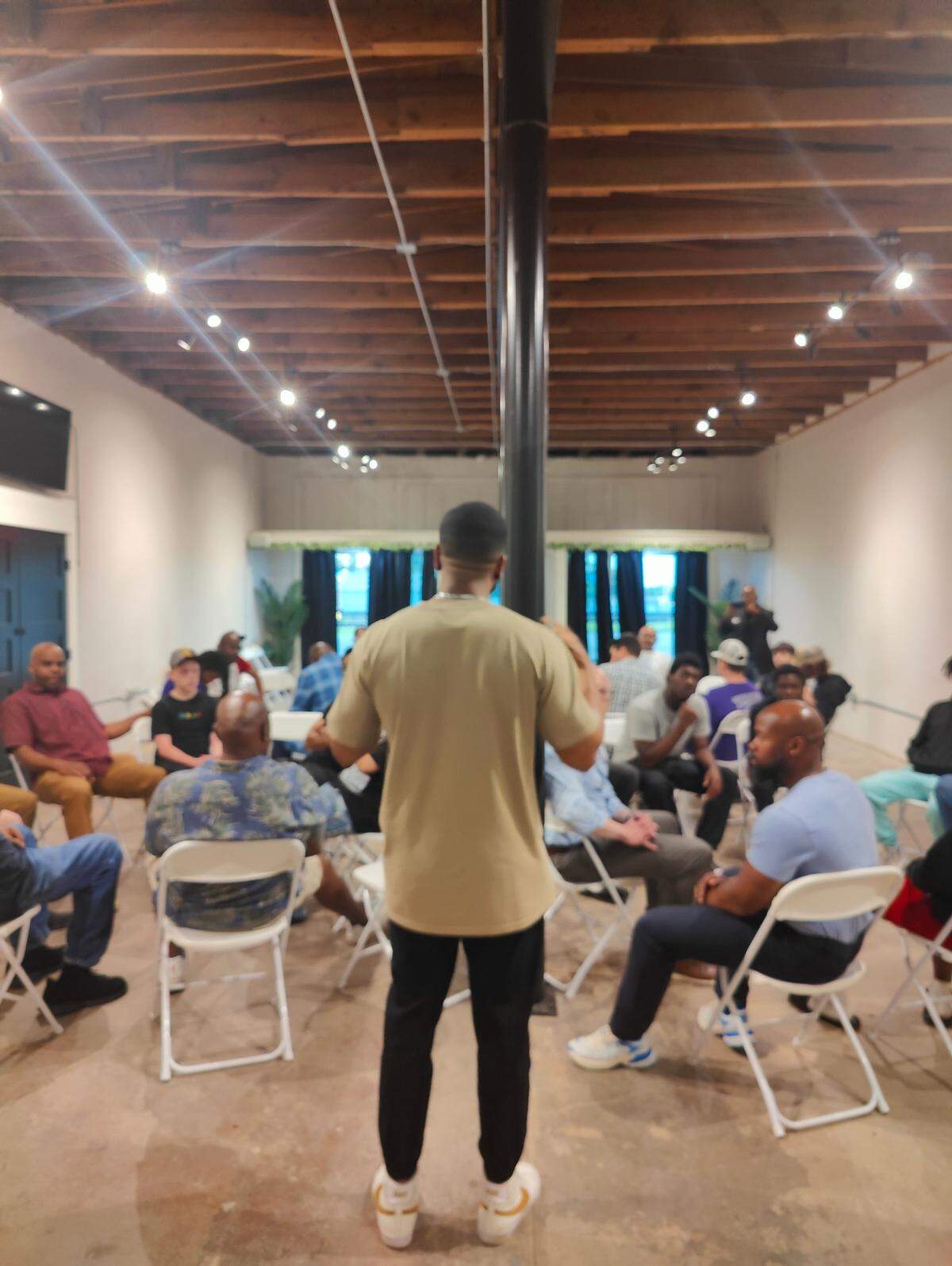
“That was the heart behind the focus on men,” Williams said. “We have a role to play.”
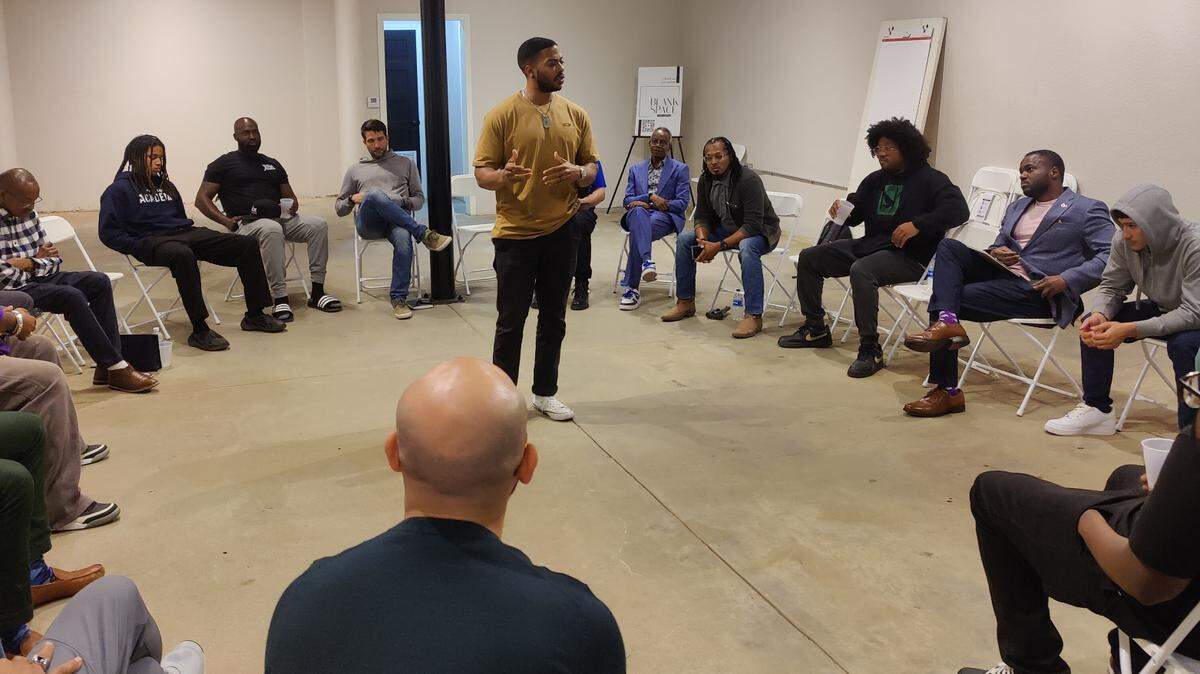
A meeting was held in 2016 where nearly 100 men, with police officers in attendance, spoke about the shootings of unarmed Black men. They used a whiteboard to write down other issues in the community that needed to be addressed.
This meeting was the catalyst for the creation of CommUnity Frontline.
The group put its focus on four pillars: racial justice and solidarity; police/community and accountability; mentoring and education; and community development.
The organization reacts to community needs, organizing meetings on topics such as juvenile justice, race and mental health for men; holding movie nights; promoting community gardening; delivering food; holding lunch events to bring awareness to local restaurants; and more. The group has installed murals recognizing Black entrepreneurs of Tarrant County and established the Tubman Gallery, which promotes underexposed and thought provoking works by women, Black and brown artists.
.jpg "forntline (1).jpg")
When the group started, projects were funded out of the men’s pockets. Their efforts in the community have helped them receive community contributions, and they have applied for grants. As they continue to grow to accommodate for the needs of the community, they have found grants often do not not align with their need for flexibility.
“How do you be simplistic? How do you cut red tape of bureaucracy when you’re doing things, and yet still get dollars in to be able to function in a new skill or place as we’re continuing to grow,” Quinton Phillips, co-founder of CommUnity Frontline, said. Phillips is a member of the Fort Worth school board.
There are 10 men and a rotation of volunteers who make up CommUnity Frontline. They include lawyers, consultants, educators, designers and entrepreneurs. They are fathers, husbands, brothers, and friends who are learning each day as their community transforms, bringing new needs, they say.
CommUnity Frontline has helped its members find purpose and structure in their lives, instilling a desire to be better men who seek other like minded men who want to serve the community, the members say.
Derek Carson met Phillips on Valentine’s Day in 2011. It led him to the men’s Bible study and eventually to be a co-founder of CommUnity Frontline.
“It helps me set up to have a long term presence and strategy of just being with people who make the place better and just being together for a long time, hoping that the end result of good people doing good things in the same space for many years results in the space being better,” Carson said.
This story was originally published June 3, 2024 at 5:00 AM.