Fort Worth’s last motel that served Black guests during Jim Crow will be demolished
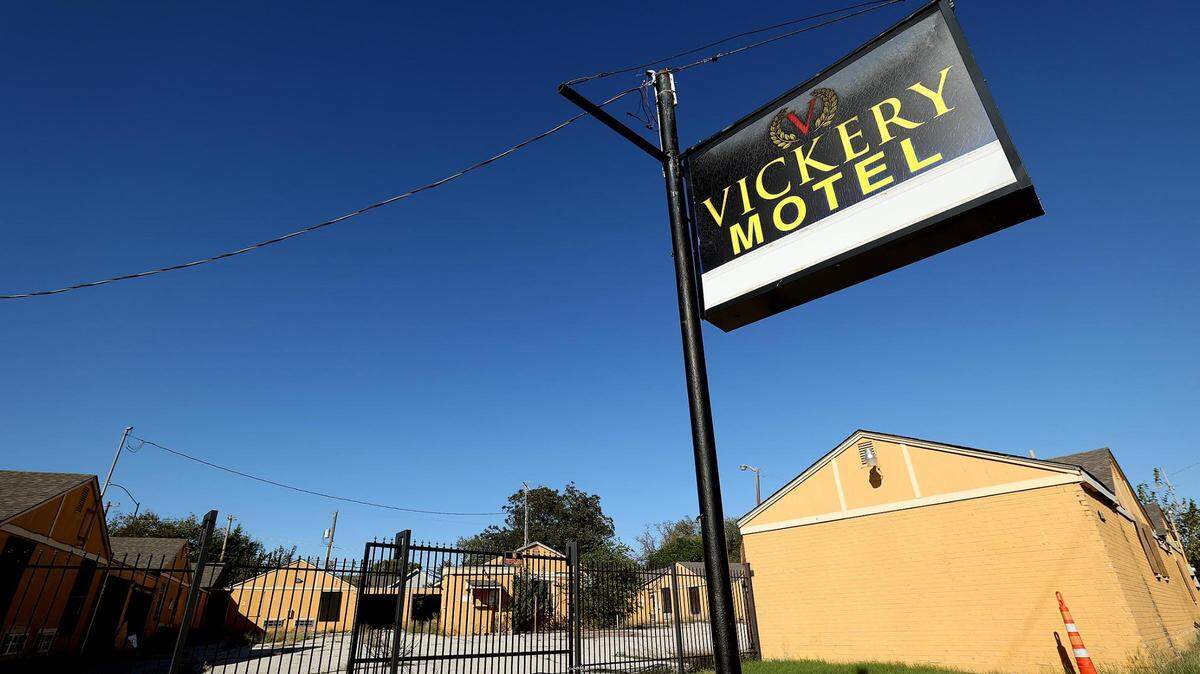
One of the last remaining motels that served African-American travelers during segregation in Dallas-Fort Worth area is set to be demolished.
The Vickery Motel at 5636 W. Vickery Blvd. is not eligible for a local designation as a Historic and Cultural Landmark, according to Fort Worth’s Historic Preservation, a program within the city of Fort Worth that works to conserve the historic, architectural and aesthetic character of the city. Staff from the department made a site visit in November.
A razing permit was issued on Jan. 2. It expires March 2.
A Historic and Cultural designation requires a property to meet criteria for significance and integrity as laid out by the historic preservation ordinance.
For significance, a property must meet eight criteria, including significant archaeological value or being the site of a significant historic event. Vickery Motel met only two.
Seven criteria must be met for integrity: location, design, setting, material, workmanship, feeling and association, as set forth in the National Register of Historic Places’ Seven Aspects of Integrity. The Vickery Motel property retains only two aspects of integrity: location and design.
“Due to the loss of historic material and advanced deterioration, the structure does not retain the integrity necessary to convey its significance,” the report read.
The Vickery Motel, originally called Como Courts, was built in 1954, according to Tarrant County tax records.
Its proximity to Como, a predominantly African-American neighborhood, and the fact it was advertised in the Como Weekly newspaper hints that it was a motor lodge for African-American people.
According to an earlier project review by the Texas Historical Commission, the Como Courts was one of two motels in the Metroplex that catered to African-Americans, the other being the Ranch Motel in Dallas.
The Ranch Motel at 1839 Fort Worth Ave., now called Inn of the Dove, was in the Green Book, a travel guide of businesses that welcomed African-Americans, though the Vickery Motel was not. The motels served Black travelers during the Jim Crow era and before the Civil Rights Act of 1964, which made racial discrimination in public accommodations illegal in the United States.
Efforts to preserve the Vickery Motel date back more than 10 years, when there was discussion about having it designated on the National Register of Historic Places.
During a Historic and Cultural Landmarks Commission meeting on Oct. 9, community leaders from the Como neighborhood and Fort Worth’s Historic Preservation Department presented a resolution for a local designation.
It was opposed by the motel’s owner, Arvind Nana, who said during the meeting that he has engaged with the community since 2021. He said the Como community sought a local designation without his consent and started the process when they learned the property was for sale and he planned to demolish the building.
The resolution to pass local landmark designation failed during the meeting.
The Como neighborhood will apply for a historical marker from the Texas Historical Commission.
“We are proceeding with the plans for the historical marker by engaging in meetings with the community and property owners to determine the most beneficial decision for the community,” said Dena Ashton, president of Lake Como Neighborhood Advisory Council.
This story was originally published January 15, 2024 at 6:00 AM.