
As TCU grows, nearby neighborhoods are making moves to block student housing
It was a problem that was supposed to be solved close to a decade ago.
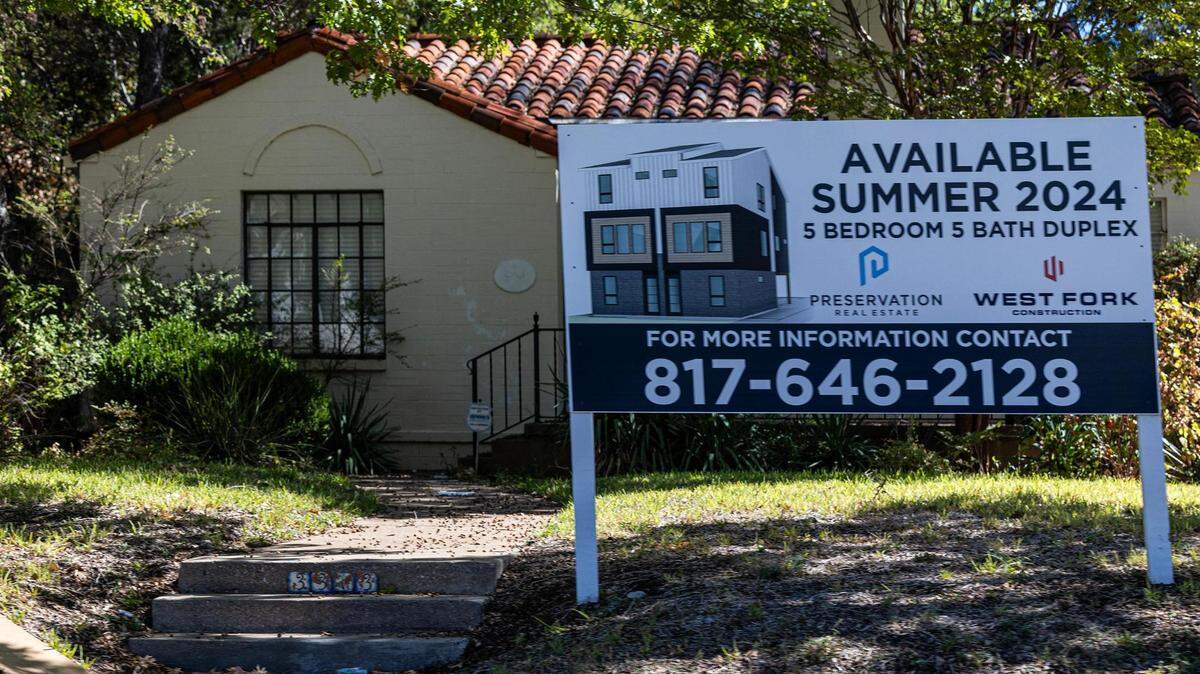
In 2014, so-called stealth dorms — single family homes rented out by the room to students — created problems with parking, noise, traffic and safety in neighborhoods surrounding TCU.
In response, the city of Fort Worth put forward new zoning rules to limit the number of unrelated persons who could live in single-family homes near TCU. If renters didn’t have some form of familial relationship with their roommates, only three people could live in a single family home at one time.
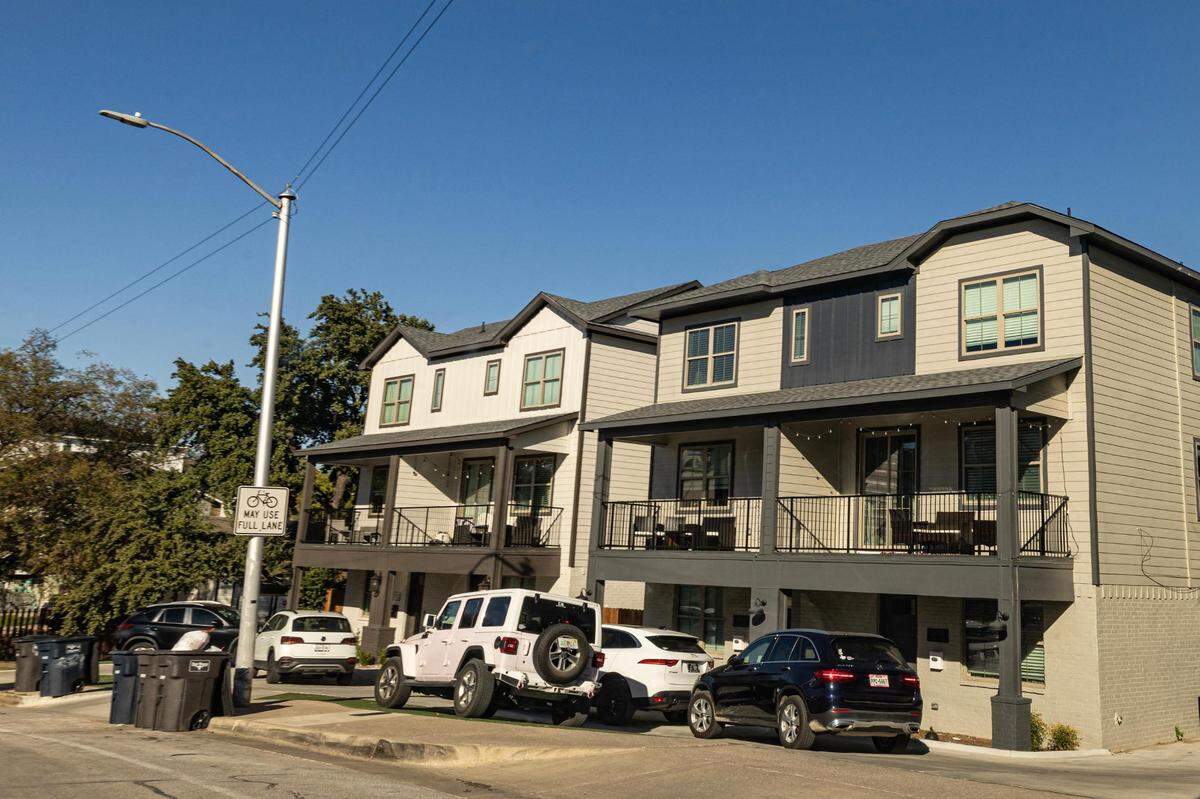
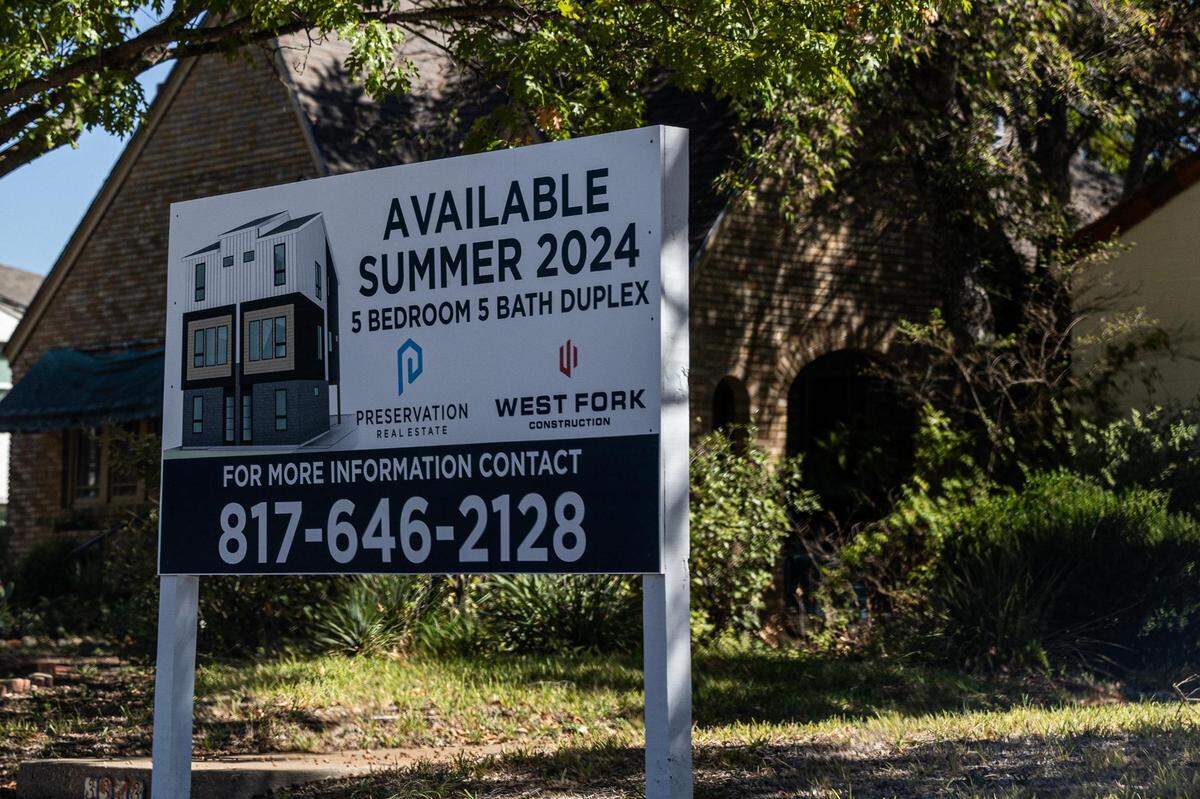
However, the roommate limit wasn’t applied to lots zoned for duplexes, which have sprung up in neighborhoods near the university. Some have replaced single family homes, while others have built three and four-story buildings where a single-story duplex once stood.
Neighborhoods around TCU are pushing to change their zoning to protect against dense student housing. They argue this is the only way to protect the integrity of single family neighborhoods as the 5,600 students who live off campus search for a place to live.
At the same time, TCU’s student population is growing and the construction of new dorms hasn’t kept up. Enrollment is up 27% the past 10 years, from 8,431 undergrads in 2013 to 10,733 this year.
Doing away with the duplex
Ryan Place, about a mile east of campus, is filled with tree-lined streets and single-story bungalows mixed in among large manor houses. With the help of Fort Worth city council member Elizabeth Beck, the neighborhood worked through the city’s multi-stage zoning process to rezone the neighborhood and remove a large chunk of two-family zoning.
This zoning allows for two individual homes or one attached duplex on a lot that is a minimum of 5,000 square feet.
These duplexes are common near Paschal High School, where five-bedroom units are rented separately or together.
The city had wanted to encourage dense housing around West Berry Street and South University Drive as part of its urban village initiative, but growing TCU enrollment seemed to make it more economically viable to build housing for students, said Peter Szok, a Ryan Place resident and professor of Latin American history at TCU.
While projects like the Grandmarc at Westberry Place have put a mix of housing and storefronts within blocks of TCU’s campus, developments along Forest Park Boulevard and McCart Avenue converted single family homes into duplexes targeted mostly to students.
“It took up a lot of spaces where families should have been, and I was very depressed by the whole process,” Szok said, adding that neighborhoods that once had a diversity of residents are now mostly filled by students.
It’s not so much that the students are a problem, but having them bundled in a neighborhood next to families trying to raise their kids isn’t appropriate, Szok said.
“Think about your own 18-year-old self. Would you have made a good neighbor?” he said.
Szok said he’s not opposed to dense housing or even rental housing, but said it should be targeted toward working families to help address the city’s housing crisis.
.jpg "CT_stealthdorms_02 (2).jpg")
Impact on the neighborhoods
The TCU overlay has had a minimal impact on the stealth dorm situation, said Mike Howell, a longtime Paschal Heights resident.
Cars are parked all over and there are noisy parties, he said.
Developers will buy up single family homes, demolish them, and then build a two or three story duplex, said Rick Garcia, secretary for the Paschal Heights Neighborhood Association.
Garcia was quick to note the neighborhood isn’t opposed to the students living there.
Most of the students are great, but there are a few every year who throw large parties, he said.
Howell has been active in opposing developments looking to rezone for duplexes, and he advocates to keep as much of Paschal Heights single family as possible.
“We’re looking to provide a safe and friendly atmosphere for families to enjoy and grow as a unit,” Howell said in April, speaking before the city’s zoning commission.
Waiting for the train
Rosemont is starting to adjust its zoning to protect against stealth dorms.
The neighborhood about a mile southeast of campus is focused on an area east of Cleburne Road and West Berry Street.
The current zoning allows for housing ranging from duplexes to four-plexes with a maximum height of three stories. This includes some of the duplexes that are common along Forest Park Boulevard, according to a spokesperson for the city’s development services department.
Developers looking to build dense housing would not need to request a zoning change, which worries Calvin Huezo, president of the Rosemont Neighborhood Association.
Zoning changes trigger neighborhood notification, which makes it easier for residents to oppose developments they don’t like. Rosemont has been active in opposing multifamily housing out of fear it would lead to displacement and change the character of their single family neighborhood.
“Our neighborhood seems to be primed for investors to come in, purchase, and build stealth dorms,” Huezo said in an email to the Star-Telegram.
Mailers asking residents to sell their properties are common in neighborhoods like Rosemont, said Fort Worth city council member Jeanette Martinez, whose district includes Rosemont.
People ignore them and throw them out, but they still keep coming, she said, adding it’s her goal to protect these neighborhoods as much as possible.
The current zoning around the intersection of West Berry and Cleburne was done to increase walkability around a proposed TEXRail station, said former city council member Ann Zedah, who now serves as executive director of the nonprofit Community Design Fort Worth.
It’s part of a “form-based code,” which set out rules for both what development can do in a certain area along with what it’s supposed to look like, she said, pointing to the Stockyards as an example.
It’s not clear when TEXRail will build a station at the intersection, but the plan to do so is still on the books, said Chad Edwards, TEXRail’s executive vice president of strategy, planning and development.
Right now the transportation agency is focusing on extending its service from the Near Southside to the Medical District near the intersection of Mistletoe Boulevard and Leslie Street, Edwards said. That project is scheduled to start construction in early 2024 and wrap up in 2026.
TCU’s growth
It’s not clear exactly how much TCU’s enrollment will continue to grow, but applications have increased following the football team’s appearance in the 2023 football national championship.
The university is building two residence halls near West Louden Street and Lubbock Avenue to house around 290 students.
“We are invested in our student experience and very fortunate that being near to campus is a draw for current and future Horned Frogs,” said university spokesperson Holly Ellman referencing the new construction in an email to the Star-Telegram.
The university recently announced it had exceeded its $1 billion fundraising goal as part of its “Lead On” campaign celebrating TCU’s 150th anniversary.
The money will go to supporting scholarships and faculty positions to help TCU expand, Chancelor Victor Boschini said at an Oct. 12 event celebrating the end of the campaign.
“We want to make sure any kid who wants to go to TCU, can come to TCU right now,” Boschini said.
The university said in a statement its endowment grew 118% through the campaign. Additionally, it said need-based financial aid grew by 185% from 2012 to 2022, from $43 million to $123 million.
It’s not immediately clear how much the university plans to grow, however, Boschini told the Star-Telegram in January it’s important that TCU doesn’t grow too fast.
TCU’s community feel is what sets it apart, and it’s important the university not lose that, he said.
This story was originally published October 27, 2023 at 6:00 AM.
.jpg)