
Fort Worth schools largely skip our rich local history. This book can help fill the void
Every town needs a general history for its young people, something written on their level that acquaints them with how their town came to be. This is especially true of a city like Fort Worth, which has so rich a history.
Yet we do not teach our city’s history as part of the public-school curriculum.
The result is tens of thousands of Fort Worth kids grow up not knowing how our city got its name, why the longhorn and the panther are part of our history, or, especially today, how ethnic minorities fit into the story. Sure, there are histories of Fort Worth history, but they were written by adults for adults, and the standard reference by Oliver Knight was written 70 years ago. A lot has happened in the last 70 years, both in terms of history-making events and interpreting the past.
Fort Worth history has not always been an afterthought when it comes to young readers.
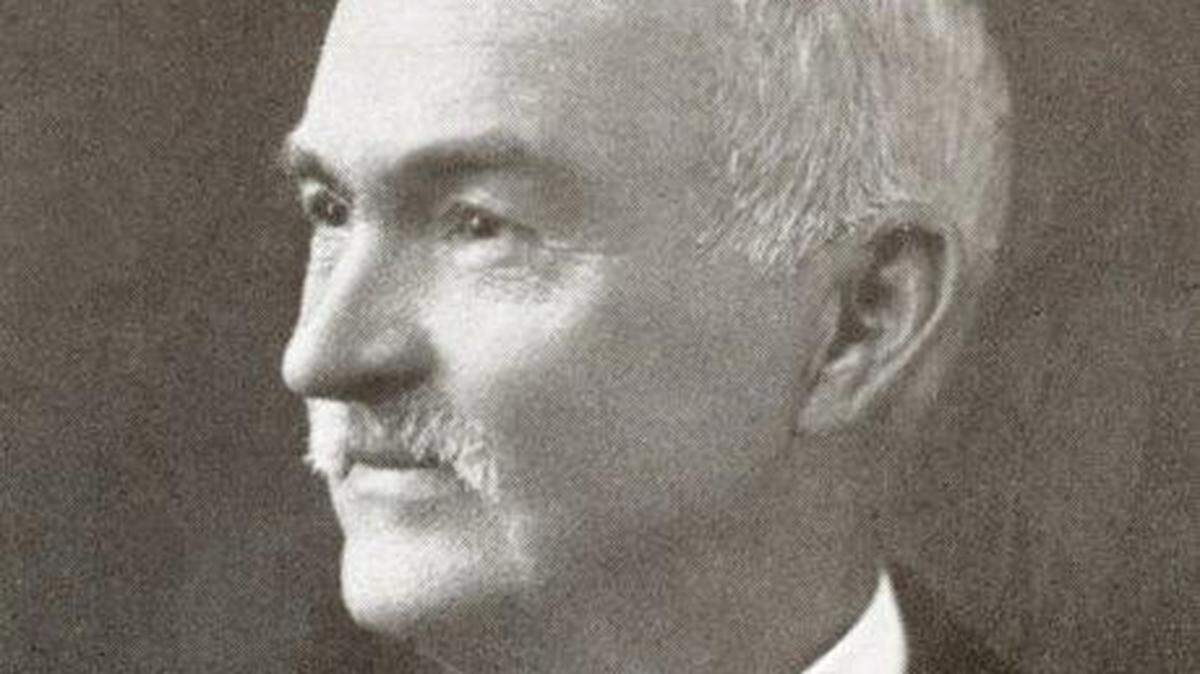
In the 1920s, The Fort Worth Independent School District employed Howard W. Peak, reputedly the first male child born in Fort Worth (June 14, 1856) and therefore one of the oldest seventy-plus years later, to make the rounds of the city’s schools telling kids about our early history from the perspective of one who had lived it. The garrulous old-timer became every kid’s grandfather, telling thrilling stories of the old days – even if all those stories weren’t exactly true. For instance, Peak was the source of the now-discredited story that a Comanche war party had once been about to attack the fort when a shot from the cannon drove them away.
When Peak died in 1939, the city lost a rich primary source of information, and Fort Worth youngsters lost a friend. Sadly, the city’s Black and brown students had no such living-history source of information and no written history either.
Peak’s example was not entirely lost on city fathers. In 1925, the Chamber of Commerce underwrote the first official history of Fort Worth “for school use.” The 58-page booklet was aimed at third- and sixth-graders to be incorporated into their geography instruction. It explained how Fort Worth acquired the name of “Panther City” and who William Jenkins Worth was among “a store of other important facts” they needed to know if they were to grow up and be informed citizens. There is no record of how the free booklet was received or whether teachers even used it as instructional material, and it was never republished.
In 1967, the FWISD finally gave the young residents of Fort Worth a textbook history of their city. Published on a tight budget, “The Fort Worth Story: Yesterday and Today” was written not by historians but by two “education consultants” assisted by two district administrators. Its purpose was “to increase students’ pride in our city” and promote “ideals of good citizenship.”
Because of the limited budget and time constraints, the book was not illustrated in the artistic meaning of that term but relied on photographs from Fort Worth Public Library collections. It began with a look at why Fort Worth was an “All America City” (a 1965 award) and ended 74 pages later with “A Look to the Future,” preparing its readers for the day they would be graduating high school seniors – still living in Fort Worth, of course.
The greatest flaw of the book, however, was that in 1967 Fort Worth history was the history of dead white males. The only mention of Native Americans were short sections on “Indian Trouble” and relating the “Cynthia Ann Parker” and “Yellow Bear” stories, incorrectly describing the latter as Quanah Parker’s “friend.”
And apparently women and Latinos played no part in building Fort Worth, not in this text anyway, which is ironic since three of the four author-editors were women.
The book was the only authorized source teachers and students had for learning Fort Worth history for the next 56 years. A few copies of the book have survived in libraries and as hand-me-downs to new generations of teachers, but it was no longer an “official” textbook.
Because of the complicated process for getting textbooks approved nowadays, this situation is unlikely to change. Also working against a new history text is that today there are so many competing viewpoints about what constitutes the “true” history of our city and who should be included in that history.
One more irony in all this is that while history and historical fiction are perennial adult favorites, the “children’s publishing industry” has traditionally been content to relate the popular myths and legends as history. The prevailing idea was that children’s books should stick to patriotism and American values and not confuse young readers with the complexities of the past.
I’ve actually written a new history of Fort Worth for young people: “Fort Worth, Texas: That’s My town!” (TCU Press). It is not an official textbook like the state-approved texts that their older brothers and sisters are assigned in Texas and U.S. history classes. This book will have to rely on parents and grandparents, school librarians and Fort-Worth-loving teachers to get the word out. But all the city’s kids - white, Black, and brown – will be able to read about people who looked like them and helped build Cowtown – not to mention where in the world that name even came from. Native Americans are also part of the story.
In 2001, a Star-Telegram writer proudly dubbed Cowtown “Kidtown” after a Washington-based research group named us one of the Top 10 kid-friendly cities in the nation. They based that ranking on Fort Worth’s historically low crime rate, its variety of museums and parks, and the number of organizations in the city that serve youth. Those survey results are more than 20 years old now, but it surely can’t hurt Fort Worth’s standing to have an updated history of our city for all those kids to read.
Author-historian Richard Selcer is a Fort Worth native and proud graduate of Paschal High and TCU.