End of emergency SNAP benefits leaves thousands in Tarrant County struggling to buy food
Brittany Terrell loads bags of groceries carefully into her car.
She placed the food that would feed her family of three on the passenger seat. She loaded the food that would go home with her grandmother into the trunk.
For both Terrell, 33, and her grandmother, Nancy Jeter, 77, the supply of groceries to feed their households has become an increasingly expensive purchase. They picked up free bags of food on Friday at a branch of the United Community Centers. Both families are two of almost 96,000 households in Tarrant County that will have less money to buy groceries in March than they did last month, according to estimates from the nonprofit Feeding Texas.
On Wednesday, emergency benefits for the Supplemental Nutrition Assistance Program, better known as SNAP, expired, marking the end of almost three years of additional funding for families who use SNAP to buy food. SNAP functions as the nation’s “backbone defense against hunger,” said Celia Cole, the CEO of Feeding Texas. The program, which provides monthly payments to help low-income Americans buy food, supports more than 220,000 people in Tarrant County. More than half of those are children. At the start of the pandemic, the federal government increased the monthly amount each household received.
But now, that increase has expired, meaning every household will receive at least $95 less than they previously did, even as inflation has driven the cost of groceries higher. Jeter, who raises four of her great-granchildren, said she would be receiving $105 less in monthly SNAP benefits.
“That was a lot of groceries it could buy,” Jeter said. Three years ago, $105 was worth $121.70, according to the federal government’s inflation calculator.
“You couldn’t pick a worse time,” said Julie Butner, president and CEO of the Tarrant Area Food Bank. “Now we’re struggling with inflation, and if you’re somebody who is struggling to just meet those basic needs — rent, utilities, gasoline, food — those are the four categories that have been hit the hardest.”
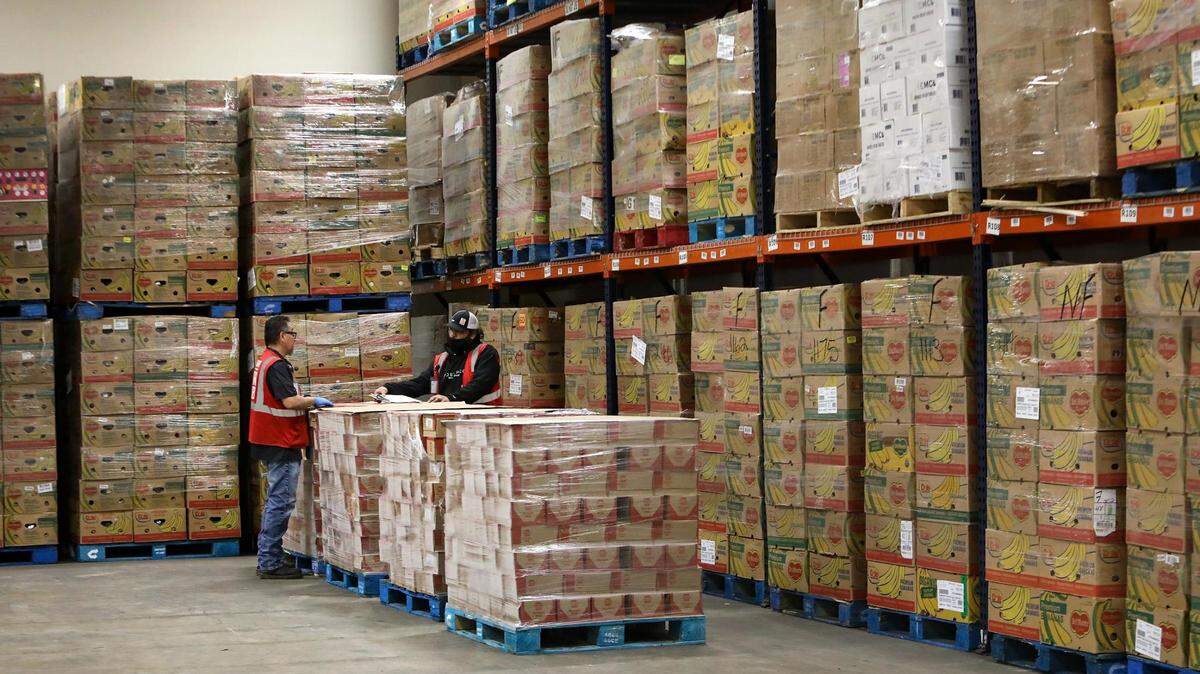
The Tarrant Area Food Bank distributes millions of pounds of food to more than 350 agencies in North Texas, like the food pantry where Terrell and Jeter got their groceries on Friday. But inflation is affecting the food bank, too, meaning that even as more people are struggling to buy groceries, the Food Bank’s dollars can’t purchase as much food as they did a year ago.
“We’ve actually been giving less food per family,” Butner said.
Inflation’s effect on food prices combined with the end of the emergency SNAP benefits “is really going to put a pinch on the community,” Butner said. “I’m feeling pretty nervous about it, to be honest. I just don’t know when inflation is going to go away.”
Butner and Cole said they expect food pantries to get more families asking for help in the coming weeks, as households grapple with the steep dropoff in funds. Anti-hunger advocates had recommended Congress establish a gradual decrease in the emergency SNAP benefits, instead of a cliff, Cole said.
“We knew the benefits were going to go away at some point. I just think a gradual reduction in benefits would make sense,” Cole said.
Tarrant County residents looking to help can donate their time or money to the Tarrant Area Food Bank, Butner said.
How to get and give help
- If you do not receive SNAP benefits, you can find get more information online at tafb.org/snap or you can call 1-866-430-6143.
- You can get free food at various food pantries throughout Tarrant County. To find a list of locations, visit tafb.org/find-food.
- If you want to donate to the Tarrant Area Food Bank, you can visit tafb.org/donate. You can learn more about volunteering with the food bank at tafb.galaxydigital.com.