
This Fort Worth community is haunted by the effects of racism, decisions of the past
READ MORE
Life and death in Fort Worth’s 76104
People in Fort Worth’s 76104 ZIP code on average won’t see their 67th birthday. What is causing the lowest life expectancy rate in Texas? What can be done to help? Read the Star-Telegram’s investigation:
Expand All
No doctors, no grocers, no help. Death comes early in these Fort Worth neighborhoods.
Life in a Fort Worth food desert, where fresh produce is 2 bus rides from home
The birth of hope: How 2 Fort Worth officers changed the lives of fatherless boys
They saw poverty and sickness, so these Dallas doctors moved into the neighborhood
Victor Neil, a friend and vice president of marketing and development for Hope Farm, recently asked what had happened to the historic Morningside neighborhood in Southeast Fort Worth. Why, he wanted to know, did residents face so many challenges?
Although I knew a little bit about the neighborhood and a bit more about Terrell Heights, the neighborhood to Morningside’s north, I really didn’t understand what happened. Curiosity led to a study of maps, newspaper articles, and other sources that might help explain the situation.
Many questions still exist.
The area now known as Morningside is actually a combination of several different developments laid out between 1890 and the late 1920s. Morningside itself was a single-family neighborhood developed by John C. Ryan in 1921. It rested on the reputation of Ryan Place, which was built about a decade earlier.
Ryan proclaimed that Morningside was like Ryan Place but “destined ... to become the leading residence section of Fort Worth for medium-priced homes.” Purchases were initially steady, but after a few years some lots were sold for hundreds of dollars less than their asking price.
Several things about the area likely gave buyers pause. The first was the neighborhood’s location adjacent to the MKT railroad tracks and close to the Santa Fe and Houston & Texas Central tracks. Train noise and soot were a definite negative. Second, even though the developments that made up Morningside were segregated (white people only), by the 1910s, the area now known as Terrell Heights was a residential area for successful Black people, including Texas’ first Black millionaire William Madison McDonald. Jim Crow and prejudice predominated, and race always trumped wealth.
By the 1930s, the government had gotten into the act when the Homeowner’s Loan Corp. developed redlining or “grades of security” maps, which were intended as a guideline for evaluating residential loans. The Morningside area was identified as “definitely declining,” making it harder to get a loan, as well as a less desirable place to buy a home. Even so, Morningside was an affordable place to purchase a home, and many moderate-income white families bought their first home in the neighborhood.
One of the first attempts to integrate the Morningside neighborhood came in 1940 when J. P. Ewing purchased five small frame homes with plans to move them to the 1300 block of East Baltimore and rent the houses to “Negroes.” Neighbors sprang into action and offered to help purchase the homes so they would not house Black people. Ewing countered that he planned to live in one of the houses himself and rent the others to white people – and that there was no threat.
The neighbors drew a line at Myrtle Street, opposing the presence of any Black residents south of that location and formed the Southeast Crusaders Civic League to further their cause.
The neighborhood also continued to oppose commercial development and, in 1948, got the City of Fort Worth to allow construction of duplexes rather than retail. This decision led, in part, to a lack of neighborhood services like grocery stores.
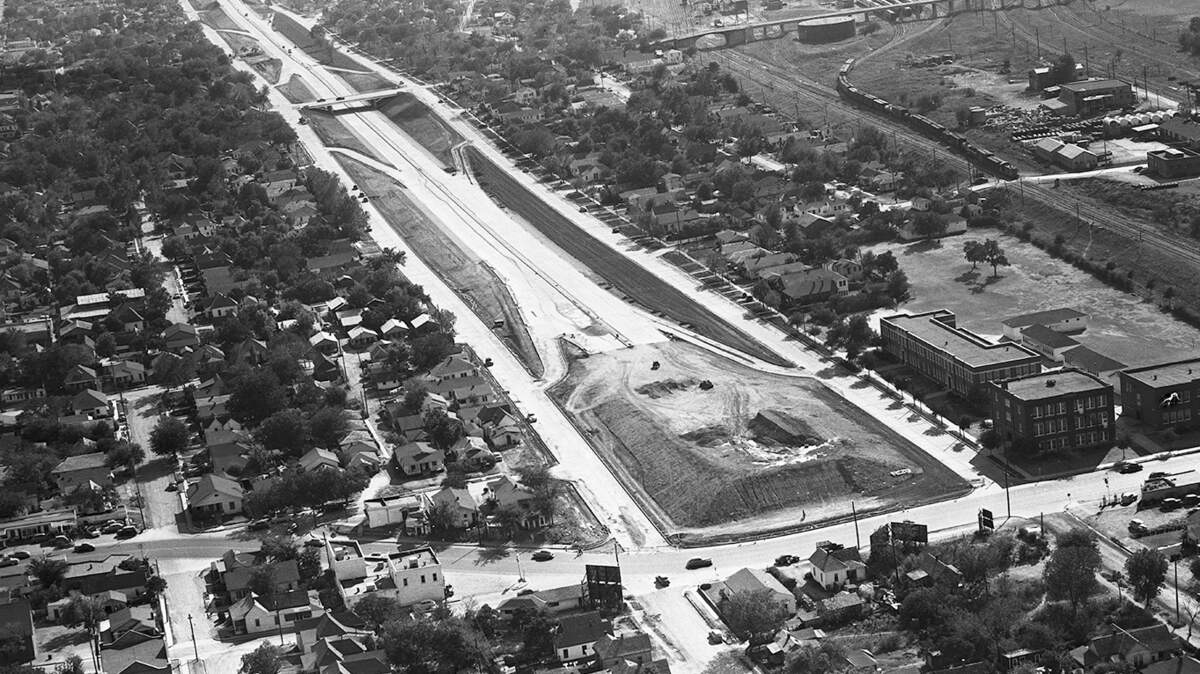
In Fort Worth, construction of the North-South and East-West highways preceded the 1956 National Interstate and Defense Highways Act by several years. Local architect and engineer Wyatt C. Hedrick drew 1946 plans for the first two sections of the North-South Expressway (from Kellis – near Seminary – to Morningside and then from Morningside to Rosedale), which were largely completed by the end of 1951. The freeway ran through Morningside just east of one set of railroad tracks – dividing the neighborhood. It was a classic example of highway construction through older areas – often occupied by Black people – whose residents had a harder time fighting back.
Residents who were not used to highway speeds walked across the at-grade freeway to visit their neighbors on the other side. At least one person was killed before the highway department decided to build fencing, but only one pedestrian overpass was built at East Robert Street near Morningside Elementary to accommodate students who needed to cross the freeway to get home. The fencing provided safety, but also further divided the neighborhood.
The shift in the neighborhood’s racial make-up started during the mid-1950s, a period when Fort Worth’s population was experiencing significant post World War II growth. Black people who had served in the military wanted housing for their families (think: Baby Boomer generation), and began to buy homes just south of Terrell Heights. Morningside’s white residents countered by revitalizing the now-named Southeast Side Civic League.
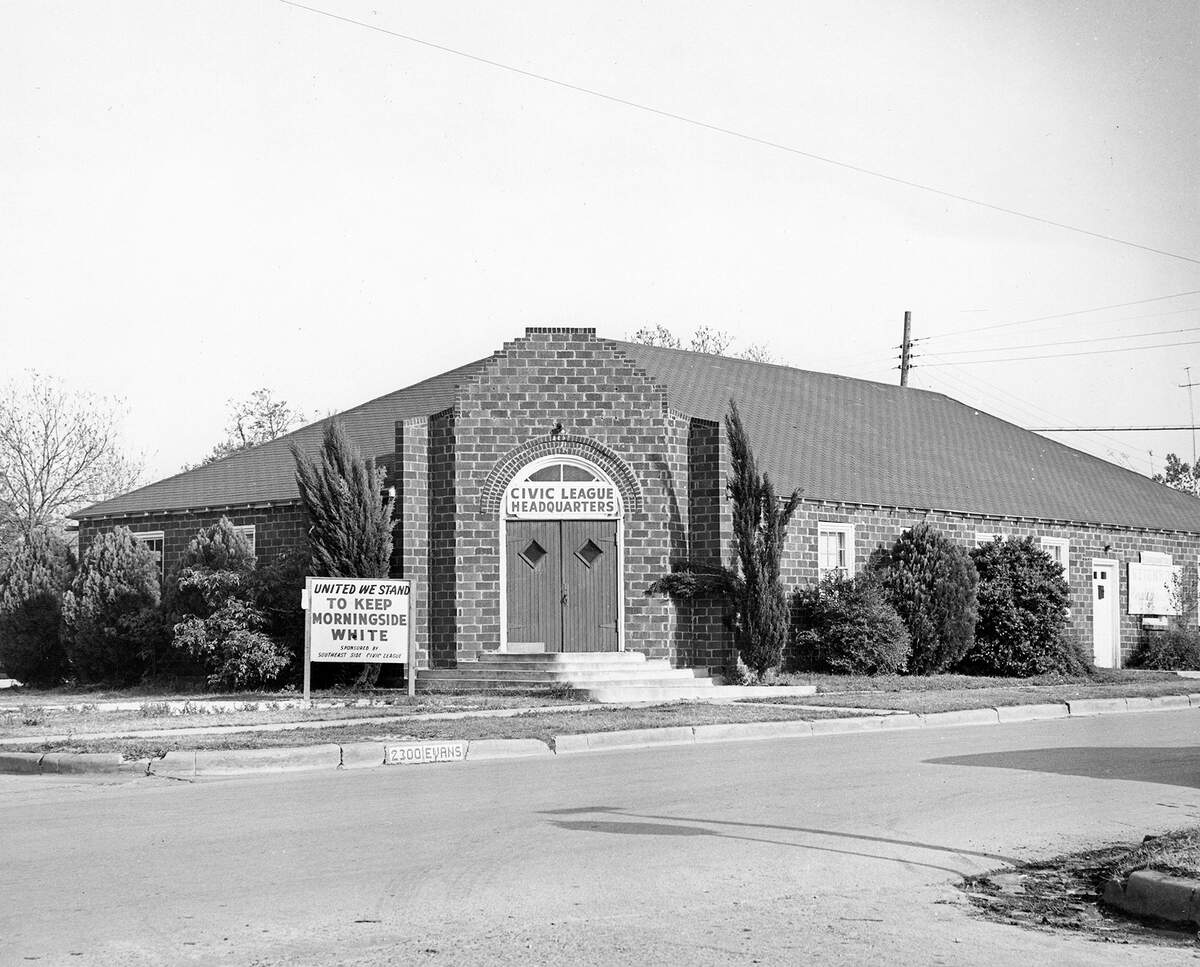
The League urged white residents not to sell, stating that, “they won’t get much for their property, anyway” and asked residents to report sales to Black people. They also began to buy houses recently purchased by Black residents and resell them to “white people only.” Morningside residents also requested a twelve-block “buffer zone park” to separate Morningside from Terrell Heights, a move that would have destroyed almost 400 houses.
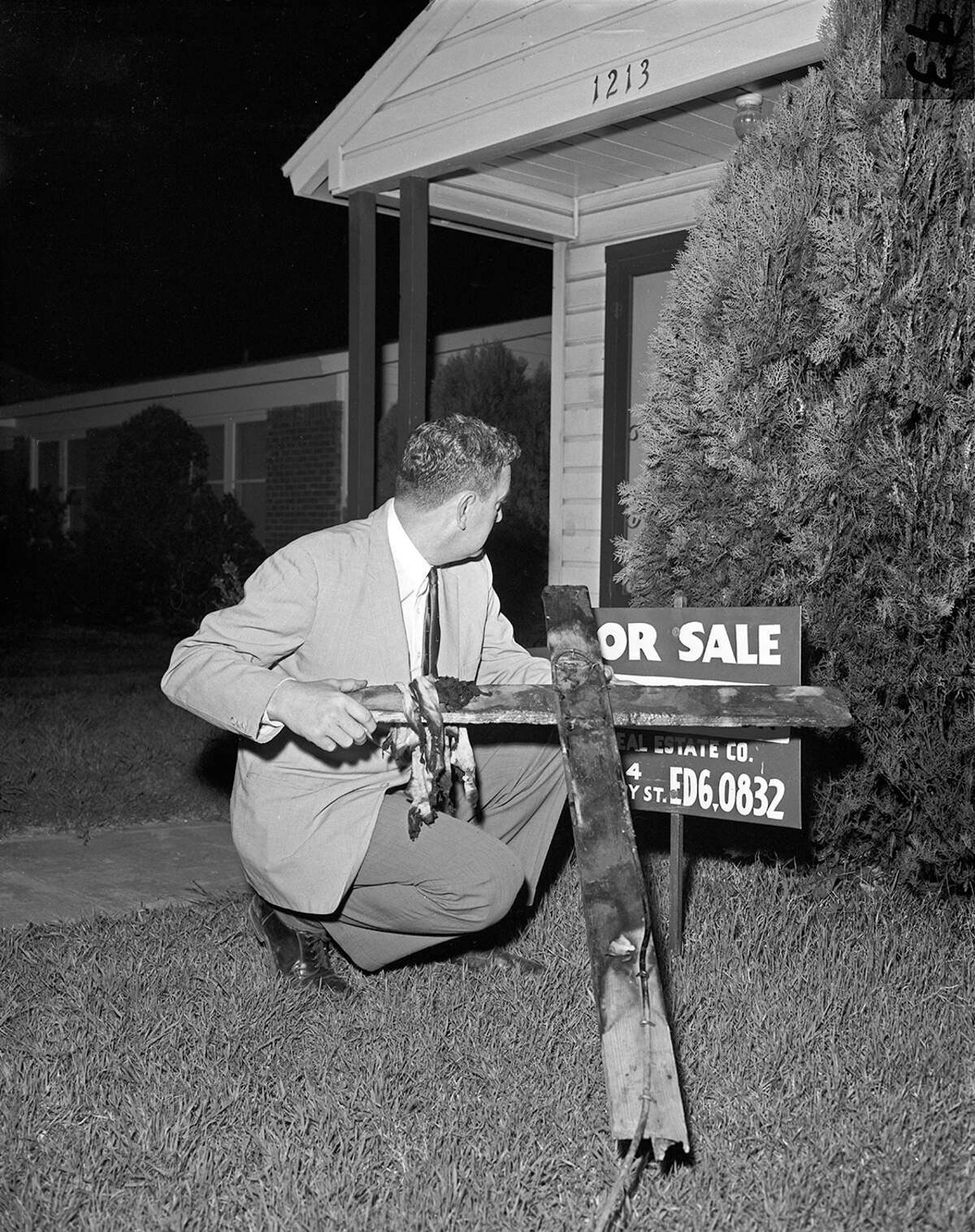
Property values were also impacted by 1957-58 flooding around the North-South Freeway and at Morningside and South Main. By 1960, there was an incident where crosses were burned on lawns. Morningside’s location between the railroad tracks, the construction of the freeway, redlining, zoning decisions, and a combative approach to integration all had a negative impact.
Today, Morningside still struggles with the cumulative effect of those past decisions.
Carol Roark is an archivist, historian, and author with a special interest in architectural and photographic history who has written several books on Fort Worth history.