Rare green comet last seen during time of Neanderthals returning within sight of Texas
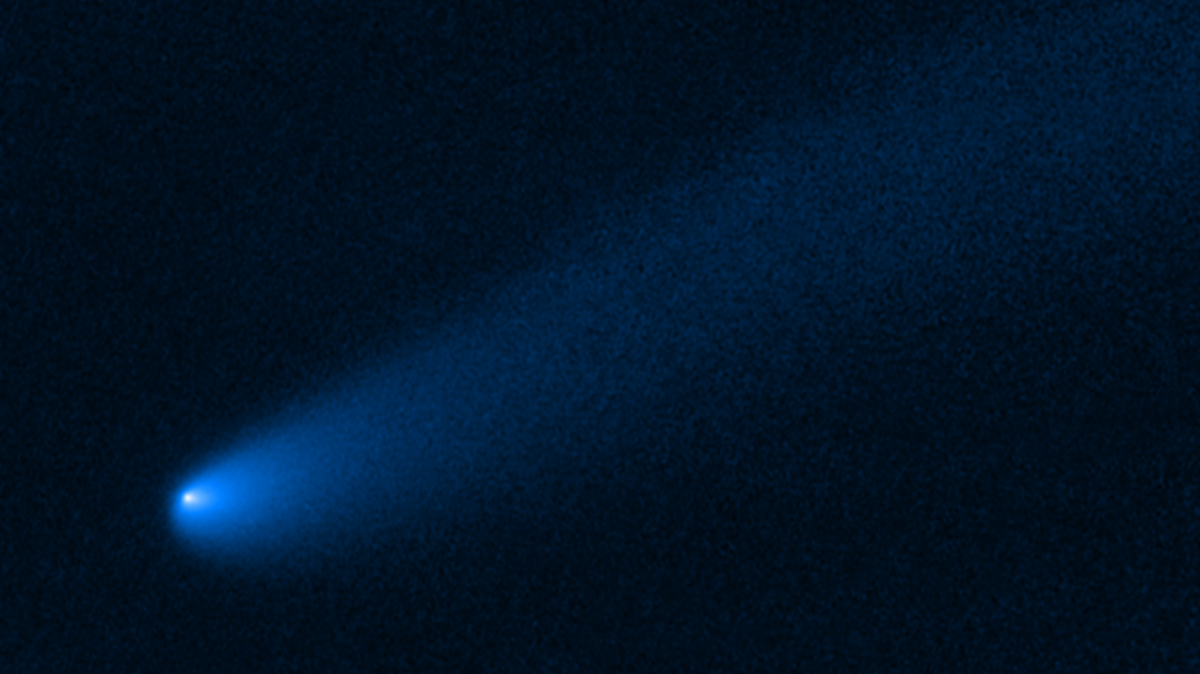
Something magical, rather than scary, is happening this Friday the 13th. For the first time in 50,000 years, a rare green comet last seen during the Ice Age will be visible from Earth.
The comet is called C/2022 E3 (ZTF) after the Zwicky Transient Facility, which first spotted it passing Jupiter last March using a wide-field survey camera. The last time humans saw the comet was during the Upper Paleolithic period, when Neanderthals still walked the Earth.
“A recently discovered comet is now passing through the inner solar system and should be visible with a telescope and likely with binoculars,” NASA said in its January skywatching tips. “The comet, which has a mouthful of a name – C/2022 E3 (ZTF) — was first sighted in March last year, when it was already inside the orbit of Jupiter. It makes its closest approach to the Sun on January 12, and then passes its closest to Earth on February 2.”
It will make its way around 160 million kilometers from the sun, which will not be visible to the naked eye but can be seen through binoculars. Then it’ll get as close as 42 million kilometers from our planet on Feb. 2, reaching its brightest, when it may be visible by the naked eye.
“Comets are notoriously unpredictable, but if this one continues its current trend in brightness, it’ll be easy to spot with binoculars, and it’s just possible it could become visible to the unaided eye under dark skies,” NASA said.
As it moves rapidly toward the northwest in January, observers in the Northern Hemisphere will find the comet in the morning sky. The comet will become visible in the Southern Hemisphere in early February. It isn’t expected to be as large and showy as Comet NEOWISE was back in 2020, but its closeness to Earth makes it an opportunity to catch a visitor from the distant outer solar system.
To get a virtual look at the comet as it reaches the minimum distance from the sun, watch the Virtual Telescope Project’s livestream starting at 10 p.m. Central Time on Jan. 12.
How to see Comet ZTF from Texas
From Fort Worth, Comet ZTF will progress as follows, according to In the Sky. On Jan. 12, Comet C/2022 E3 (ZTF) will make its closest approach to the sun, at a distance of 1.11 AU. On Feb. 1, Comet C/2022 E3 (ZTF) will make its closest approach to the earth, at a distance of 0.28 AU, forecast to reach its brightest. It will lie at a distance of 1.16 AU from the sun.
Here’s when Comet ZTF will be visible to Texans:
- Jan. 13: Visible from 2:47 a.m. until 6:27 a.m.
- Jan. 15: Visible from 2:28 a.m. until 6:27 a.m.
- Jan. 17: Visible from 2:06 a.m. until 6:27 a.m.
- Jan. 19: Visible from 1:40 a.m. until 6:26 a.m.
- Jan. 21: Visible from 1:06 a.m. until 6:26 a.m.
- Jan. 23: Visible from 12:18 a.m. until 06:25 a.m.
- Jan. 25: Visible from 10:57 p.m. until 06:25 a.m.
- Jan. 27: Visible from 6:57 p.m. until 6:24 a.m.
- Jan. 29: Visible from 6:59 p.m. until 6:23 a.m.
- Jan. 31: Visible from 7 p.m. until 6:22 a.m.