
Did you miss your trash day? Here’s what happened with the change in Fort Worth
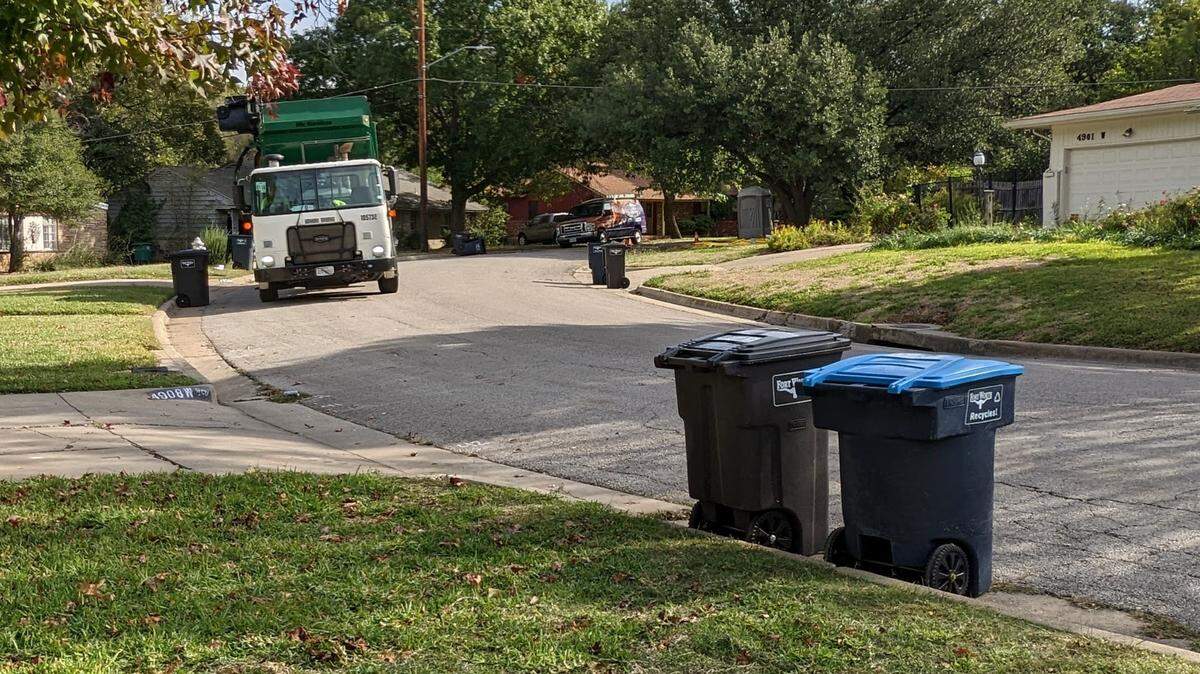
A plan to improve Fort Worth’s trash service was plagued by a data glitch and communication delays that kept many residents in the dark about changes to their trash pickup days.
Postcards meant to notify residents got mixed in with campaign fliers, city council members weren’t notified until the last minute, and whole neighborhoods missed a week of pickups because of the confusion.
The city changed pickups for 78,849 of its 250,000 households. It made the change to improve service in parts of far north Fort Worth farthest from the city’s landfill in southeast Fort Worth, solid waste director Brandon Bennett said.
Trash routes in those areas were too long, which led to some trash collectors working until 9 p.m. without finishing, Bennett said.
The solution was to shorten routes farthest from the landfill to account for the distance trash trucks need to travel between opposite corners of the city, he said.
The city sent postcards notifying residents the new routes would go into effect Nov. 7, but a technical glitch between city databases led to a delay in sending the postcards out.
Members of the Fort Worth City Council also weren’t notified of the change until the day before it was meant to go into effect.
Council member Michael Crain, who represents west Fort Worth, said he didn’t get his postcard until after the scheduled changes, and wasn’t given enough information on which neighborhoods would be affected by the change.
Crain also said the postcards could have been mistaken for campaign mailers ahead of the Nov. 8 general election.
These are things the city council could have advised on ahead of the proposed changes, Crain told Bennett during a city council work session Nov. 15.
Bennett took responsibility during the session. He said he had been on vacation before the changes were meant to go into effect, and forgot to tell his staff to cancel the roll out if there were technical glitches.
He said in an interview Friday that the changes were spread throughout the city and that he could not give specifics on which neighborhoods were most effected.
Postcards were sent only to the affected addresses, which was done to avoid confusion for residents whose garbage pickup days weren’t changing, he said.
The city opted to use postcards after getting feedback that residents weren’t opening enveloped mail. It also didn’t use robocalls, because with few residents using landlines, many would have mistaken the calls for spam, Bennett said.
He said the city has to be extremely efficient with its trash collection resources, because it hasn’t raised its collection rates since 2006. Sometimes an efficient system isn’t the most flexible when you need to make changes, Bennett said.
.jpg)