Rail carriers celebrate labor deal as a win, but union workers want to see fine print
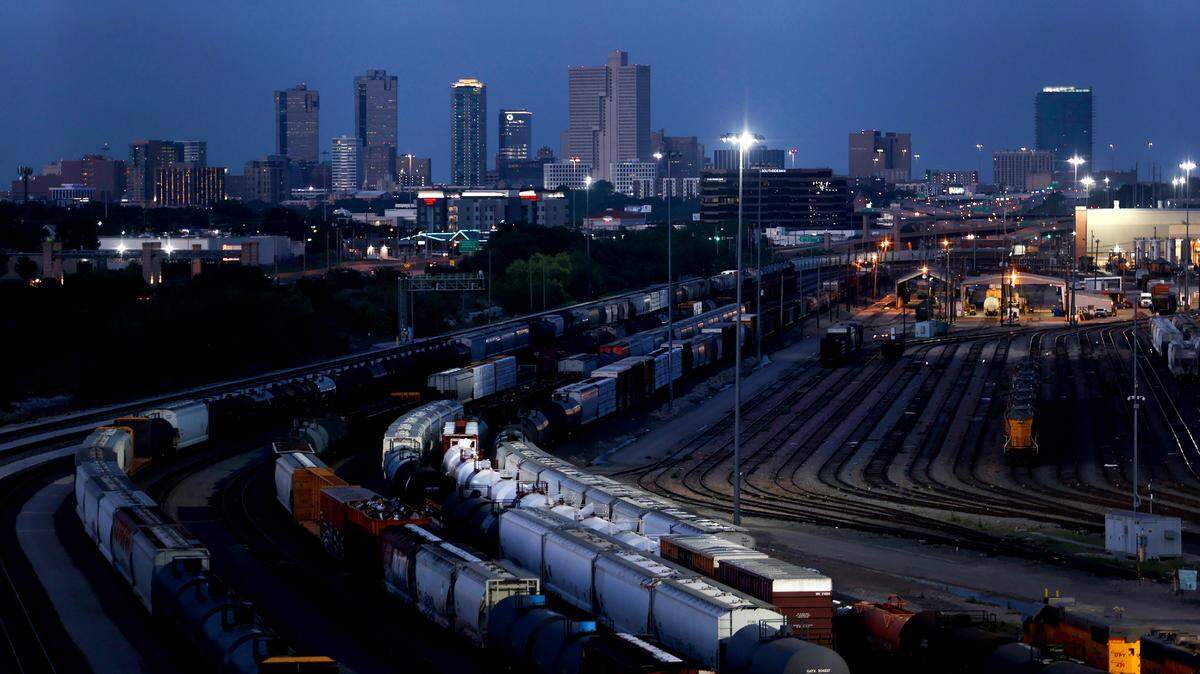
The nation’s freight rail carriers and 12 unions representing their workers reached a tentative deal Thursday that averted a strike that would have caused economically disastrous supply shortages.
Now the deal goes to workers for a vote, including those at Fort Worth-based carrier BNSF.
President Joe Biden announced the breakthrough in negotiations less than 24 hours before a potential strike. The deal — for now — averts the catastrophic shutdown of interstate commerce that could have cost $2 billion a day.
The White House had put pressure on both sides to resolve the conflict while urgently cobbling together contingency plans.
Ahead of a deadline Friday at 12:01 a.m. Eastern, rail carriers had already started an embargo on hazardous materials in case of a strike. Amtrak had announced a suspension of all long-distance trains starting Thursday.
Biden hailed the agreement as “a victory for railway companies who will be able to retain and recruit more workers for an industry that will continue to be part of the backbone of the American economy for decades to come.”
The deal combines better pay and improvements to working conditions and health care costs, the White House said.
Later during remarks in the Rose Garden, Biden noted the deal avoided “significant damage that any shutdown would have brought.”
BOTH PARTIES REACT
Celebration may be premature, as rank-and-file rail employees have indicated dissatisfaction with the terms of the agreement.
“We still have to vote on it, but I can tell you I and a lot of others don’t like it,” a Kansas City-based freight conductor told the Star-Telegram. “We want our insurance left alone and we want the carrier to negotiate a reasonable attendance policy so we can have a better quality of life.”
The conductor, who is a member of the SMART Transportation Division union, spoke on a condition he not be named.
As of 3 p.m. Thursday, union members had not yet seen the full agreement.
“The devil is in the details,” said Jordan Boone, who is an Illinois-based SMART-TD union official and BNSF conductor. “We trust our leadership to understand our needs and we anxiously await to see it in writing.”
Carriers, meanwhile, are praising the economic benefits of the resolution.
“We’re just happy that we were able to come to an agreement with our employees and get back to what we do best,” said Zak Andersen, vice president of corporate relations for BNSF.
Avoiding a national strike of railroad workers spared the Dallas-Fort Worth region from significant supply chain disruptions, Andersen said, as the company’s Alliance facility is critical to the regional and national supply chain.
WHAT’S IN THE DEAL
As late as Wednesday, rail carriers and unions had not reached an agreement that addressed scheduling and attendance policies for workers.
Presidents of the SMART-TD and the Brotherhood of Locomotive Engineers and Trainmen issued a joint statement Thursday morning about the contents of the deal.
The agreement calls a cumulative wage increase of 24% over five years, including an immediate 14% raise. That’s what the board established by President Biden recommended in its August report.
The deal also freezes members’ monthly health care contributions.
In response to workers’ concerns about job conditions, the agreement creates voluntary assigned days off and one additional paid day off.
“For the first time ever,” the statement read, members will have the ability to take time away from work for routine and preventive medical appointments. Hospitalizations and surgical procedures will also be exempt from attendance policies.
WHAT COMES NEXT
In the coming weeks, workers will vote on the deal.
While there remains a chance of a strike, rejection of the agreement is unlikely, said Joseph McCartin, a labor historian and professor of history at Georgetown University.
The political context is important.
With just two months until midterm elections, Biden – the self-proclaimed most pro-union president in history – needs the support of unions, McCartin said. Conversely, in dealing too big a blow to Biden, organized labor could hurt itself.
At this point, it’s up to union leaders to communicate to members: “If we go to war any further, we’re weakening a person whose help we’re going to need in other ways,” McCartin said.
“Biden has to trust that those leaders know what they can and can’t get through with their members. And the union leaders in turn have to know what Biden can and can’t do in this situation.”
Biden perhaps has learned from history, McCartin said.
In the Railroad Strike of 1946 that followed World War II, President Harry Truman also stepped in and invoked the Railway Labor Act. When the strike began, Truman addressed Congress and threatened to draft the strikers if they didn’t return to work.
In the following election, “Truman and his party got creamed,” McCartin said.
“There are a lot of moving pieces,” he noted. “But it just seems to me that looking at the dynamics of what happened, this is probably going to hold up.”
This story was originally published September 15, 2022 at 6:21 AM.