
38% of the property in Fort Worth faces a flood risk. Is yours in a danger zone?
Carrie Richards had big plans for her new house in Arlington Heights.
She moved from Chicago to Fort Worth in 2021, and planned to turn the garage into an in-law unit so she could move her mother out from Wisconsin.
She spent $115,000 to fix up her Carlton Avenue home, but her dreams were dashed in May when she learned during a community meeting that her neighborhood regularly floods.
“I went from excitement of owning my first house to this unbelievable horror about being trapped into a situation I didn’t know I was walking into,” Richards said.
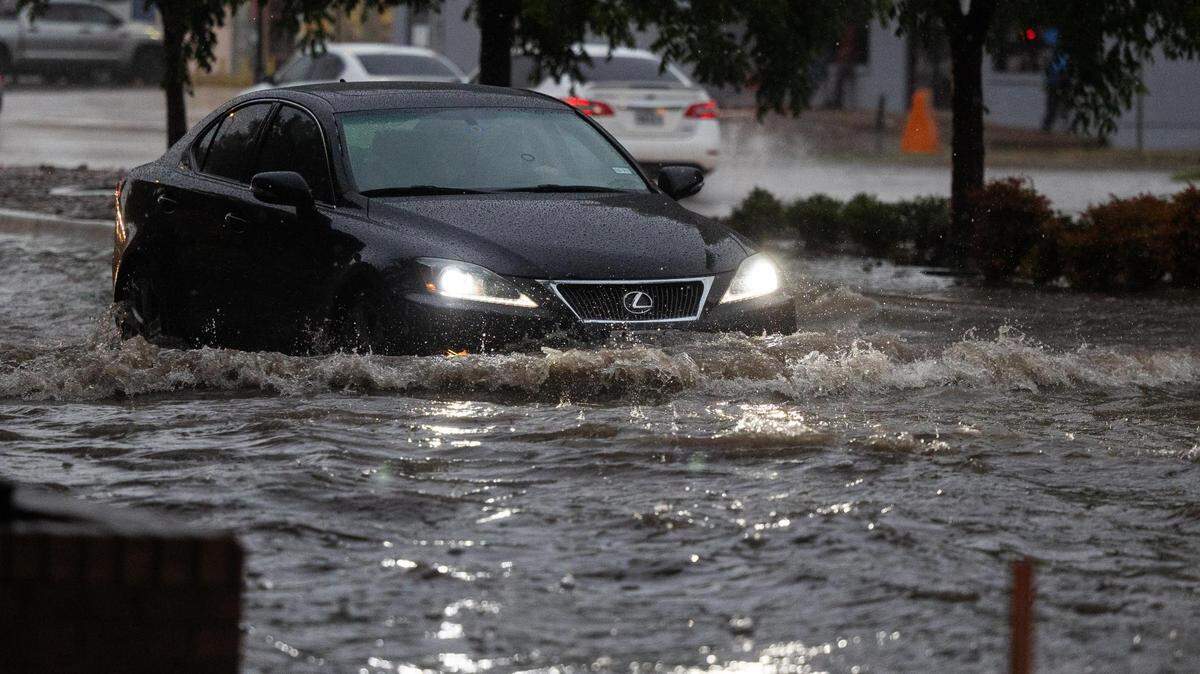
The Aug. 22 rainstorm that dumped up to 9.19 inches on Fort Worth turned her street into a whitewater rapid. Richards had up to 3 feet of water in her garage. The city said 49 buildings, 237 vehicles and 58 roads were flooded, and first responders rescued 22 people from high water.
About 40% of the property in the city faces some kind of flood risk. In Texas, most flooding occurs outside of FEMA’s flood plain, according to a report from Gov. Greg Abbott’s commission to rebuild Texas following Hurricane Harvey in 2017.
In Fort Worth, much of the flooding is caused by over-matched drain pipes and new development covering land that would normally absorb rainwater. The city has identified 300 flash flooding areas it considers dangerous.
Homes in Richards’ neighborhood were built along an old creek bed and are served by a century-old storm drain that has been overwhelmed by development.
Until recently there were no official maps that detailed that kind of flood risk.
FEMA flood maps maps show flood risks based on 100-year patterns for rivers and streams, but don’t provide detailed data on localized flash flooding. And those maps are likely out date given they don’t take into account the impacts of climate change, FEMA director Deanne Criswell said in a Sept. 4 interview with CNN.
The state’s climatologist predicts a 4% increase in rainfall for every 1 degree in warming, and that the state’s temperature will rise an average of 3 degrees by 2036, according to an October 2021 report.
The city has been working on new flood maps since 2018 to help residents like Richards be more aware of local flood risk. In Fort Worth, 76% of flooding between 1980 and 2019 was outside the federal flood plain.
The data is available through the city’s One Address platform, but the updated maps will allow residents to get a visual representation of their flood risk. The city plans to release the new map this fall.
Flood risk vs. potential high water areas
The maps show the local flood risk (called city flood risk areas) and areas where the city suspects there will be flooding (potential high water areas).
The city has the most flooding data for areas around the Cultural District, West Seventh Street, Meadowbrook, Near Southside, Rosemont and Worth Heights. Because of the detailed information, the city will be able to mandate stricter regulations so development doesn’t worsen flood risks.
Potential high water areas include Marine Creek, Summerfields and Ridglea Hills. A map of potential high water areas should be released by the end of the year.
Existing Flood Problems
Only developments larger than one acre are subject to regulations aimed at mitigating flood risks, but the city plans to soon require stormwater management from all projects in its flood risk areas.
Regulating stormwater for smaller lots could help fix some of the problems seen in older areas of the city like Linwood, where the city’s drainage system is too old and too small to handle the increased runoff from the new concrete and buildings.
The Greater Fort Worth Association of Realtors was initially concerned whether the maps would trigger requirements to buy flood insurance for buyers with federally backed home loans, said Robert Gleason, CEO of the Greater Fort Worth Association of Realtors. The average cost of flood insurance in Texas is $676 per year, according to online insurance marketplace Police Genius.
Despite those concerns, Gleason said there’s a compelling public interest in having the information out there.
The city can’t force home sellers to disclose whether they’re in a city flood zone, but the information can be helpful for home buyers doing their due diligence, Gleason said.
The city will reach out to Realtors, insurance agents, lenders, engineers and builders to make sure they are aware of the information, Dyke wrote in an email to the Star-Telegram.
Richards said dealing with her neighborhood’s flood problems has been emotionally devastating.
After the August storm, she put off plans to move her mother from Wisconsin.
She’s evaluating her next steps and trying to figure out how much the clean up will cost.
This story was originally published September 29, 2022 at 6:00 AM.
.jpg)