Is the Texas heat really killing off our trees? An arborist explains
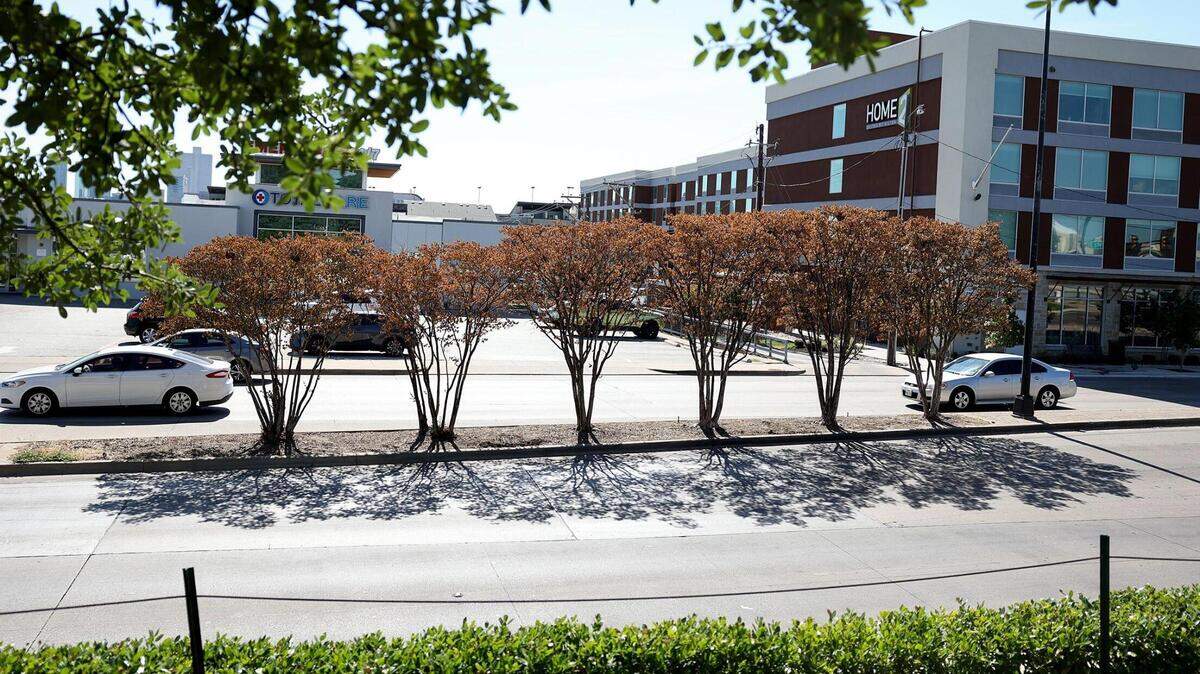
Fort Worth has not seen any notable rain since June 3. Pair that with nearly 40 days with temperatures topping 100 degrees, and the trees are suffering.
“Some of the trees are struggling so bad, they’re dropping some leaves here and there,” said James Prichard, certified arborist and owner of Integrity Tree Care. “If this keeps up and if we don’t get any rain through August, it may go down as one of those unprecedented summers.”
Judging by the forecasts from the National Weather Service, the trees are nowhere near redemption. The summer will continue to scorch and rain is, well, not in the forecast any time soon. The last time DFW tasted sweet rain was back on June 3.
The summers of 1980 and 2011 will always live in Texas lore as one of the hottest on record, and 2022 sure has the potential to step up to that mantle.
This all could spell trouble for the trees.
Is there potential for a lot of dead trees?
Prichard has been in the tree business for decades and said the worst summers on record were 1980, 1998 and 2011.
All three years make up most of the list of most 100-degree days in a year, according to the National Weather Service. Topping the list is 2011 at 71 days, followed by 1980 at 69 days and 1998 at 56 days.
While 2022 might not be there yet, Prichard said, the heat this year certainly feels comparable to those record years.
Prichard recalls his crews chopping down dead trees after the blistering summer of 2011. This year feels like it has the potential to be as bad unless we get a reprieve in the form of rain, he said.
“There’s a potential for a lot of dead trees, but I don’t think we’re there yet,” Prichard said.
It all depends on how much rainfall occurs in the next couple months, and if that can cool off the trees and ground, Prichard said. It’s hard to tell how bad this year will be because we are still in the middle of the summer season, he added.
“There’s gonna be some dead trees from it, it’s just the nature of it,” Prichard said. “It’s a process of elimination.”
Is our dry spell flirting with a record?
As of Sunday, Dallas-Fort Worth’s streak of days without measurable precipitation has been extended to 58, according to the National Weather Service. With no rain to speak of in the forecast for the next few days, this stretch of dry days will place Fort Worth in sole possession of second on the list.
The last times this year substantial rainfall was recorded was in early June, said Patricia Sanchez, a meteorologist at Fort Worth office of the weather service. Fort Worth’s Meacham International Airport recorded a measly 0.21 inches on June 1. Two days later, it was much wetter with 1.92 inches recorded.
And that has been it in Fort Worth. There were “trace” amounts of rainfall in mid-July, but the number was so low it’s almost nonexistent, Sanchez said. Trace rainfall is anything under 0.05 inches, which is difficult to measure with a traditional rain gauge.
The other longest dry streaks in DFW history are:
- 84 days — July 1 to Sept. 22, 2000
59 days — June 4 to Aug. 1, 2022*
- 58 days (tie) — Nov. 4 to Dec. 31, 1950
- 58 days (tie) — May 25 to July 21, 1934
*Still active
The summer months are commonly a dry period, between July, August and September, Sanchez said. Typically, July sees about two inches or so of rain, but so far this year that number is stubbornly stuck at zero.
There’s a 20% chance of precipitation for both Friday and Saturday, which could break the dry streak. However, if no rainfall occurs, the summer of 2022 could top the record books.
How can you keep trees alive?
A few hours or even a day of consistent rainfall will certainly help trees soak up much needed moisture.
A slow-soaking rain, almost like using a soaker hose, would be the ideal situation to help rejuvenate sunburnt trees, Prichard said. The slow rain would give the tree and surrounding ground time to soak up the moisture into the roots.
A torrential downpour would certainly help trees, but the rain would likely not soak as deeply as needed since the ground is exceptionally dry and hard — and most of the water will simply drain out.
“I mean, we’ll take what we can get at this point,” Prichard said.
This summer is far from over and only time will tell on how harmful this heat wave will be to the trees, but there are still ways to help trees. Here are a few tips on tree care this summer:
- Water slowly — A trick to watering a tree is to provide a lot of water over a long period of time — such as using a soaker hose on a low trickle for eight to 10 hours.
- Finger test — A simple test to see if it’s time to water is sticking a finger in the dirt. If it’s dry then water, if it’s not then don’t.
- Be on time — A few tree species will give notice when they are getting too dry, such as birch or locust, but a majority won’t. If watering for the tree is only done after the tree starts showing signs of drought stress, it could be too late.
- New trees — New or young trees have a different watering schedule than other established ones. It’s important not to over water, but have a consistent schedule. The main takeaway is if the soil is moist the tree should be happy.
- Native trees — Trees that are native to Texas or areas of extreme heat will likely fare better than those not used to the warm climate.
This story was originally published July 29, 2022 at 3:56 PM.