
Fort Worth saw record high water use in May. As drought worsens, are restrictions next?
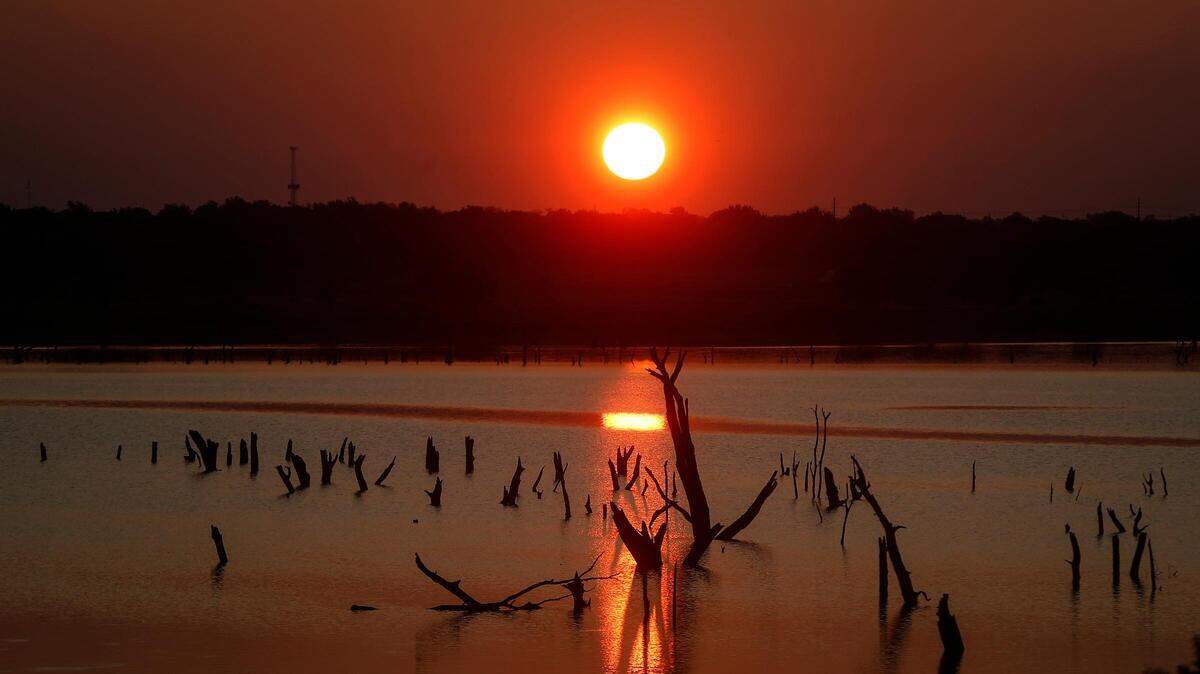
CORRECTION: Watering is prohibited between 10 a.m. and 6 p.m. in Fort Worth. The time was incorrect in an earlier version.
We’re not there yet, but without more rain, North Texas cities could begin imposing drought restrictions this fall.
May saw the highest water usage in the region since 2006, according to the Tarrant Regional Water District. Individuals are using less water, but the area’s rapid growth is increasing demands on the water supply.
The water levels in the region’s reservoirs have been holding steady at around 90%, according to the water district. Drought restrictions will kick in once those levels drop to 75%, which is the district is forecasting for late September.
However, not much will immediately change in Fort Worth should the region enter a Stage One drought.
A Fort Worth ordinance adopted in 2014 limits residential lawn watering to two days a week and prohibits it between 10 a.m. and 6 p.m.
The biggest restrictions would come into place if reservoir levels drop to 45% of capacity.
All outdoor watering would be prohibited, all outdoor fountains would be shut off, and you could only get your car washed at a commercial car wash.
The water district is launching a campaign in July to encourage more conservation by limiting outdoor watering and planting drought resistant plants.
Conservation has become its own valuable water source, said Rachel Ickert, water resources manager for the district.
Water users conserved 20 billion gallons of water in 2021. That’s roughly 15% of the system’s overall capacity.
The district is also working to build capacity with its Cedar Creek Wetlands project. The man-made wetlands could provide as much as 80 million gallons per day once it gets up and running sometime around 2032, according to the district.
The district provides roughly 400 million gallons of water per day to the region.
Despite the stable reservoir levels, 75% of Tarrant County experiencing severe drought, according to the U.S. Drought Monitor.
Severe drought increases wildfire danger, makes it hard to grow crops and difficult to graze cattle.
The Dallas-Fort Worth area sees an average of 1.6 days in June above 100, according to the National Weather Service. So far this month, we’ve had six days above 100.
This story was originally published June 21, 2022 at 4:33 PM.
.jpg)