
Fruits and vegetables once headed to trash now feeding Fort Worth gardens
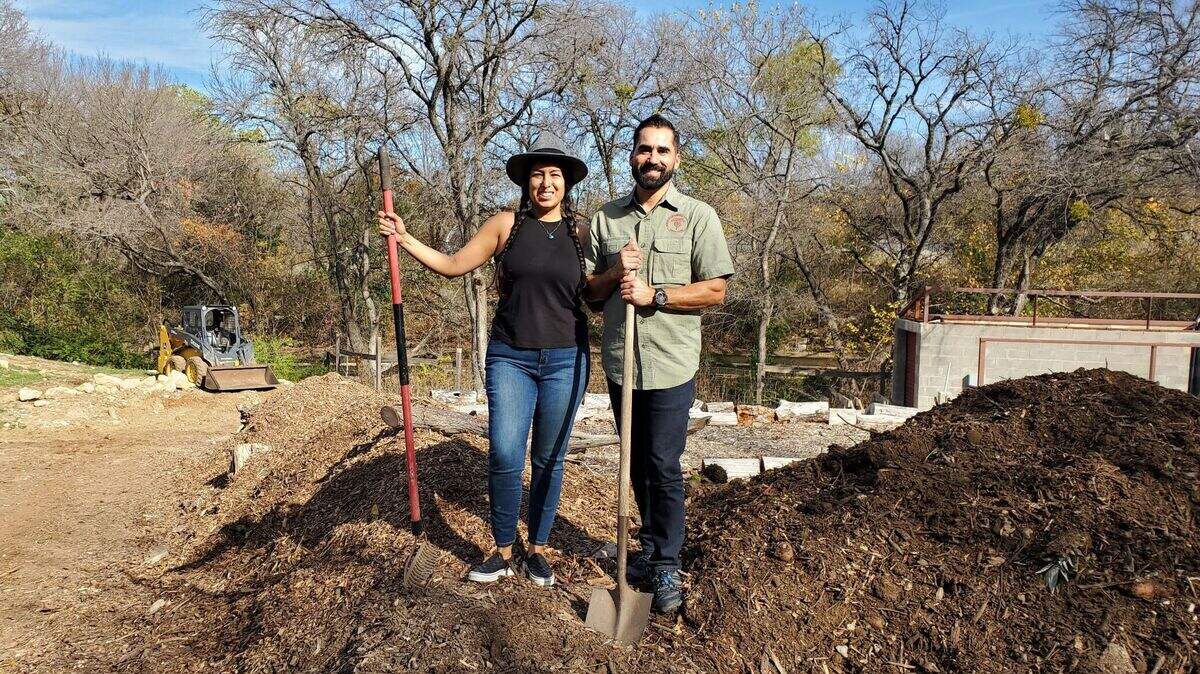
Every week, grocery stores pull their overripe or slightly imperfect fruits and vegetables and throw them in the dumpster. Now a North Texas program is working to divert that food waste to urban farms to help grow healthier foods.
Compost Carpool, founded in 2019, is a regional company that transports thousands of pounds of discarded produce per week to urban farms around Fort Worth.
Partnering with Compost Carpool in 2021, the Blue Zones Project launched the Culled Produce Program with grocery retailer G.E. Foodland Inc. in the city.
The Blue Zones Project is a community-led well-being improvement group that focuses on helping Fort Worth and other cities around the nation. As part of the project, the city, schools and employers encourage healthier lifesytles.
Melissa Pringle, founder of Compost Carpool, said the relationship with the Blue Zones Project allowed the company to expand its mission to include food recovery.
“Composting is one of the top ways you can reduce your overall carbon footprint,” Pringle said. “It’s a full cycle of diverting waste from landfills, reducing greenhouse gases, getting those nutrients back into the soil, and helping the local community by supporting urban farmers.”
Compost Carpool picks up the compost from Elrod’s Cost Plus Supermarket, 1524 NW 25th St. in Fort Worth, and the Forest Hills Foodland, Market at 3320 Mansfield Highway.
The project also transports edible produce to school food pantries.
“We started this company to provide a transportation system for compostable materials — as a food recycling alternative,” Pringle said. “In our business, we pick up materials from residents and commercial businesses, donate some of those raw materials to local farms and gardens and compost a portion ourselves to give back to our residential subscribers.”
Brenda Patton, program director of Blue Zones Project Fort Worth, said the Culled Produce Project came to be through research and other community partners.
“[Compost Carpool] has been able to alleviate some of those logistics to be able to remove the barriers that existed, such as the time constraint that it takes for the farmer to go pick up the produce and take it back to their farm,” Patton said.
In 2014, the year Blue Zones Project launched in Fort Worth, the Gallup National Health and Well-Being Index placed Fort Worth in 185th place out of 190 in health rankings of large metro areas. In 2018, the city rose to 31st.
Fort Worth is the largest Blue Zone city in the nation.
Urban farms promote healthy eating
In 2014, Ursula and Steven Nuñez started their three-acre farm, Mind Your Garden, by planting fruit and trees. In 2018, after Steven Nuñez, a veteran, finished his thesis at the UT Arlington, the couple began to push their farm further, Ursula Nuñez said.
Herbs, potatoes, tomatoes, grapes and more are in their garden, in the Glencrest neighborhood of Southeast Fort Worth. The farm takes advantage of the free compost to grow foods rich in nutrients.
On Saturdays, the couple sets up a market to sell produce and exchange recipes. They want to grow healthy food and promote healthy eating, Ursula Nuñez said.
“My family has a history of cardiovascular disease,” she said. “[Steven’s] family has a history of diabetes. So now having kids and thinking about our future, it was ‘We have to break this cycle and do better for our kids. For our health.’”
Mind Your Garden partnered with Grow Southeast, an initiative between CoAct, a Fort Worth-based nonprofit, the office of Tarrant County Precinct 3 Commissioner Roy Brooks and the Healthy Tarrant County Collaboration to help the farm get more resources.
Once Ursula and Steven Nuñez started receiving produce, they were able to see firsthand the amount of the amount thrown out in good shape.
“In talking to the grocery stores, it’s like ‘Why are you guys throwing out this food if it’s still, I mean, it’s beautiful,’” Ursula Nuñez said.
Nutrients are what help produce grow and thrive, she said. If the couple were to go to a local store and buy soil, it’s not going to have the nutrients and bacteria needed to help a garden.
“It’s amazing that grocery stores are throwing this away, and that it’s landing in a landfill when it could be turned into compost and nutrients,” Ursula Nuñez said. “It’ll save people money in the long run from having to drive, go purchase and bring home.”
This story was originally published June 19, 2022 at 12:00 AM.