
$2.3 billion, 150-mile pipeline connects Tarrant, Dallas counties’ water districts
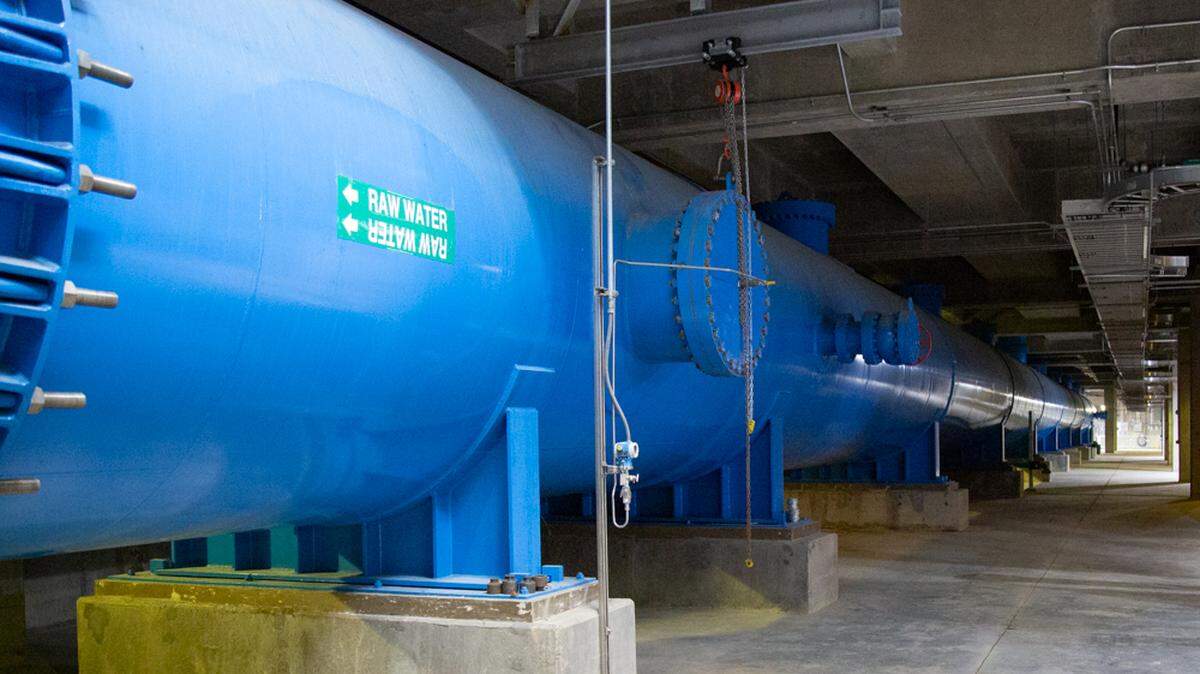
The Tarrant Regional Water District and Dallas water utility celebrated the opening of a 150-mile pipeline Friday, helping secure the growing region’s supply of drinking water.
The $2.3 billion project, funded between the two counties and the state, comes at a time when North Texas faces the dual threats of prolonged drought and surging demand for water.
As of Tuesday, roughly 81% of Texas was experiencing some level of drought, affecting an estimated 16.6 million people, according to the U.S. Drought Monitor. More than half the state is suffering from extreme or exceptional drought conditions.
There are 4.6 million water users in the Fort Worth-Dallas metroplex, and that number is expected to double by 2070, said Terry Lowery, director of Dallas Water Utilities. The integrated pipeline will increase the supply of water available to Tarrant and Dallas counties.
It adds a third lake to the Tarrant Regional Water District’s existing two reservoirs, Richland-Chambers and Cedar Creek reservoirs. It also strengthens the system by adding a third pipeline to move water from the reservoirs, said Ed Weaver, the Tarrant district’s program manager for the pipeline project.
If Dallas needs water and Tarrant has it, it can be moved through this new pipeline and vice versa, explained Denis Qualls, a senior program manager with the Dallas water utility.
Rainfall patterns differ across North Texas, with areas farther east typically seeing more precipitation, Qualls said. By connecting the Tarrant and Dallas systems, the utilities have a wider basin to capture rainfall and strengthen the system overall, he said.
“We’re really ahead of the curve with this pipeline,” said Carlos Flores, a Fort Worth city council member. Instead of waiting for a dire water emergency, the utilities are working proactively to ensure the region has enough water, he said.
The project also saves money for both utilities, said Dan Buhman, general manager for the Tarrant district. He estimated the shared pipeline will net a $1 billion savings in operations and maintenance costs.
The most important savings, Buhman said, is the time and energy residents will save not having to go find clean drinking water. He pointed to statistics showing 2 billion people worldwide don’t have access to clean drinking water.
Projects like this pipeline allow residents to live without the fear of not knowing whether they will have enough water, Buhman said. “And that’s the essence of community and care for your fellow man.”
.jpg)