When will inflation end? How much higher will prices rise? We asked a Texas economist
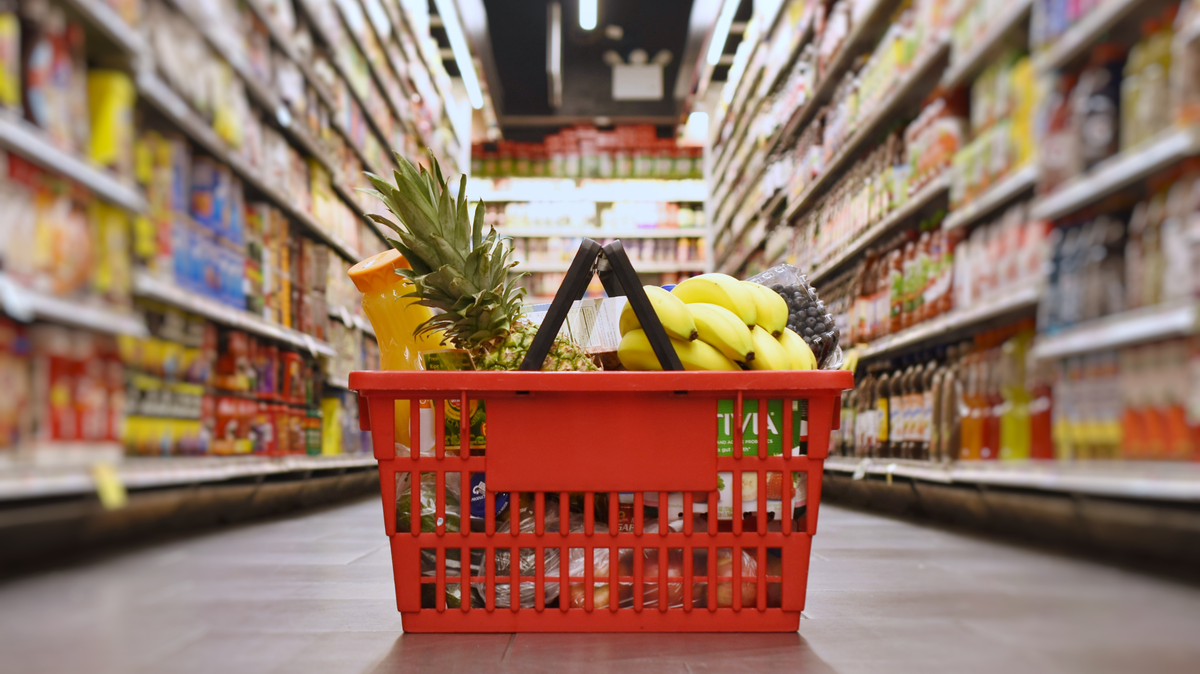
Prices in the Dallas-Fort Worth-Arlington area jumped 9% over the last year, the largest increase since December 1981, the U.S. Bureau of Labor Statistics reported in April. That’s hit everything from a carton of eggs to new cars.
With COVID-19 easing in Texas, we’re just waiting for prices to go back to normal. Now the question that all Texans are asking is: When will inflation end?
“Inflation is higher than we’ve seen in decades and is at a level where it is certainly being felt in household budgets, and it’s likely to persist for the next few months,” said Ray Perryman, an economist with The Perryman Group.
U.S. inflation eased a bit in April after reaching an all-time high in March, helped by a slight decline in gas prices, though we’re now seeing those rise again. According to the Consumer Price Index, inflation is up 8.3% from a year ago. Inflation increased 0.3% in April, down from 1.2% in March.
The good news? An economic forecast by Kiplinger says the U.S. inflation rate is expected to ease further over the rest of this year, and 2022 will likely end with a rate of about 6.3%. In 2023, the rate should fall faster, down to 3% by the end of that year.
Why is it taking so long for inflation to ease?
According to Kiplinger, the higher cost of housing will keep inflation rates elevated for some time. Gas prices and heating costs are likely to stay high for a while because of the war in Ukraine but may soon plateau. Car and truck prices will stay high until the semiconductor shortage ends within the next year or so. Shortages of various products, the latest being baby formula, will drive prices up, adding to the inflation rate.
“While inflation won’t end overnight, most of the factors that are driving inflation are temporary in nature and largely driven by the pandemic and the Russian invasion of Ukraine,” Perryman said. “One issue is that the pandemic led to a breakdown in the supply chain due to various restrictions, production stoppages, worker illness and other disruptions.”
“It’s a little like a huge traffic jam, with shortages in specific input goods setting off slowdowns which lead to other slowdowns. Add to that the overloaded logistics sector and it will take time to sort it all out. The recent production curtailments by China, also pandemic-related, have slowed progress,” Perryman said.
Inflation has been exacerbated by high demand pushing up prices, while low supply is caused by production and delivery challenges.
And gas prices are pushing the inflation rate to record levels, Perryman said. Before the Russian invasion of Ukraine, oil prices were already trending upward as global demand recovered from the pandemic and supply was slow to respond. With the war taking Russian oil off the market for many countries, prices rose even higher.
“High fuel prices trickle through the economy raising costs of transportation and production,” Perryman said. “There is a great deal of uncertainty at this point regarding both the path of the war and the response of global markets with regard to Russian oil.”
What will inflation look like for the rest of 2022?
The Federal Reserve beginning to take action on inflation, Perryman says, will help ease inflation over the next several months.
The oil industry responding to high prices will also help, he said. In Texas, a high number of drilling permits were issued in April. The number of drilling permits issued by the Railroad Commission of Texas in April rose 29% to 946, compared with 732 a year ago, according to World Oil. That includes 836 permits to drill new oil or gas wells.
The Texas economist expects that the next few months will likely continue to be characterized by high inflation, but not much higher than current levels.
“By the end of the year, I think we’ll see measurable improvement,” Perryman said. “Supply chains are improving in many respects, the extra cash is being dissipated, and energy markets are becoming more balanced.”
What will inflation look like in the future?
Over the long term, some additional inflation is inevitable due to the excess liquidity and resulting federal debt during the pandemic, Perryman said. But he says it’s unlikely to be much higher than before the pandemic.
“This is a very different situation from that of the 1970s and early 1980s, when structural issues were causing and basically institutionalizing inflation,” Perryman said. “Most of what we’re seeing today is transitory and driven by an usual, but temporary, convergence of events.”
This story was originally published May 13, 2022 at 10:21 AM.