
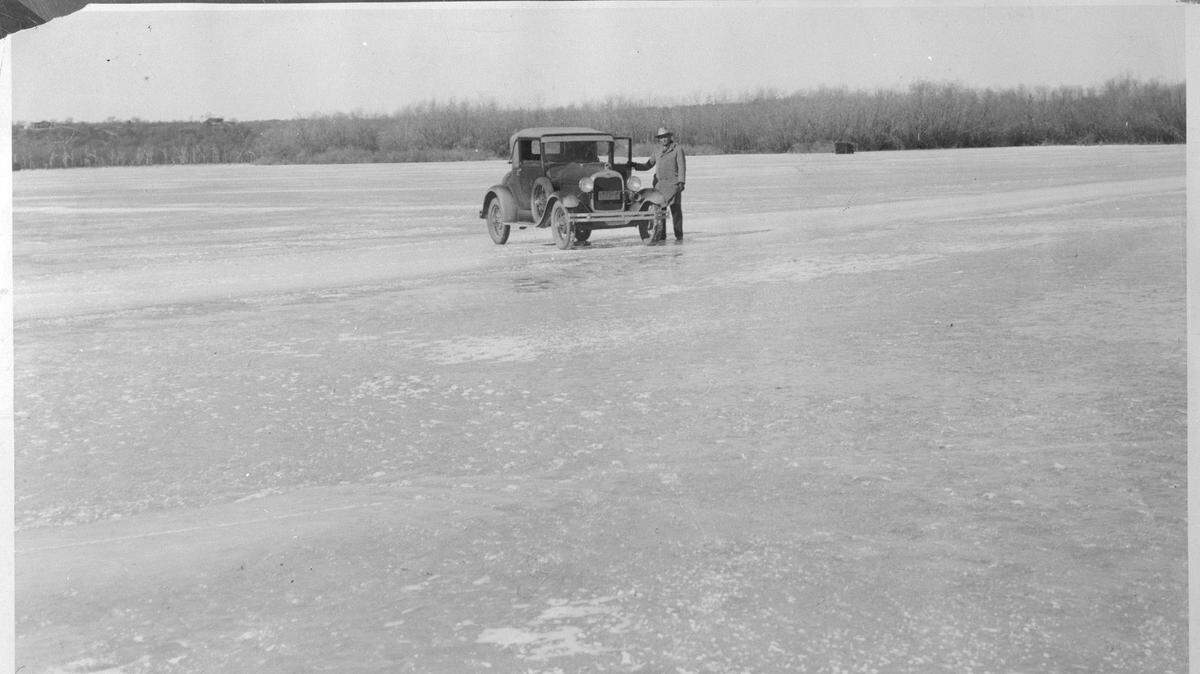
It was once so cold in Fort Worth, you could drive a car on Lake Worth. Really.
On the afternoon of Jan. 15, 1930, the temperature in Fort Worth dropped below freezing, dipping to 11 degrees by 6 a.m. the next morning. A Star-Telegram headline optimistically predicted “Warmer Weather Due After Drop to 11 Above.”
The next week would show how relative the term “warmer” was.
The next day’s front page predicted the coldest weather of the young year with a “blizzard” to bring snow or rain. A small headline reported that Lake Worth was beginning to freeze over.
(Listen. Can you hear the Model Ts revving up?)
In fact, before dawn on Jan. 18, the temperature dropped to one below zero, the coldest temperature since 1899, when the temperature had fallen to eight below zero.
Also on Jan. 18, a deputy county clerk who was in the habit of placing his false teeth in a glass of water each night woke the next morning to find that the water in the glass had frozen solid. He had to thaw the water to eat breakfast.
The sub-zero jolt made ice on area lakes and streams even thicker. Finally the temptation was too much: People began to skate and sled on Lake Worth and Sycamore Creek.
On Jan. 21, the Star-Telegram forecast “Zero Weather Due Again Tonight.”
The city water department reported that 100 water meters had burst.
On Jan. 21, before the cold snap even ended, the costs of repairs of burst water pipes, construction losses and other weather-caused expenses in Fort Worth were estimated at $300,000 ($4.7 million today).
The low temperature on Jan. 22 was 8 degrees. Again the Star-Telegram forecast “warmer weather” for the next day even as people skated and ice-fished on Lake Worth.
On Jan. 22, about 200 people ventured onto the frozen lake, with another thousand gathered around the shore marveling at the sight. About 50 people had driven cars onto the lake to go skittering over its glassy surface. Daredevil motorists discovered that if they sped up their cars as best they could and then braked hard, their cars would go skidding uncontrollably over the ice.
In response to such shivery shenanigans, the police department at first dispatched motorcycle officers to patrol the perimeter of the lake to prevent motorists from driving onto the lake. Finally the police department dynamited the lake at places where motorists had been driving onto the ice.
By Jan. 23, ice on the lake from shore to shore was 7 inches thick.
But on Jan. 23, the temperature finally rose above freezing. The “warmer” weather that the Star-Telegram had been predicting for days finally arrived. The end dreweth nigh for winter sports on the glacier called Lake Worth.
The Big Chill of 1930 had done what the Great Depression could not. It halted construction on five major building projects downtown because the air was too cold to work with concrete and plaster: The Fair, Petroleum Building, Fort Worth Public Market, Firestone Service Store and First Methodist Church.
According to today’s National Weather Service, Fort Worth’s temperature had been at or below freezing from 3:15 p.m. Jan. 15 to 10 a.m. January 23, 1930. That’s 211 hours (8.7 days), which ranks second to 295 hours — twelve days — a record that many today remember, set in 1983 from 7 a.m. Dec. 18 to 2 p.m. Dec. 30.
Mike Nichols blogs about Fort Worth history at www.hometownbyhandlebar.com.