
La Loma-style Christmas brought Fort Worth Latinos back to the miracle at Tepeyac Hill
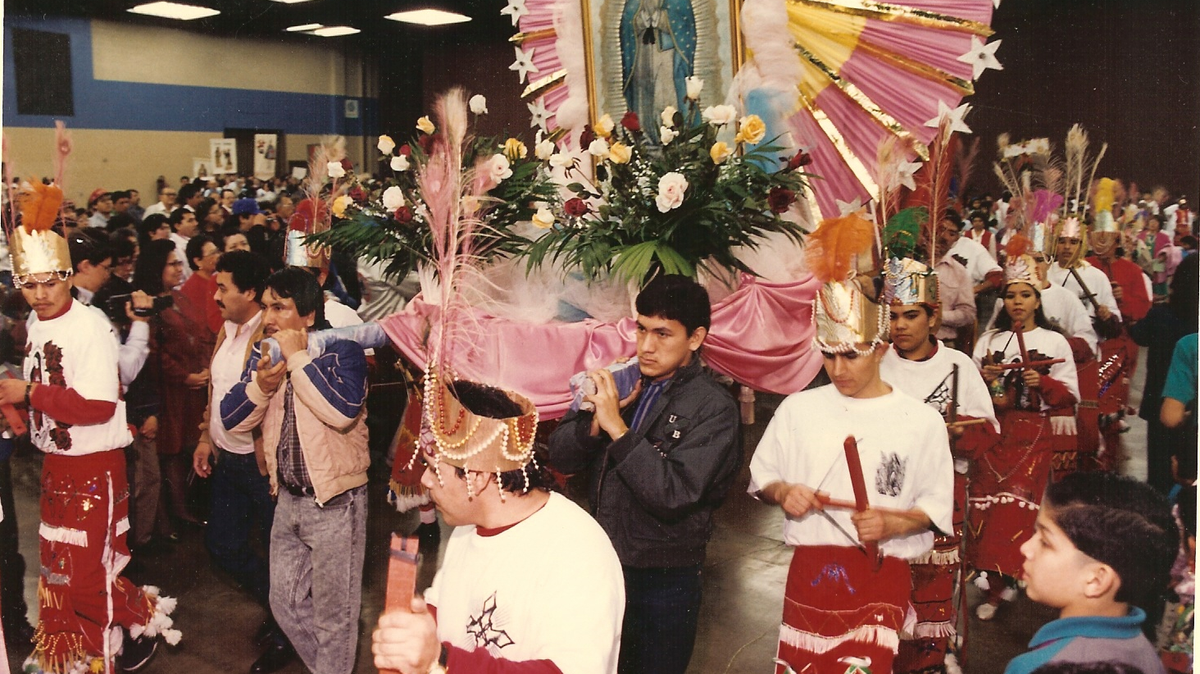
Delsa García recalled that in her youth during the 1950s and 1960s the close-knit barrio of La Loma (The Hill) in the Meacham Airport region began their Christmas celebration on the Feast Day of Our Lady of Guadalupe, Dec. 12.
According to Roman Catholic history, in 1531 the virgin Mary appeared four times to Aztec Indian Juan Diego, with a request to build a church in her honor at Tepeyac Hill, outside Mexico City. Skeptical Archbishop Juan de Zumárraga demanded proof of the miraculous appearance. At the blessed mother’s instructions, Diego unfolded a cloak before the archbishop, showering the floor with Castilian roses and revealing her painted figure. Her iconic image now dwells in millions of homes, churches, and on shirts, dresses, and devotees’ tattooed bodies.
Spanish friars had difficulty converting the defeated Aztecs, but when the Indios saw the resemblance to their goddess Tonantzin and beheld the tilma with Mary’s Indian image, Indios converted in the millions. Through Spanish colonization, Christianity spread throughout the Americas, including the present day southwestern United States and Florida. The first Christmas celebrations in the New World were conducted in Spanish, complete with cuetlaxóchitl (poinsettias), carols, processions, and Mass.
Some Fort Worth Guadalupanas, followers of the brown-skinned Madonna, carried on the 16th century tradition by gathering at Our Lady of Guadalupe Church, then on Long Avenue, a week before her feast day. They enlisted parishioners to decorate cars and trucks with colorful paper flowers and mounted images of the miraculous encounter on trailers. Starting from the church, families walked throughout La Loma, carrying candles or lanterns, praying, and singing “Las Mañanitas” and “Ave Maria.” Some boys dressed as St. Juan Diego.
On returning to the front of the church, celebrants requested the virgen intercede to cure illnesses, financial woes, domestic discord, and thanked her for the birth of her son. Some faithful walked in humility on their knees into the church as practiced at the Basilica of Our Lady of Guadalupe in Mexico City.
La Loma-raised Joe Govea travelled in December 1985 to the Basilica, the most visited Catholic shrine in the world. Govea observed worshippers flowing to the Basilica like a human tide of holy water. Mexican Indians danced on Dec. 11 and at midnight popular Mexican singers entertained the multitude with religious songs. He learned that a twisted brass cross that had stood on the altar underneath the framed tilma was the remnant of a disbeliever’s unsuccessful attempt in 1921 to destroy the image within bomb-hidden flowers.
García reveled in the 12 days leading to Christmas as Guadalupanas organized a La Loma version of the traditional posada, replicating the holy family’s efforts to find shelter in Bethlehem. They planted luminarias in front of designated two-bedroom homes each evening, praying and singing. Guadalupanos carried a statue of nuestra señora into the home followed by as many of the celebrants that could fit into the haven. Most stood outside as Guadalupanas served food and drinks while children received bags of fruits, nuts, and candies. A joyous aura of a blessed community feast swept over La Loma on the 12 nights.
At Our Lady of Guadalupe Church, families attended midnight Christmas Mass where they witnessed a nativity play. La loma-style Christmas brought Fort Worth Latinos back to the miracle at Tepeyac Hill and the birth of the Christ child.
This story was originally published December 24, 2021 at 5:30 AM.