‘It’s a lifesaver:’ Fort Worth’s homeless get a fresh start at Casa de Esperanza
Juline Lawsha packed up her entire life in a giant suitcase.
It had followed her during her three years on the streets, including two she spent in a tent. She had picked up the suitcase from Union Mission Gospel of Tarrant County and filled it to the brim. Late last year, she brought it home.
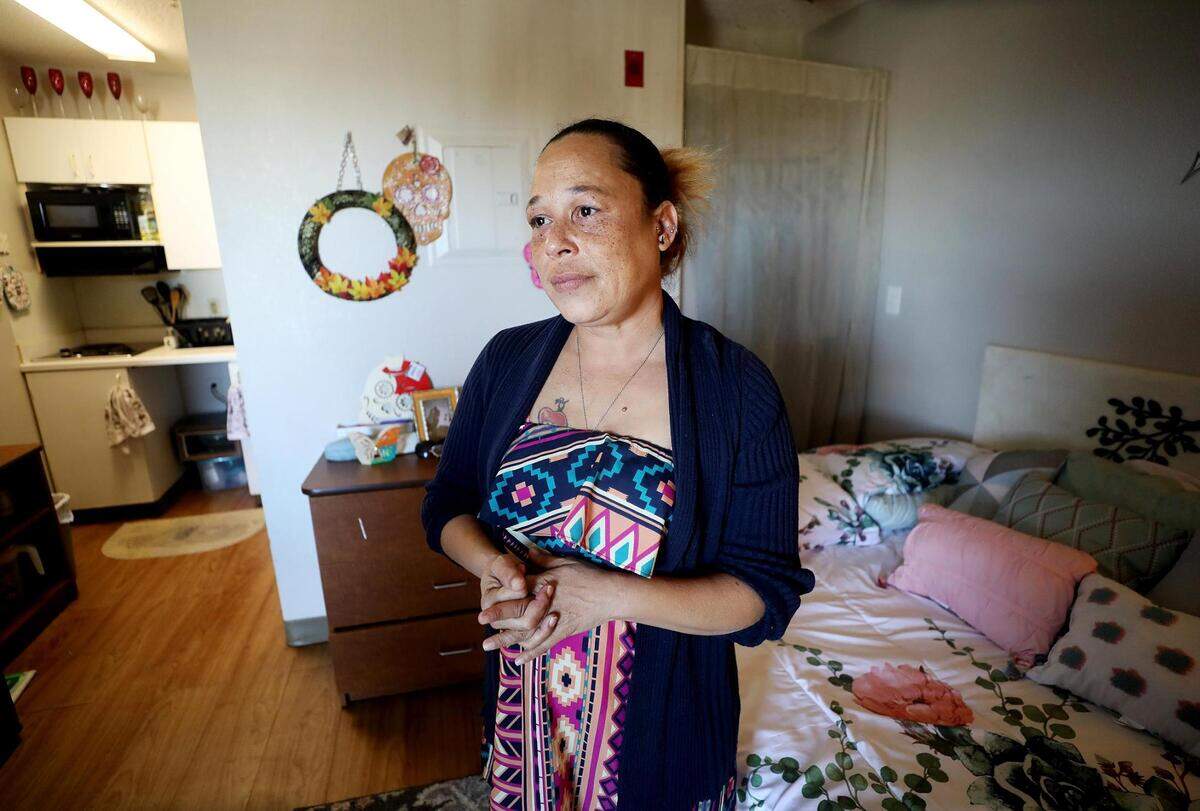
That tan case now sits under a stack of pillows by her dining room table in her efficiency apartment at Casa de Esperanza.
On this November afternoon, she has company with a 17-year-old dark brown and tan Chihuahua named Paco, who Lawsha takes care of for a friend as a source of income. “Criminal Minds” flashes on her TV screen. Photos of her kids and grandkids in California hang on the wall by her bed, printed out for her by a friend.
“It’s mine and I’m proud of it,” Lawsha says.
This home provided a fresh start — not only for her, but 118 others.
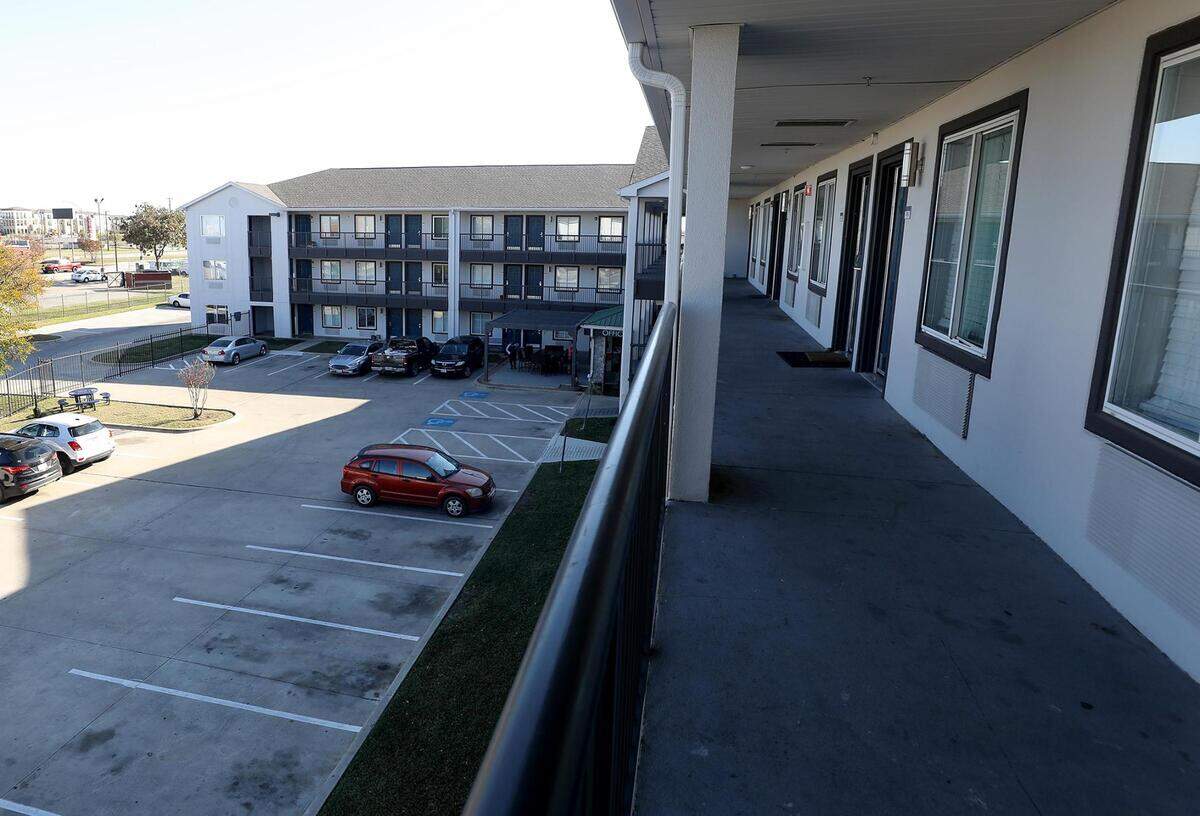
Casa de Esperanza, a 119-unit complex for those experiencing chronic homelessness, opened its doors in November 2020 after the city gave Fort Housing Solutions $9.2 million from federal pandemic relief funds to purchase and renovate the former HomeTowne Studios on Tanacross Drive in north Fort Worth.
The residents found their new homes through the Tarrant County Homeless Coalition. They have fully furnished rooms with full-sized bathrooms, and access to case managers, a dog park and a community garden.
It’s home, and a second chance, for people who had nowhere else to go.
“It’s really to save lives,” said Tara Perez, manager of Fort Worth’s Directions Home program, which oversees the city’s efforts to reduce homelessness.
Since residents moved into the complex a year ago, some have been able to get back on their feet after years on the streets. Some are in school while others found jobs. Almost all of them — 95% — are still living there a year later.
It’s a new model for the city, said Mary-Margaret Lemons, president of Fort Worth Housing Solutions. The office has been asked to give presentations and speak on panels because of its success, and the city of Fort Worth is looking create more units in hopes that Tarrant County’s estimated 400 chronically homeless people have a place to live.
“It’s been really reaffirming, I guess, to know that we got it right and I think the collaboration was really the key though,” Lemons said.
Combining housing and services
Lemons came up with the idea for Casa de Esperanza’s three years ago.
She had seen the need for permanent housing that included the services people need to get back on their feet. Her office had found a hotel to covert and providers on board to make it happen, but the pieces never came together. Then the pandemic hit.
Perez had the same idea around the same time. She wanted to see how the city could replicate the Palm Tree Apartments, a 24-unit complex on Race Street for people experiencing homelessness, who often struggle to find affordable units or landlords who accept assistance and are willing to overlook evictions or criminal histories.
This model gives people a home and allows them to build a rental history.
“We’ve come to kind of look at this model as like trying to solve three problems at once,” Perez said.
And there’s benefits in having units set aside for the chronically homeless because it allows resources to get into the hands of people who need them quicker, Lemons said.
Once Fort Worth Housing Solutions obtained the property, it took two months to renovate it and start leasing out the rooms. The Housing Solutions office needed to relocate 80 to 90 families who had been living at the hotel, some of whom had been there for years, Lemons said.
Life inside Casa de Esperanza
Residents at Casa de Esperanza typically get referrals from the homeless coalition and sign a 12-month lease, but they’re allowed to stay longer, Lemons said. When their lease is up, some residents may choose to apply for another housing program or seek housing assistance that allows them to move.
“Success looks different for everybody and we recognize that and we recognize we may have some of those residents for the rest of their life, which is absolutely fine as well,” Lemons said.
Once they move in, residents are immediately provided services through JPS Health Network, My Health My Resources of Tarrant County and Presbyterian Night Shelter. Residents can get help for substance abuse disorders and have access to medical treatment and mental health care.
The case managers on site also provide life skills and activities for residents to create a sense of community.
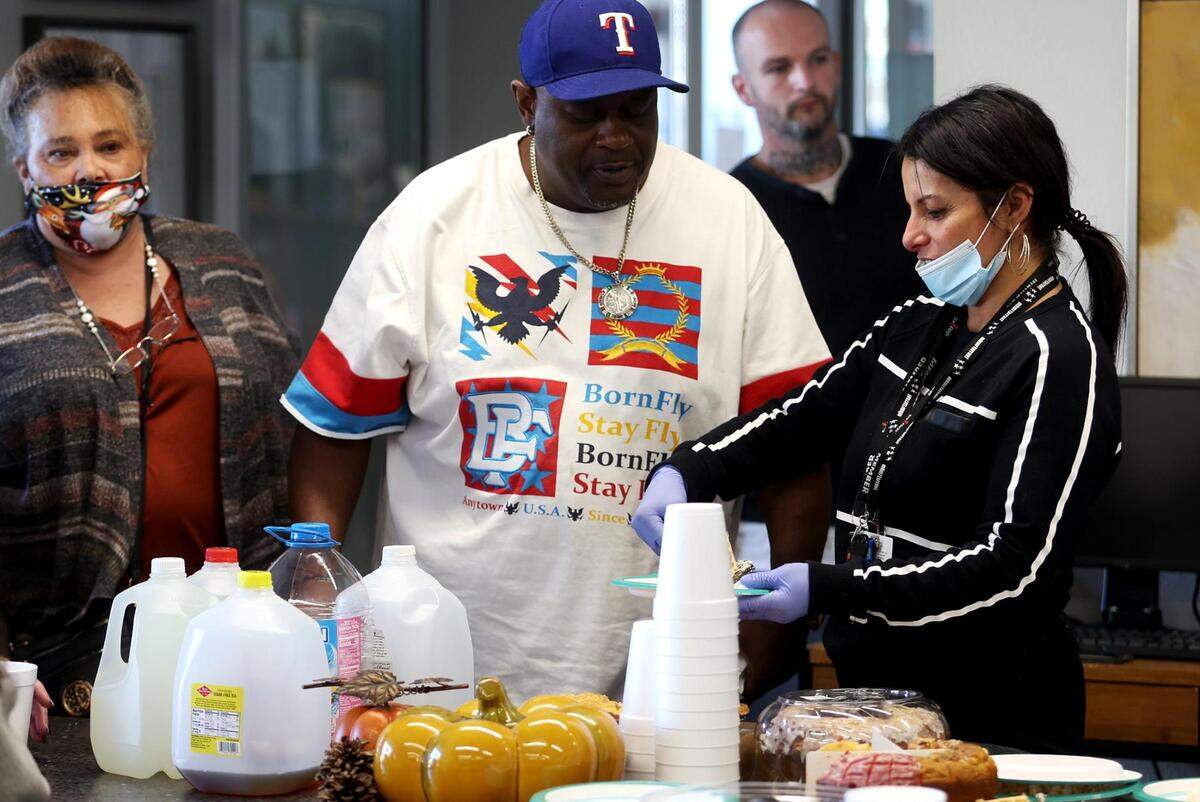
“Whether it’s education, or job training, or getting just critical documents that you may need to be able to go out and look for a job, all those things are happening,” Lemons said.
A normal day starts early, Lemons said, with people heading to school, to work, or to their appointments with case managers.
The week before Thanksgiving at Casa de Esperanza, the community room bustled as residents came in and out to grab plates of cake, pie, stuffing, potato salad and turkey.
This is how the staff gives back to the residents, a case worker said.
Among the crowd was Laura Lyday, a woman with a splash of freckles across her face and a heart tattoo with her name inside it on her chest. She lived on and off East Lancaster Avenue for 11 years before arriving at Casa de Esperanza.
Since she moved in, she’s been able to head to culinary school through Tarrant County Community College’s Visions Unlimited Program for members of the homeless community.
Lyday’s love of cooking started when she made meals from Rachel Ray’s “30-Minute Meals,” a show her youngest daughter was obsessed with and watched over and over again. She dreams of having a restaurant of her own.
The theme, she’s decided, will be art. Lyday wants themed music nights with food to match: Creole food on blues and jazz night, Italian food on Italian night.
Being at Esperanza has allowed her to improve her mental health and self-esteem, she said. On Lyday’s fridge inside her apartment, there’s an anime-style depiction of her drawn by the daughter of a former resident who died this year. On the other side, there are lines from the Bible, the Quran and reminders for her new beginning.
“Honesty is always hard work,” Lyday reads.
She called the people working in the offices at Casa de Esperanza lifesavers.
“A lot of times the reason why we don’t go to the shelter is because we’re belittled because we’re homeless,” Lyday said. “You know, we get treated like we’re just some roaches or some ants crawling on the ground, you know, like we’re nothing. And then to just come into a place like this and for everyone to accept you and treat you like family and go above and beyond for you, it’s like a blessing for everyone out here.”
Having her own space has meant having a place to have her grandkids over to cook and do art. It’s meant being able to set goals, being safe and being back in her children’s lives.
“Just being able to have these people come in and do this for us so we can make goals and accomplish our goals and be somebody instead of feeling like we’re nobody or people telling us we’re nobodies, you know it’s a lifesaver,” she said. “It’s breathtaking.”
This story was originally published December 21, 2021 at 5:30 AM.